
A swimming pool that has been red-tagged by the city or that has been sitting unmaintained for months or years can feel like it is dragging your whole property sale down with it. Pools that are out of code, unfenced, cracked, or otherwise unsafe create real complications in a home sale. Traditional buyers worry about liability. Lenders add conditions. And the cost to fix or fill a neglected pool can be substantial. Here is what you actually need to know about selling with this situation on your hands.
What It Means When a Pool Is Red-Tagged or Unmaintained in Los Angeles
A red-tagged pool in Los Angeles has been flagged by a city or county inspector as unsafe or non-compliant with current safety codes. The most common reasons for a pool red tag in LA County involve missing or non-compliant fencing and barriers, electrical safety violations, structural cracking or integrity issues, and lack of proper drain covers under the Virginia Graeme Baker Pool and Spa Safety Act.
An unmaintained pool may not have a formal red tag, but it presents its own set of challenges. A pool with green stagnant water, a cracked or damaged shell, a non-functional pump and filtration system, or a deteriorated deck is a liability in the eyes of most buyers and their lenders. Even if no official notice has been issued, the condition creates real complications in the sale process.
Why LA County Pool Safety Codes Matter So Much When Selling
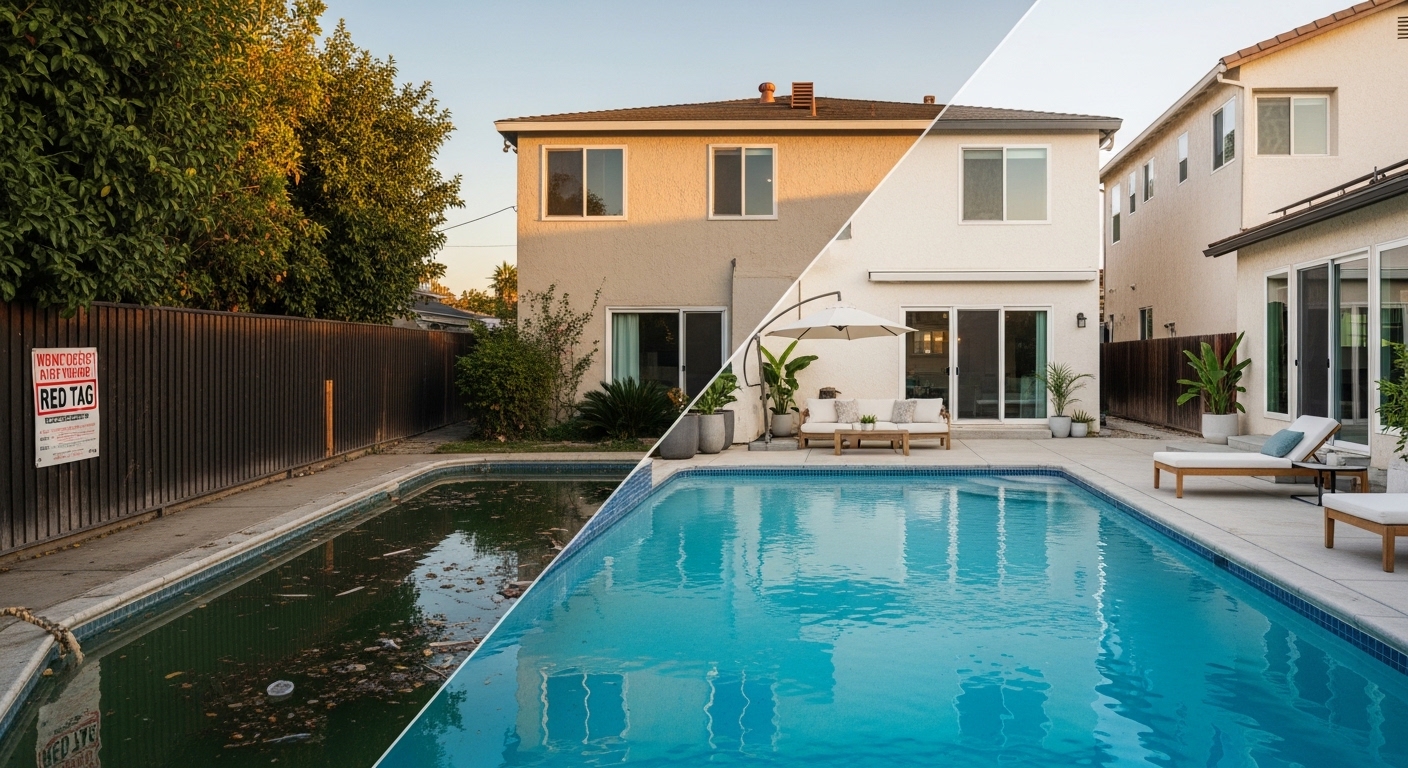
California and Los Angeles County have among the most detailed residential pool safety requirements in the country. The California Swimming Pool Safety Act requires that all pools have at least one of several approved drowning prevention features, including a compliant fence or barrier, a self-closing self-latching gate, a pool alarm, a safety cover, or door alarms on all doors with direct access to the pool area.
According to the Los Angeles County Department of Public Health, pool safety requirements are enforced through building inspections and complaints, and non-compliant pools can be cited and required to come into compliance before the property changes hands depending on the circumstances of the transaction and the applicable jurisdiction.
A buyer using a conventional or government-backed mortgage will face a lender who requires the pool to be in safe, functional condition before the loan can close. FHA and VA appraisers are specifically instructed to flag pool safety issues during their inspections, which can become a condition of the loan approval that must be resolved before closing.
The Most Common Pool Problems That Complicate LA Home Sales
- Missing or non-compliant fencing: Pools without an approved barrier system around the perimeter are the most common cause of pool-related citations in LA County
- Electrical violations: Outdated pool wiring, missing GFCI protection, or non-bonded pool equipment creates safety risks that inspectors and appraisers flag
- Structural cracking: Significant cracking in the pool shell may indicate settling or shifting that requires engineering evaluation before a lender will approve financing
- Green or stagnant water: A pool that has not been maintained is a liability issue and is often flagged by home inspectors as a condition requiring remediation
- Non-functional equipment: Broken pumps, filtration systems, or heaters that make the pool non-operable are commonly cited during buyer inspections
- Deteriorated decking: Cracked, heaved, or unsafe pool decking creates liability exposure that buyers and their insurance carriers may not accept
How a Red-Tagged or Neglected Pool Affects Your Buyer Pool in Los Angeles
The practical effect of a red-tagged or seriously neglected pool is that it eliminates or significantly restricts buyers who need mortgage financing. Conventional lenders, FHA, and VA lenders all have appraisal requirements that flag major pool safety and condition issues. A buyer who gets a loan commitment contingent on bringing the pool into compliance is a buyer who may back out when they realize the scope and cost of what that means.
That leaves your realistic buyer pool as cash buyers who can purchase without a lender’s appraisal conditions, investors who are buying the property for renovation anyway, or buyers who plan to fill or demolish the pool entirely and are not concerned about its current condition or compliance status.
The Option of Filling or Demolishing the Pool Before Selling
One path some sellers take is filling the pool rather than repairing it. Pool demolition and fill costs in Los Angeles typically range from $5,000 to $15,000 depending on the size of the pool and whether a full removal or a partial fill is used. This removes the pool-related complications from the sale entirely and broadens the buyer pool back to anyone who wants a home in the neighborhood without a pool.
Whether this makes financial sense depends on how much the pool is dragging down the price versus what it would cost to fill it. In some Los Angeles neighborhoods where pools are considered a premium amenity, removing the pool could reduce the home’s value more than the pool problem itself. In other cases, the pool is more of a liability than an asset and filling it opens up more options. This is a calculation worth running before making a decision.
| Option | Cost Range | Effect on Buyer Pool | Time Required |
|---|---|---|---|
| Repair and bring to code | $10,000 to $50,000 or more | Opens full buyer pool including financed buyers | Weeks to months |
| Fill or demolish the pool | $5,000 to $15,000 | Removes pool issue entirely | Days to weeks |
| Sell as-is to cash buyer | No upfront cost | Cash buyers only | 14 to 21 days to close |
Selling a Home With a Problem Pool Without Making Any Repairs
If spending money on the pool before selling is not a realistic option for you, selling to a cash buyer as-is is the most direct path. Cash buyers who purchase homes in Los Angeles regularly deal with pool-related issues. They evaluate the cost of bringing the pool into compliance or demolishing it and factor that into their offer, exactly the way they factor in any other repair or remediation needed on the property.
You do not need to fix the fencing, repair the electrical, or clean the water before you sell. The buyer takes the property in its current condition and handles the pool situation after closing. Your job is simply to be fully transparent about what the pool’s condition and compliance status actually is so the buyer can price it correctly from the start.
California Disclosure Requirements for Pools When Selling
California requires disclosure of all known material facts, and a red-tagged or significantly neglected pool absolutely qualifies. You must disclose the red tag or any citation if one has been issued, the current condition of the pool including any known structural issues, any electrical concerns you are aware of, and the compliance status of required safety barriers and equipment.
According to the Centers for Disease Control and Prevention, residential swimming pool safety is a significant public health concern, and California’s detailed pool safety code requirements reflect the serious risks associated with non-compliant or unmaintained pool installations. Failure to disclose known pool safety issues to a buyer can create legal liability for the seller after the sale closes.
Getting a Fair Offer on Your LA Home With a Problem Pool
Our guide on selling a house as-is in East Los Angeles covers the full as-is sale process and what to expect at each step. And our post on selling a house in an LA High Fire Hazard Severity Zone walks through how cash buyers evaluate homes with property-specific complications that affect the traditional buyer pool.
Our team at Buy Your Properties purchases homes throughout Los Angeles with pools in any condition, including red-tagged, unmaintained, or non-compliant pools. Reach out through our contact page and we will get you a no-obligation offer within 24 to 48 hours based on the property’s actual current condition.
According to the National Association of Realtors, swimming pools are among the most commonly cited property features that affect home sale negotiations, with pool condition and safety compliance frequently becoming a point of contention between buyers and sellers in California’s strict regulatory environment.
Conclusion
A red-tagged or unmaintained pool in Los Angeles is a real complication in a home sale, but it does not have to be a dealbreaker. Cash buyers who know how to evaluate properties with pool issues can make a fair offer based on the current condition and handle the remediation themselves after closing.
Be upfront about the pool’s status, know your disclosure obligations, and get a no-obligation offer before spending money on repairs you may not need to make. The right buyer for your specific situation may be able to close this deal faster than you think.
Frequently Asked Questions
Can I sell a home in Los Angeles with a red-tagged pool?
Yes. A red-tagged pool does not prevent the sale of the home, but it does restrict your buyer pool primarily to cash buyers who do not need lender approval. You are required to disclose the red tag and the specific conditions that led to it. Cash buyers who regularly purchase homes in Los Angeles are familiar with pool red tags and can evaluate the cost of bringing the pool into compliance or demolishing it as part of their purchase analysis.
What are the most common reasons pools get red-tagged in Los Angeles?
The most common reasons pools receive a red tag in Los Angeles are missing or non-compliant safety barriers and fencing, electrical violations including missing GFCI protection or bonding issues, non-compliant drain covers under federal pool safety law, and structural integrity concerns from cracking or settling. Any of these conditions can trigger a citation depending on how the issue was identified, whether through a routine inspection, a complaint, or discovery during a building permit application.
Do I have to fix the pool before selling my LA home?
No. You are not legally required to fix the pool before selling. However, leaving the pool in a red-tagged or significantly unmaintained condition will limit your buyer pool to cash buyers and investors. If you want to sell to financed buyers, you will need to bring the pool into compliance before their lender will approve the loan. Many sellers in this situation choose to sell as-is to a cash buyer rather than invest in pool repairs they may never recoup in the sale price.
How does a neglected pool affect the appraised value of an LA home?
An unmaintained or non-compliant pool can reduce the appraised value of a home in two ways. First, a lender’s appraiser may flag the pool as a condition requiring correction before the loan closes. Second, the appraiser may reduce the pool’s contributory value to zero or below zero if the pool is in a condition where it creates liability rather than adding value. In some cases, buyers and their appraisers treat a severely neglected pool as a negative feature that reduces the overall property value.
Is it better to fill the pool or sell the home as-is with the pool problem?
It depends on the cost of filling versus the reduction in sale price for selling as-is, and on the value pools add in your specific neighborhood. In some LA communities, a pool is expected and its removal reduces the home’s appeal significantly. In others, the pool is a liability and removing it opens up the sale to more buyers. Getting a cash offer first gives you a baseline to compare against the cost of either repairing or filling the pool, which helps you make this decision from a position of real numbers rather than guessing.