
Owning a home in Los Angeles that has been damaged by a mudslide or is sitting on land with active soil erosion is one of the most stressful real estate situations imaginable. The ground itself feels unreliable, buyers with traditional financing are extremely hard to find, and every month you hold the property costs money while the underlying land issues continue to create uncertainty. If you need to sell and move on, there are real options available to you even in this situation.
Why Mudslide and Soil Erosion Damage Makes a Traditional Home Sale So Difficult
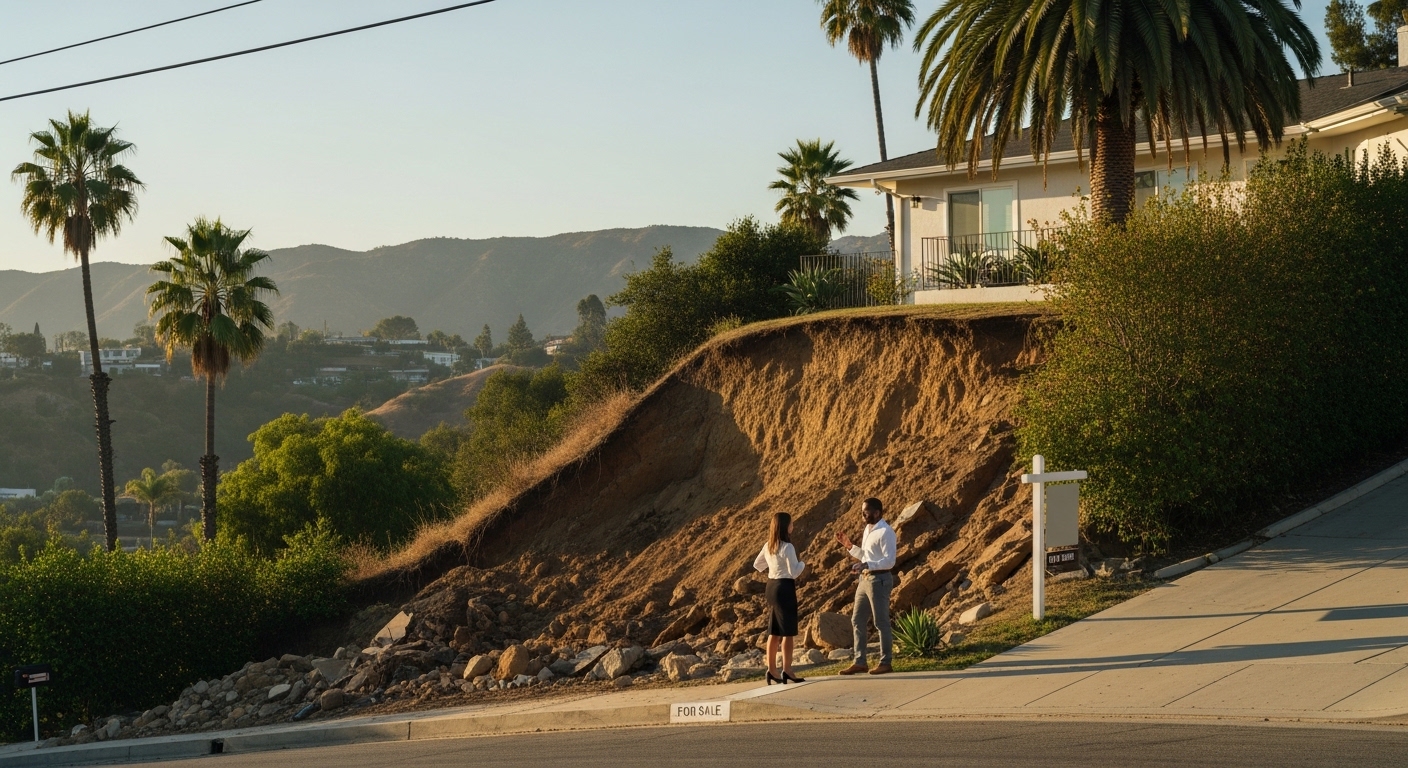
Homes affected by mudslides or significant soil erosion in Los Angeles face a combination of challenges that most traditional buyers are simply not equipped to handle. Structural damage caused by ground movement can be visible or hidden, and lenders will not approve financing on a property until they know the foundation, grading, and land stability issues have been professionally assessed and documented.
Even when the visible damage is repaired, the stigma of a mudslide-affected property lingers. Buyers who do their research will find the history, and many will walk away rather than take on the liability of owning a home on land that has already moved once. That narrows your pool to a very specific type of buyer.
What Makes LA Hillside and Canyon Homes So Vulnerable to Ground Movement
Los Angeles has a geography that naturally concentrates landslide and soil erosion risk in certain areas. Steep hillsides, canyon walls, and areas adjacent to dry creek beds are all locations where soil saturation from rain or ground disturbance can trigger movement. The combination of clay-heavy soils common in many LA hillside areas and the cycle of drought followed by heavy rainfall creates ideal conditions for mudslides and erosion events.
According to the U.S. Geological Survey Landslide Hazards Program, Southern California is one of the most landslide-prone regions in the United States, with hillside development in areas with clay-rich soils and steep slopes presenting ongoing risk during wet seasons. Homes in these areas carry a permanent risk profile that does not go away even after individual events are remediated.
The Most Common Types of Damage Sellers Deal With After a Mudslide or Erosion Event
When a mudslide or soil erosion event affects a Los Angeles home, the damage can take many forms. Here is what sellers in this situation most commonly deal with:
- Foundation damage from differential settlement caused by soil movement under or adjacent to the structure
- Retaining wall failure where walls designed to hold back soil have cracked, tilted, or collapsed partially or fully
- Slope instability on the lot itself, where the graded slope continues to shift and threatens the home or adjacent structures
- Site drainage failures where drainage systems designed to manage water flow have been compromised by ground movement
- Interior structural damage including cracked drywall, sticking doors, uneven floors, and cracked tile that reflects foundation movement
- Access damage where the driveway, stairs, or walkways to the home have been damaged or destabilized by the event
How Cash Buyers Evaluate Mudslide-Affected Homes in Los Angeles
Experienced cash buyers who purchase distressed properties in Los Angeles have a different framework for evaluating homes affected by mudslides or soil erosion than traditional buyers do. They are not looking for a move-in ready home. They are evaluating the land, the structure, the cost of remediation, and the long-term potential of the property once the issues are addressed.
A buyer in this space starts by understanding the scope of the soil issue. Is it a one-time event that has been stabilized, or is there ongoing movement? What does a geotechnical assessment show about the underlying land stability? What will it cost to bring the site back to a stable, buildable condition? Those answers drive the offer more than the condition of the house itself.
What to Have Ready Before You Contact a Buyer About a Mudslide-Damaged Property
The more information you can provide upfront about the event and the current condition of the property, the faster a serious buyer can evaluate and make an offer. Here is what buyers will want to know:
| Information Type | Why Buyers Need It | Where to Find It |
|---|---|---|
| Geotechnical or soil report | Shows the cause and extent of ground movement | Previously prepared by engineer or geologist |
| Structural inspection report | Documents damage to foundation and structure | Licensed structural engineer |
| City or county inspection records | Shows any red tags, yellow tags, or violations | Local building department |
| Insurance claim history | Documents the event and any prior remediation | Your insurance carrier |
| Remediation work completed | Shows what has already been done to stabilize the site | Contractor invoices and permits |
What the Offer Price Looks Like on a Mudslide-Affected LA Home
The offer price on a mudslide or erosion-damaged home in Los Angeles reflects the cost of bringing the property back to a stable, usable condition deducted from what the property would be worth once remediated. The larger and more uncertain the remediation cost, the larger the deduction from the stabilized value.
Sellers should understand that the offer will be significantly lower than what a comparable undamaged home in the same neighborhood would sell for. But it will also be faster, cleaner, and not contingent on financing or insurance approvals that may be impossible to obtain for a property with known ground movement history.
California Disclosure Requirements When Selling a Mudslide-Affected Home
California law requires full disclosure of all known material facts affecting a property, and mudslide damage or soil erosion history absolutely qualifies. You are required to disclose the event, any damage it caused, any remediation work that was done, and the current status of any ongoing geotechnical concerns to any potential buyer before the sale closes.
According to the California Geological Survey, many parts of Los Angeles are located within mapped landslide zones that carry specific disclosure obligations under California Government Code. Properties in these areas require landslide hazard zone disclosures in addition to the standard property condition disclosures required by California Civil Code.
Experienced cash buyers expect and accept these disclosures. They are not going to be surprised by them. A transparent disclosure process actually speeds up the transaction by giving the buyer everything they need to finalize their offer without extending due diligence timelines.
Getting a No-Obligation Offer on Your Mudslide-Damaged LA Home
Our guide on selling a house in an LA High Fire Hazard Severity Zone covers how cash buyers approach homes with natural hazard histories and required disclosures in Los Angeles. And our post on selling a house as-is in East Los Angeles walks through the as-is sale process for sellers who need to exit without completing major repairs first.
Our team at Buy Your Properties purchases homes throughout Los Angeles, including those affected by mudslides, landslides, and soil erosion. Reach out through our contact page and we will evaluate your property and get you a realistic offer within 24 to 48 hours.
According to the National Association of Realtors, natural disaster-affected properties represent a consistent and significant segment of distressed real estate transactions, with experienced investors and cash buyers playing a key role in purchasing these homes and facilitating the recovery of affected neighborhoods.
Conclusion
Selling a Los Angeles home affected by a mudslide or soil erosion is genuinely hard through a traditional listing. The buyer pool is narrow, financing is nearly impossible to obtain, and the disclosure requirements can scare off buyers who are not prepared for what they are taking on. But experienced cash buyers who specialize in distressed and hazard-affected properties in Los Angeles can evaluate these situations accurately and move quickly.
Get your documentation together, be fully transparent about the history and current condition, and reach out to buyers who already know how to handle this type of property. The right buyer will give you a fair offer and a fast path out of a very difficult situation.
Frequently Asked Questions
Can I sell a house in Los Angeles that has been damaged by a mudslide?
Yes. You can sell a mudslide-damaged home in Los Angeles, but the buyer pool is limited primarily to cash buyers and experienced investors who know how to evaluate and remediate these properties. Traditional buyers using mortgage financing will not be able to purchase a home with known unresolved structural or geotechnical issues. Being transparent about the damage, providing any available inspection or geotechnical reports, and working directly with a cash buyer gives you the fastest and most realistic path to closing.
What do I have to disclose when selling a mudslide-affected home in California?
California requires disclosure of all known material facts, which includes the mudslide event itself, any structural or foundation damage it caused, any remediation work that was completed, and any ongoing geotechnical concerns. Properties in mapped landslide zones also require specific Natural Hazard Disclosure zone notifications. Buyers who understand distressed properties expect these disclosures and are not deterred by them when they have been documented accurately.
How does a cash buyer determine what to offer on a mudslide-damaged LA home?
A cash buyer starts with the stabilized value of the home, which is what it would be worth once all geotechnical, structural, and drainage issues have been fully remediated. From that number, they deduct the estimated cost of the required remediation work, plus a return for the risk and time involved in completing that work. The resulting number is the maximum they can offer today and still achieve a reasonable return on the investment.
Will a traditional lender finance the purchase of a mudslide-damaged home in LA?
In most cases, no. Traditional mortgage lenders require that the property be in habitable condition and free of known structural or geotechnical hazards before they will approve a loan. A home with known mudslide damage, an unresolved foundation issue, or documented slope instability will not meet standard lender underwriting criteria. This is one of the primary reasons why cash buyers are the most realistic option for selling a mudslide-affected home quickly.
How long does it take to sell a mudslide-damaged home in Los Angeles to a cash buyer?
An experienced cash buyer can typically make an offer on a mudslide-damaged home in Los Angeles within 24 to 48 hours of receiving basic property information, including any available inspection or geotechnical reports. If the offer is accepted, most sales close in 14 to 21 days. This is dramatically faster than a traditional listing, which may never close at all if the buyer pool is too narrow or financing is unavailable for the property.