
A vacant retail space or strip mall sitting empty in Los Angeles County is costing you money every single month. Property taxes, insurance, maintenance, and the opportunity cost of capital that is tied up in a non-performing asset add up fast. If you are ready to sell and move on, the good news is that there are real buyers for vacant commercial retail properties in this market, even when demand for retail space has shifted in recent years.
What Makes Vacant Retail in LA County Different to Sell
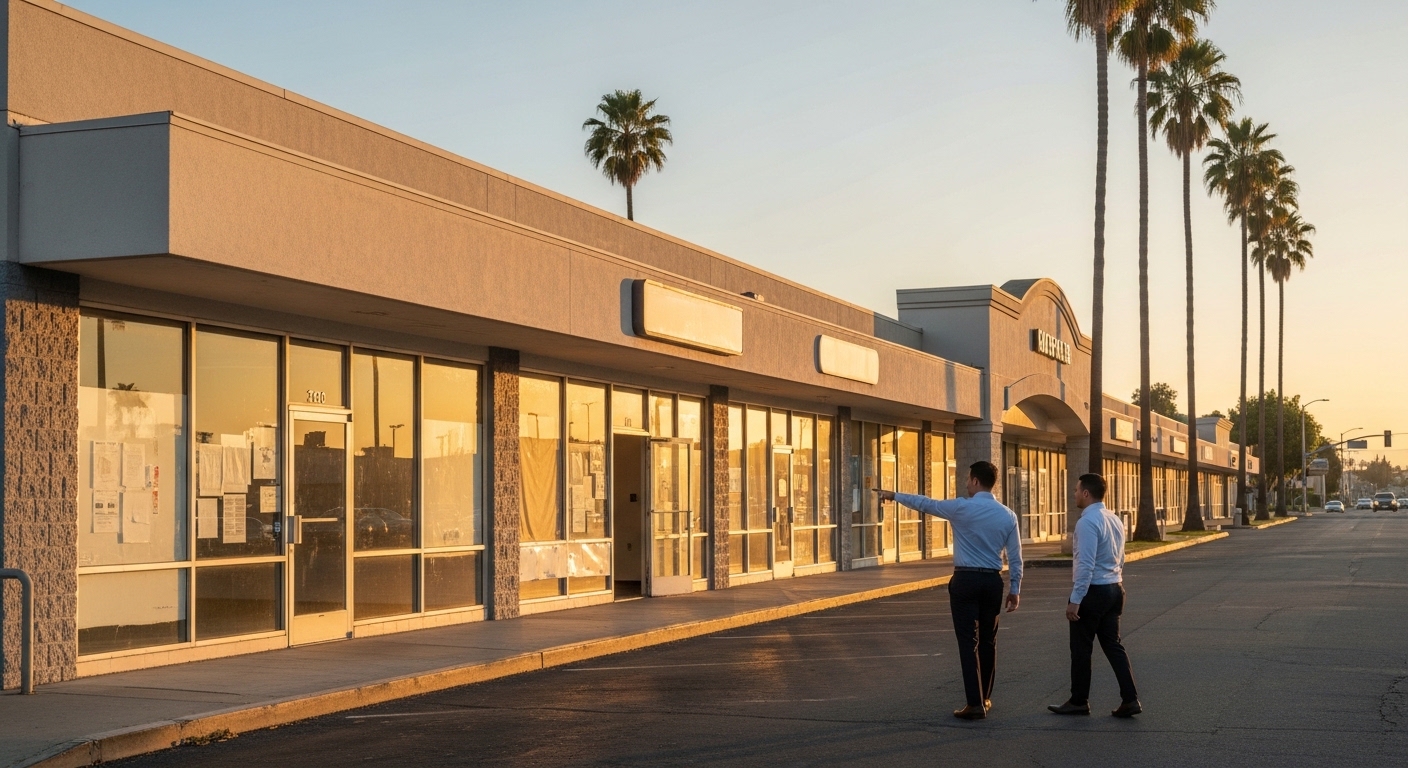
A vacant retail space or strip mall comes with a specific set of challenges that do not apply to occupied commercial properties or residential real estate. There is no rent roll to show a buyer. There is no income stream to run a cap rate analysis on. The valuation is driven entirely by the property’s physical characteristics, its location, the land value, and what a buyer believes they can do with it.
That changes who is interested in the property. Buyers of vacant retail are not income investors looking for a stabilized cash flow. They are typically value-add investors who plan to lease up the space, owner-users who want to occupy the space for their own business, developers who see redevelopment potential, or opportunistic buyers who are purchasing at a discount and planning to hold until conditions improve.
Why Retail Vacancy Has Changed the Buyer Pool in Los Angeles County
The retail market in Los Angeles County, like retail markets across the country, has gone through significant changes since the acceleration of e-commerce shifted consumer habits. Strip malls and standalone retail buildings that once had reliable national tenants have faced vacancy challenges as those tenants have downsized, gone online, or closed entirely.
That shift has created a more complex market for vacant retail sellers. There are still buyers, but they tend to be more selective about location, zoning, and the property’s potential for alternative uses. A well-located vacant retail property on a high-traffic corridor in an LA County city still attracts strong interest. A property in a secondary location with limited visibility and aging infrastructure is a harder sell but not an impossible one.
What Buyers Look for in a Vacant Retail Space or Strip Mall in LA County
Understanding what drives buyer interest helps you position your property correctly and set realistic expectations about price and timeline. Here is what matters most to the buyers actively purchasing vacant retail in Los Angeles County:
- Traffic counts and visibility: High-traffic corridors with good street visibility attract the widest range of buyers, including owner-users who need customer access.
- Zoning flexibility: Properties zoned for multiple uses or located in areas where alternative uses like residential conversion are feasible attract developer interest in addition to retail buyers.
- Parking availability: Strip mall properties with adequate parking remain more attractive than those with limited or difficult parking access.
- Building condition: Buyers factor deferred maintenance into their offer, but major structural issues or significant code violations create additional risk that reduces the buyer pool further.
- Lot size and configuration: Larger lots or those with redevelopment potential often appeal to developers who may value the land more than the existing structure.
- Lease potential: Even for vacant properties, a buyer’s ability to estimate achievable market rent in the area affects how they value the property.
How Vacant Retail Properties Are Valued in Los Angeles County
Without an active income stream, vacant retail properties in LA County are typically valued using one of three approaches. The first is a sales comparison approach, where the property is compared to similar vacant retail transactions in the area. The second is the income approach based on potential market rent the space could achieve, rather than actual current income. The third is a land value approach for properties where the existing structure has limited value and the buyer is primarily interested in what can be built on the site.
For strip malls specifically, the comparison approach is most common. Buyers and brokers look at recent sales of similar sized properties in similar locations and adjust for condition, parking, visibility, and zoning. Properties in high-demand areas like the San Gabriel Valley, the South Bay, and the San Fernando Valley tend to hold value better than secondary locations.
The Most Common Reasons Owners Sell Vacant Retail in LA County
Sellers of vacant retail in Los Angeles County come from a wide range of circumstances. Understanding which situation most closely matches yours helps clarify which type of buyer and which timeline makes the most sense for you.
- Anchor tenant departure that triggered a domino effect of co-tenant vacancies in a strip mall
- Inherited commercial property that the new owner has no interest in operating or leasing
- Redevelopment of a nearby area that has shifted foot traffic away from the property’s location
- Retirement from commercial property ownership after years of active management
- Financial pressure requiring liquidity from a non-performing asset
- Partnership dissolution requiring a clean sale to distribute proceeds among multiple owners
| Seller Situation | Best Buyer Type | Expected Timeline |
|---|---|---|
| Vacant strip mall, high-traffic location | Owner-user or value-add investor | 60 to 90 days with right buyer |
| Vacant strip mall, secondary location | Opportunistic investor or developer | 90 to 180 days or more traditionally |
| Single vacant retail pad | Owner-user, franchise operator, or developer | 45 to 90 days with right buyer |
| Inherited or distressed retail property | Cash buyer, as-is purchase | 30 to 45 days |
Can You Sell a Vacant Strip Mall Faster Through a Cash Buyer?
Yes, and this is often the right path for sellers who need liquidity quickly or who do not want to manage a long commercial listing process. Cash buyers and investors who focus on vacant commercial retail in Los Angeles County do not need income documentation to make an offer. They evaluate the property based on location, zoning, condition, and comparable sales, and they can often close in 30 to 45 days without the extended due diligence period that commercial lenders require.
According to the National Association of Realtors Commercial Division, cash buyers continue to represent a significant portion of commercial real estate transactions, particularly for smaller retail properties and strip centers that are below the threshold that institutional buyers focus on. That is good news for individual owners of vacant retail in LA County who want a faster exit than a traditional listing provides.
How to Sell Your Vacant Retail Property in LA County Without a Long Wait
The fastest path to selling a vacant retail space or strip mall in Los Angeles County is to reach out directly to buyers who are already looking for this type of property. That means investors, developers, and commercial buyers who are active in your specific submarket, not a general commercial listing that sits on the market for months waiting for the right buyer to find it.
Provide basic information about the property upfront. Know the address, the square footage, the lot size, the zoning, the traffic count if you have it, and the current condition of the building. The more specific information you can share, the faster a serious buyer can evaluate whether the property fits what they are looking for and make an offer.
Getting the Right Buyer for Your LA County Retail Property
Our guide on selling an LA apartment building with deferred maintenance covers how cash buyers approach commercial properties with condition issues, which applies directly to vacant retail buildings with deferred upkeep. And our post on selling a house as-is in East Los Angeles gives you a sense of how the as-is sale process works for sellers who want to exit without making repairs first.
Our team at Buy Your Properties Commercial purchases vacant retail spaces and strip malls throughout Los Angeles County. Reach out through our contact page and we will evaluate your property and get you a realistic offer within 48 to 72 hours.
The U.S. Small Business Administration is a useful resource for understanding what types of owner-users and small business buyers access commercial real estate financing, which can help you understand the range of potential buyers for your vacant retail space beyond just investors and developers.
The California Association of Realtors publishes ongoing market data on commercial property sales throughout California, including Los Angeles County, which can help you understand current pricing trends for retail properties in your area before you start the selling process.
Conclusion
A vacant retail space or strip mall in Los Angeles County is a non-performing asset that costs you money every month it sits empty. The right buyer, whether that is an owner-user, a developer, or a cash investor, can close faster than most commercial sellers expect if you reach out directly rather than waiting for a traditional listing to generate interest over months.
Know what your property is worth based on comparable sales in the area, be upfront about its condition and zoning, and focus your outreach on buyers who are already active in the LA County commercial retail market. The faster you connect with the right buyer, the sooner you stop paying to hold a property that is not generating any income.
Frequently Asked Questions
How is a vacant retail property valued in Los Angeles County?
Vacant retail properties in LA County are typically valued using a sales comparison approach based on recent comparable transactions, an income approach based on estimated market rent the space could achieve, or a land value approach if the property’s redevelopment potential exceeds the value of the existing structure. The most common method for strip malls is the sales comparison approach, adjusted for location, condition, visibility, parking, and zoning.
Are there buyers for vacant strip malls in secondary locations in LA County?
Yes, though the buyer pool is narrower than for well-located properties. Opportunistic investors and developers who specialize in repositioning underperforming retail assets are the most likely buyers for secondary location properties. Cash buyers who can acquire at a discount and hold for future appreciation or redevelopment opportunities are also active in this segment. The price will reflect the location challenges, but sales are absolutely achievable.
How long does it typically take to sell a vacant retail property in Los Angeles County?
A traditional commercial listing for a vacant retail property or strip mall in LA County can take six months to over a year depending on the property’s location and condition. Cash buyers and direct investors who are already looking for this type of asset can typically make an offer within 48 to 72 hours of receiving basic property information and close in 30 to 45 days without the extended due diligence process that commercial lenders require.
Do I need to make repairs before selling my vacant retail space in LA County?
No. Cash buyers and investors who purchase vacant retail properties in Los Angeles County account for deferred maintenance and necessary repairs in their offer price. You are not required to renovate or upgrade the property before selling. Being upfront about the building’s condition allows buyers to make accurate initial offers that are less likely to change after inspection, which leads to smoother and faster closings.
What zoning issues should I know about before selling a vacant retail property in LA County?
Zoning is one of the first things buyers of vacant retail properties investigate. Understanding what uses are permitted by right on your property and whether there are overlay zones that allow additional uses, such as residential or mixed-use development, is important context to share with potential buyers. Properties in areas where zoning supports adaptive reuse or density increases attract a wider range of buyers and often command stronger prices than those limited to traditional single-use retail.