
Most people think owning real estate means owning the land and the building. But what if I told you some of the most famous buildings in the world are sitting on land someone else owns? That’s exactly what a ground lease is — and once you understand how it works, it might just change how you think about real estate investing.
What Is a Ground Lease?
A ground lease (also called a land lease) is a long-term agreement where the landlord owns the land but rents it to a tenant who builds and owns the structure on top of it. The tenant pays ground rent to the landowner, usually monthly or annually, for the entire lease term.
What makes this different from a regular lease? In a normal rental, you use someone else’s space for a short time. In a ground lease, you might be renting the land for 50, 75, or even 99 years. And during that time, you own whatever you build on it. At the end, the improvements typically revert back to the landowner.
According to The Motley Fool, a great example is American Tower, a company that owns tens of thousands of cell tower locations — but in most cases, the company doesn’t own the land those towers sit on. Instead, they use ground leases to access those locations.
How Does a Ground Lease Work?
Here’s the basic flow. A developer or business wants to build on a prime piece of land — maybe in a city center, on a waterfront, or near a transit hub. The landowner doesn’t want to sell, but they’re happy to lease. So they sign a ground lease agreement that typically lasts 50–99 years.
The tenant (developer) then builds on the land. They own the building and any improvements during the lease. They pay all the bills too — property taxes, insurance, and maintenance. Most ground leases are structured as triple net (NNN) leases, meaning the tenant handles nearly all expenses.
I once worked with a small business owner who asked me why a restaurant on prime downtown land was paying rent when it looked like they owned the place. The answer was simple: they owned the building, but the land underneath was on a 75-year ground lease. To them, it made total sense — they couldn’t have afforded that land outright.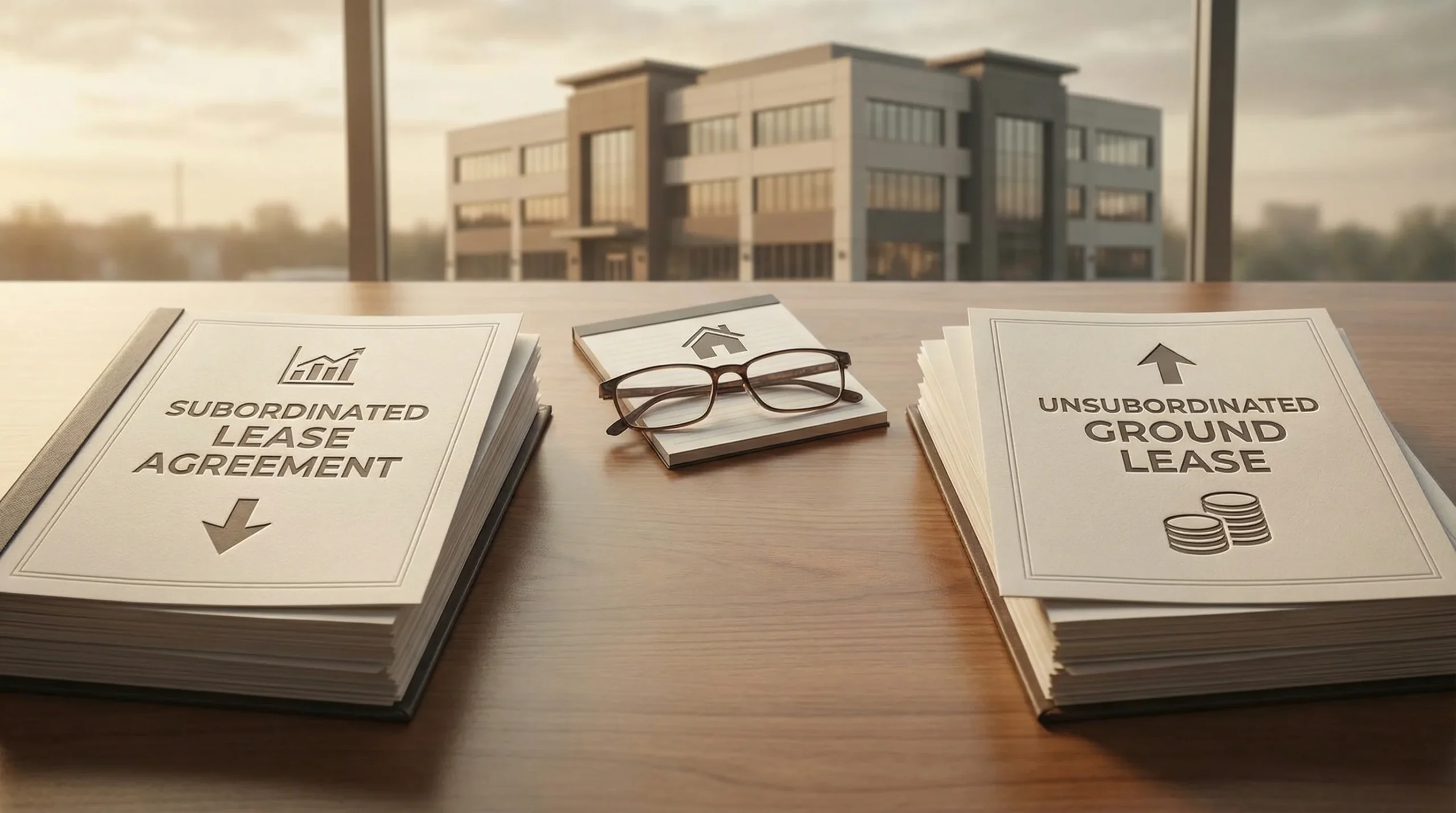
Subordinated vs. Unsubordinated Ground Leases
This is one of the most important distinctions in any ground lease deal, and it affects how financing works.
In a subordinated ground lease, the landowner agrees that the lender can have first claim on the property if things go wrong. This makes it easier for the tenant to get a construction loan or leasehold mortgage, because the lender has collateral. But it puts the landowner at risk of losing their land if the tenant defaults.
In an unsubordinated ground lease, the landowner’s position is protected. If the tenant can’t pay their debts, the lender can’t take the land. This is safer for the landowner but makes financing harder for the tenant.
Key Terms in a Ground Lease Agreement
Before you sign anything, you need to understand the moving parts. Here’s a quick overview of the main terms you’ll see:
| Term | What It Means |
|---|---|
| Lease Term | Duration of the lease, typically 50–99 years |
| Ground Rent | Periodic payment from tenant to landowner |
| Escalation Clause | How rent increases over time (CPI, fixed %, or market) |
| Reversion | Improvements pass to landlord at lease end |
| Subordination | Whether lender or landlord has first claim |
| Purchase Option | Tenant’s right to buy the land at a set price |
The escalation clause is something to watch closely. If the rent resets to market value every 10–20 years, your payments could jump dramatically. This has caused real problems for co-op buildings in New York City where land rent reviews made monthly costs unaffordable for residents.
Benefits of a Ground Lease for Landlords and Tenants
Both sides can win with a ground lease — if the deal is structured properly. The reasons each party might prefer this over a straight sale are actually pretty compelling.
Advantages for Landlords (Landowners)
Here’s what landowners gain:
- They keep ownership of the land — forever
- They earn steady ground rent income for decades without managing a building
- They avoid paying capital gains tax from a sale
- At the end of the lease, they get back a fully developed, improved property
- They can include rent escalation clauses to protect against inflation
- Entities like family trusts, churches, or government bodies that can’t sell land can still earn income from it
According to Agora Real Estate, ground leases are particularly attractive to family trusts and REITs because of their lower risk and long-term stability. The tenant is responsible for all expenses, which means a nearly hands-off investment for the landowner.
Advantages for Tenants (Developers and Businesses)
Tenants benefit too. Prime land in a city center can cost millions to buy outright. A ground lease gives access to that land without the massive upfront cost. Instead, they use that saved capital to invest in the building itself.
They can also deduct lease payments as a business expense and may be able to depreciate the building improvements they make. For a business looking to grow in a high-demand area, this kind of capital preservation matters a lot.
Risks and Downsides to Watch Out For
Like any real estate deal, ground leases aren’t perfect. There are some real risks, especially if you don’t read the fine print carefully.
The biggest risk is what happens when the lease gets close to expiring. If there are only 20 years left on a ground lease, mortgage lenders often won’t finance a deal. The loan term needs to be shorter than the remaining lease term. Buildings on expiring ground leases can become very hard to sell or refinance.
Another risk is the rent reset. Some older ground leases have clauses that let the landowner reset the rent to current market rates every few decades. If land values have shot up, that can be a nasty shock. I’ve seen investors inherit properties with ground leases and not realize the rent was about to triple. Due diligence is not optional here.
According to LoopNet, it’s critical to understand the rent structure and escalation clauses before entering any ground lease deal, as these directly affect the long-term financial viability of the investment. If you’re exploring creative property strategies, our post on buying property with tax liens might also interest you.
Is a Ground Lease Right for You?
That depends on your goals. If you’re a landowner with a prime piece of property that you want to keep in the family, a ground lease can generate income for generations without ever giving up ownership. If you’re a developer or business owner who needs access to a great location without the capital to buy the land, a ground lease opens doors that would otherwise be closed.
The key is to get a real estate attorney involved from the start. Ground leases are not DIY contracts. Every clause matters — from the rent escalation to the reversion terms to the subordination language. If you’re buying an existing property that has a ground lease already attached to it, make sure you know exactly how much time is left and what the rent terms look like.
Looking for help with your next property decision? Check out our resources on buying your first home in 2026, explore our property selling options, or contact us directly and we’ll help you find the right path.
Conclusion
A ground lease is a powerful — and often misunderstood — real estate tool. It separates ownership of the land from ownership of the building, creating a unique arrangement that can benefit both sides when structured thoughtfully. Whether you’re a landowner looking for passive income, a developer seeking access to prime real estate, or an investor evaluating a property with an existing ground lease, understanding the mechanics is everything. Always read the fine print, always talk to a legal professional, and always know what happens when the lease ends.
Frequently Asked Questions
Who owns the building in a ground lease?
The tenant owns the building and any improvements made during the lease term. The landlord owns only the land. When the lease ends, the improvements typically revert to the landowner unless the lease says otherwise.
How long does a ground lease typically last?
Most ground leases run between 50 and 99 years. This gives tenants enough time to build and recover their investment, while giving landowners a very long-term income stream.
Can a ground lease tenant get a mortgage?
Yes, but it depends on the type of lease. In a subordinated ground lease, the tenant can use the leasehold interest as collateral for a construction loan or mortgage. Lenders typically require the remaining lease term to be longer than the loan term.
What happens when a ground lease expires?
When the lease term ends, the building and all improvements typically revert to the landowner. Modern leases often include renewal options or purchase options that give tenants the chance to extend the arrangement or buy the land before the expiration date.
Is a ground lease a good investment?
It can be — for the right investor. Landowners enjoy steady, passive income and long-term land appreciation without the headaches of managing a building. But both buyers and tenants need to carefully review rent escalation clauses and lease expiration terms before committing.