
You pay rent. You pay groceries. And then comes the property tax bill — and your jaw drops. If you own a home, property taxes can feel like money you never get back. So it makes sense to ask: are there any US states with no property tax? The short answer might surprise you.
Do Any US States Have Zero Property Tax in 2026?
Here’s the truth — no US state has completely eliminated property tax for all homeowners. Every state in the country has some form of real property tax. The difference is how much they charge and who gets breaks.
Some states charge very little. Others charge a lot. And a handful of states offer programs that can bring your effective tax rate down to almost nothing — especially for seniors and veterans.
Why No State Can Fully Eliminate Property Tax
Property taxes fund things like local schools, fire departments, police, and public roads. These services cost real money. Without property taxes, local governments would have almost no way to pay for them.
That’s why even states that want to lower taxes for residents keep some form of property tax system in place. They just structure it differently. Some shift the burden to sales or income taxes instead.
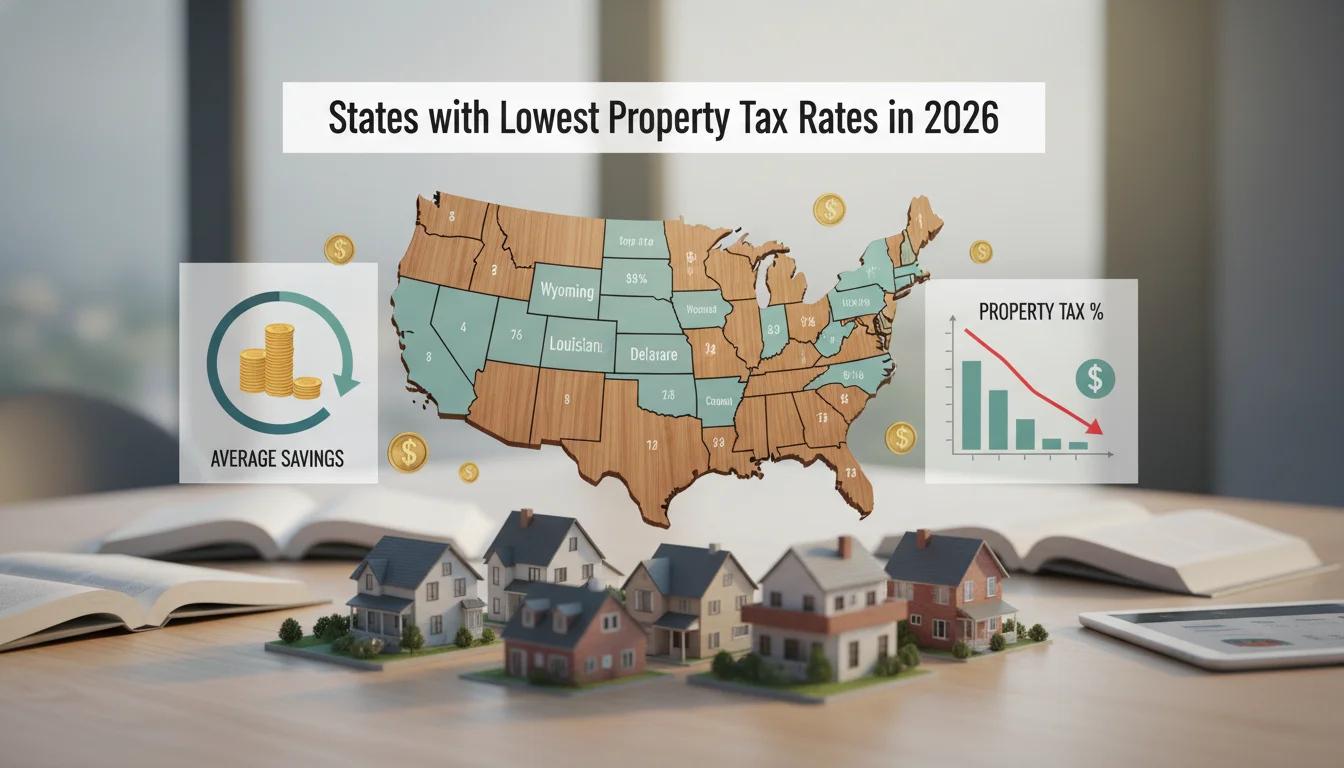
States with the Lowest Property Tax Rates in 2026
I once helped a friend compare homes across three different states. We were shocked at how different the annual property tax bills were — same home value, wildly different costs. That research taught me more about property tax rates than anything else.
While no state has zero property tax, some come very close. According to data from the Tax Foundation, here are the states with the lowest effective property tax rates in 2025–2026:
- Hawaii — 0.27% to 0.31% effective rate (lowest in the nation)
- Alabama — 0.38% to 0.41% effective rate
- Colorado — around 0.51% effective rate
- Nevada — about 0.55% effective rate
- South Carolina — around 0.56% effective rate
- Wyoming — about 0.56% effective rate
- West Virginia — around 0.57% effective rate
- Utah — about 0.58% effective rate
Hawaii’s rate looks tiny. But here’s the catch — home prices in Hawaii are extremely high, so the actual dollar amount you pay can still be large even with a low rate.
How Alabama Comes Closest to No Property Tax for Seniors
Alabama is interesting. If you’re 65 or older, Alabama offers a full state property tax exemption on your primary home. That means you pay no state-level property tax at all. You still pay local taxes, but the state portion goes to zero.
This makes Alabama one of the most attractive states for senior homeowners looking to reduce their tax burden. Some counties in Alabama have very low local rates too, so combined, the total can be almost nothing.
States with the Highest Property Tax Rates
On the flip side, some states charge much more. Knowing both ends helps you make better decisions — whether you’re buying a home, investing in real estate, or planning to retire.
Top 5 Highest Property Tax States
According to the US Census Bureau, these states have the highest average effective property tax rates:
| State | Effective Tax Rate | Median Annual Tax |
|---|---|---|
| New Jersey | 2.23% – 2.49% | $9,400+ |
| Illinois | 1.92% – 2.08% | $5,800+ |
| Connecticut | 1.79% – 1.91% | $6,200+ |
| New Hampshire | 1.77% – 1.89% | $6,700+ |
| Vermont | 1.71% – 1.83% | $4,800+ |
Living in New Jersey can mean paying nearly $10,000 a year in property taxes on a median-priced home. That’s a big chunk of your budget every single year.
Property Tax Exemptions That Can Reduce Your Bill to Near Zero
Even though no state eliminates property tax for everyone, many states have strong exemption programs. These programs can bring your actual property tax bill way down — sometimes to nearly nothing.
Common Property Tax Exemption Programs in 2026
Here’s a look at the most common types of property tax exemptions available across the US:
- Homestead exemption — Reduces the taxable value of your primary home. Available in most states.
- Senior citizen exemption — Many states offer deep discounts for homeowners over 65. Alabama, for instance, exempts seniors fully at the state level.
- Veteran exemption — Veterans and disabled veterans often get significant tax relief, sometimes 100% exemption.
- Disability exemption — Homeowners with certain disabilities may qualify for reduced or zero property tax.
- Agricultural exemption — Land used for farming often gets taxed at a much lower rate based on use, not market value.
If you own a home and haven’t applied for your state’s homestead exemption, you may be paying more than you need to. It’s worth checking with your local county assessor’s office.
How Veterans Can Get Close to Zero Property Tax
Some states go very far for veterans. Texas gives 100% property tax exemption to veterans with a 100% service-connected disability rating. Florida does the same. These programs mean some homeowners in these states pay absolutely nothing in property tax — even though the state itself still has a system in place.
According to the US Department of Veterans Affairs, eligible veterans should always check their state’s property tax exemption program because the savings can be substantial and many eligible veterans simply don’t know they qualify.
If you’re thinking about how your property tax bill affects the overall value of owning vs. investing, you might also want to read our post on how to calculate cap rates for investment property — taxes are a big part of that equation.
How Property Tax Affects Real Estate Investing in 2026
If you’re buying property as an investment, property tax rates matter a lot. A high tax bill eats directly into your net operating income (NOI), which affects your cap rate and overall return.
Low Tax States Are Popular with Real Estate Investors
Investors often pay close attention to property tax rates when choosing markets. States like Alabama, Wyoming, and Nevada are attractive partly because their low taxes make cash flow easier to achieve. A rental property that barely breaks even in New Jersey might cash flow well in Alabama.
I’ve talked to investors who chose to buy in lower-tax states specifically to protect their profit margins. When you’re running the numbers on a rental, every dollar of tax you don’t pay is a dollar in your pocket.
Property Tax and the LLC Advantage
Many real estate investors hold properties in an LLC to separate their personal finances from their investments. When you’re calculating property tax as a business expense, having it in an LLC also makes tax accounting cleaner. If you’re thinking about this structure, our post on the benefits of buying property under an LLC is a great place to start.
How to Lower Your Property Tax Bill in Any State
You may not be able to escape property tax entirely, but you can almost always lower your bill. Most homeowners don’t realize how many options they have.
Steps to Reduce What You Owe
- Apply for your state’s homestead exemption if you haven’t already
- Check if you qualify for a senior, veteran, or disability exemption
- Review your property assessment — mistakes are common and can overvalue your home
- Appeal your assessment if it seems too high compared to nearby homes
- Check if any income-based tax relief programs are available in your county
- Ask your local assessor’s office about payment plans or deferral programs
A lot of people just pay what they’re billed without ever questioning it. But assessment errors happen. And when they do, you could be overpaying by hundreds — or even thousands — of dollars a year.
States with Property Tax Freeze Programs for Seniors
Some states let seniors freeze their property tax at a certain level so it never goes up, even if home values rise. States like New Jersey, Tennessee, and Oklahoma offer these programs. It’s one of the best ways for older homeowners to stay in their homes without getting priced out by rising tax bills.
If you’re nearing retirement and planning for long-term costs, this kind of program is worth researching in your specific state. And if you’re not sure where to start, feel free to contact us — we can help point you in the right direction.
Also, if you’re thinking about buying a home soon and want to understand all the financial factors involved, our property selling guide can give you context on how taxes factor into your overall real estate decisions.
Conclusion
There are no US states with zero property tax in 2026. But some states — like Hawaii, Alabama, Colorado, and Nevada — come close with very low effective tax rates. And through exemptions for seniors, veterans, and disabled homeowners, some individuals can get their property tax bill down to nearly nothing. The key is knowing what programs exist in your state and actually applying for them. Don’t just pay what arrives in the mail — do your homework and you might be surprised how much you can save.
Frequently Asked Questions
Is there any US state with no property tax?
No. As of 2026, every US state has some form of property tax. However, states like Hawaii, Alabama, and Colorado have very low effective tax rates, and certain individuals (seniors, veterans, disabled homeowners) may qualify for full exemptions that bring their personal bill to zero.
Which US state has the lowest property tax in 2026?
Hawaii has the lowest effective property tax rate in the nation, ranging from 0.27% to 0.31%. Alabama and Colorado follow closely behind. However, Hawaii’s high home prices mean the actual dollar amount paid can still be significant.
Can seniors avoid property tax completely?
In some states, yes. Alabama offers a full state-level property tax exemption for homeowners aged 65 and older. Other states offer significant reductions. The exemption doesn’t always cover local taxes, but the savings can still be very large depending on where you live.
Do veterans get property tax exemptions?
Yes. Many states offer property tax exemptions for veterans, especially those with service-connected disabilities. Texas and Florida offer 100% exemptions for veterans with a 100% disability rating. Other states offer partial exemptions based on disability level and other factors.
How can I lower my property tax bill?
Start by applying for your state’s homestead exemption if you haven’t already. Check if you qualify for senior, veteran, or disability exemptions. Review your property assessment for errors and appeal it if the value seems too high. Many homeowners overpay simply because they never questioned their assessment.