
If you own raw land in the Santa Monica Mountains and you are thinking about selling it, you need to understand something right away. This is not a simple land sale. The rules that govern what a buyer can do with that land are some of the most detailed and restrictive in all of California, and they affect your sale price, your buyer pool, and your timeline more than almost any other factor.
Why the Santa Monica Mountains Are Different From Other Land
The Coastal Zone and What It Means for Your Property
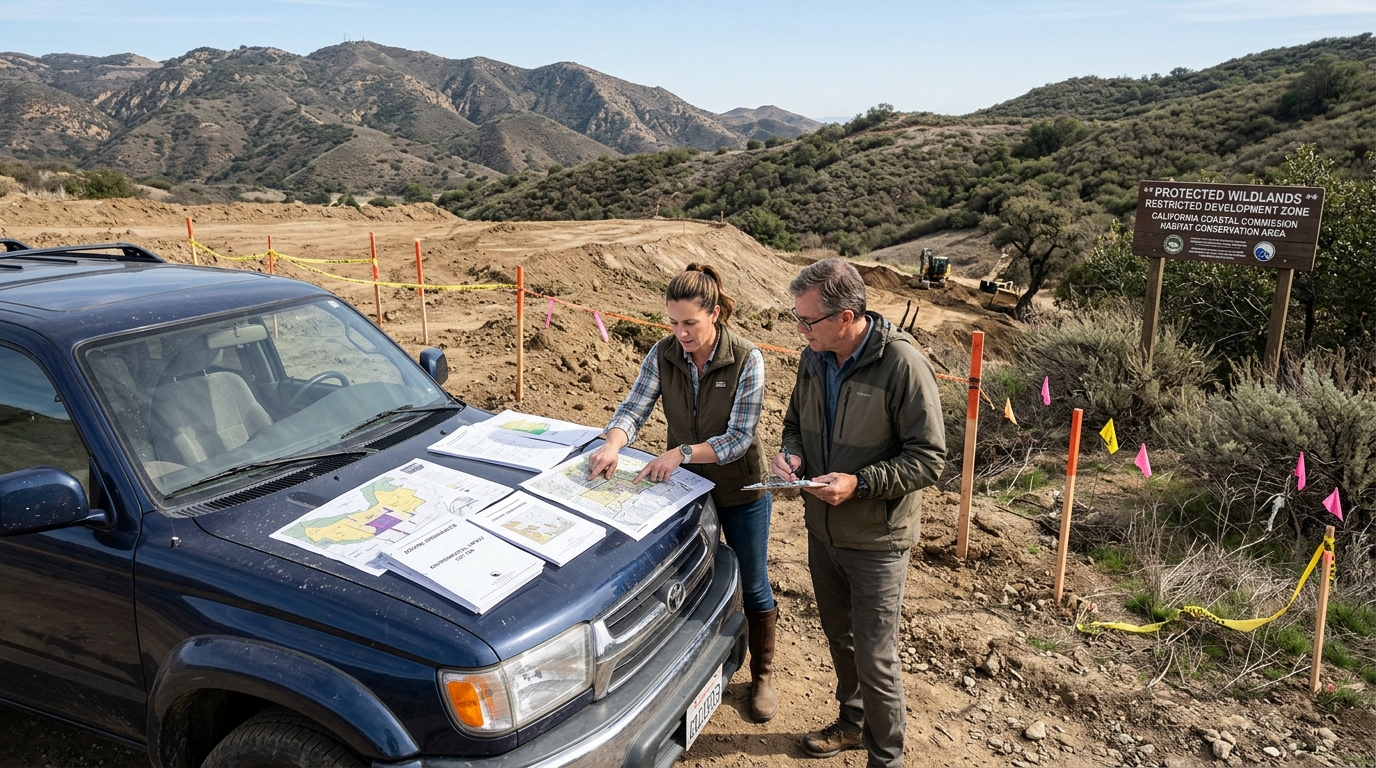
A significant portion of the Santa Monica Mountains falls within what is called the Coastal Zone. This is the area regulated by the California Coastal Act, which the state legislature passed in 1976 to protect coastal resources from development. Within this zone, almost any kind of development requires a Coastal Development Permit (CDP) from either the California Coastal Commission or the local government, depending on whether a Local Coastal Program (LCP) is in place for that specific area.
The unincorporated portion of the Santa Monica Mountains has a certified LCP, which means that permitting authority for most new development has been transferred to Los Angeles County rather than the Coastal Commission directly. However, the Coastal Commission still reviews appeals and retains jurisdiction over certain sensitive areas. According to LA County Planning’s coastal program page, the Santa Monica Mountains LCP was certified in 2014 and covers roughly 81 square miles of unincorporated land in the coastal zone.
Sensitive Resource Areas That Can Block Development
One of the most significant features of the Santa Monica Mountains Land Use Plan is the establishment of three levels of Sensitive Resource Areas. The highest level actually bars any residential or commercial development outright. That is not a permitting hurdle. That is a hard stop.
For a land seller, this matters enormously. If your property is within or adjacent to one of these protected areas, your buyer pool shrinks dramatically. Buyers who were planning to build a home or develop the parcel will walk away. The buyers who remain are typically conservation groups, investment buyers who want the land for recreational use, or people who are comfortable holding land long-term with limited development potential.
Knowing your property’s resource designation before you list is not optional. It is one of the first things any serious buyer will check, and it should be one of the first things you verify with the county before you set your asking price.
The Zoning Picture in the Santa Monica Mountains
Rural-Coastal Zoning and What Buyers See
When the Santa Monica Mountains LCP was certified, it introduced a new zone called Rural-Coastal. This zoning designation was created specifically to ensure that properties in the mountains aligned with the Land Use Plan categories in the LCP. The zone comes with specific rules about density, setbacks, height limits, and the types of uses that are allowed on the land.
Most parcels in this area fall under very low density designations. That means even if a buyer is allowed to build, they may only be able to build one home on a large parcel. Some areas have minimum lot sizes that effectively prevent subdivision. Others have restrictions on grading, vegetation clearing, and impervious surface coverage because of the mountain’s steep terrain and sensitive habitat.
The county uses a zoning lookup tool that buyers and sellers can use to see the specific land use designations for individual properties in the Santa Monica Mountains coastal zone. Using this tool before your listing goes live gives you a much clearer picture of what you can actually tell buyers about the land’s potential.
How the Coastal Development Permit Process Works
Even if your land is zoned to allow development, the buyer still needs to get a Coastal Development Permit before building anything. This is a real regulatory process with timelines, review steps, and the possibility of conditions being attached to any approval. The permit covers things like stream setbacks, erosion control, view protection, fire safety, and protecting wildlife habitat.
According to the Santa Monica Mountains Local Coastal Program page from LA County Planning, Coastal Act policies are the standards used by the Coastal Commission in its coastal permit decisions. These policies address shoreline access, sensitive habitats, visual resources, water quality, and more. A permit that would be straightforward in another part of the county can take significantly longer in the Santa Monica Mountains because of the number of layers being reviewed.
As a seller, you cannot control how long that permit process will take after you sell. But you can help buyers understand what they are walking into. Sellers who prepare honest, clear information about the permitting environment close faster than those who leave buyers to figure it out on their own.
What Buyers Look For and How to Attract Them
Who Is Actually Buying Santa Monica Mountain Land
The buyer pool for raw land in the Santa Monica Mountains is more specific than most sellers expect. You are not going to get a large wave of first-time homebuyers or typical residential buyers. The people shopping for this kind of land generally fall into a few clear groups.
- Buyers who want a private estate lot and are willing to spend years navigating the permitting process to build their dream home
- Investors who want to hold the land and sell it later when regulations or values shift
- Conservation buyers including land trusts and environmental organizations who want to protect the land from development permanently
- Buyers who already own adjacent property and want to expand their holdings
- Agricultural buyers interested in the small-scale farming and ranching uses that the LCP allows in some areas
Each of these buyer types values the land differently and asks different questions. A conservation buyer cares about what habitat is present. An estate builder cares about view corridors and buildable area. An investor cares about future entitlement potential. Knowing which type of buyer your property is most likely to attract helps you market it correctly from the start.
Documents and Disclosures That Speed Up the Sale
Raw land sales in California already require detailed disclosures. Land in the Santa Monica Mountains requires even more because of the Coastal Act overlay, the LCP zoning designations, and the possible presence of sensitive resources on or near the property. Buyers doing due diligence on this kind of land will ask a lot of questions, and having answers ready shortens your sale timeline considerably.
| Document or Information | Why Buyers Need It | Where to Get It |
|---|---|---|
| Current zoning designation | Determines what can be built | LA County Planning zoning lookup |
| LCP land use category | Shows allowed density and uses | Santa Monica Mountains LCP documents |
| Sensitive resource area status | Shows any development prohibitions | LA County Planning coastal GIS tool |
| Previous CDP history | Shows prior permits and conditions | Coastal Commission permit database |
| Access and road status | Confirms legal access to the parcel | Title company and county records |
According to the Special Coastal District Zoning overview from California land use attorneys, Coastal Development Permits in Los Angeles County run for a fixed time, and once they expire, the permit process must begin again. For a buyer planning future development, understanding whether any prior permits on your land are still active is an important disclosure item.
If you have dealt with building permits, code issues, or title complications on your property, our post on selling a property with building code violations will show you how to handle complex disclosure situations with buyers. And if your land situation is tied to a larger portfolio decision, our guide on selling a mixed-use building in Downtown Los Angeles gives context on how regulatory layers affect complex property sales. When you are ready to move forward on your land sale, contact us here and we will work through the specifics with you.
Conclusion
Selling land in the Santa Monica Mountains is genuinely rewarding when done right, but it requires a level of preparation that most land sellers underestimate. The Coastal Zone, the LCP zoning designations, and the Sensitive Resource Area classifications all shape who your buyer is and what they are willing to pay. The sellers who come to market with clean information, honest disclosures, and a realistic understanding of what the land can and cannot do are the ones who close successfully. Take the time to understand your property’s regulatory picture before you list, and your sale will go a lot smoother.
Frequently Asked Questions
Do I need a permit to sell raw land in the Santa Monica Mountains?
No. Selling the land does not require a permit. But the buyer will need to obtain a Coastal Development Permit before doing any development on the property. Knowing this ahead of time helps sellers set realistic expectations for buyers about the timeline between purchase and construction.
What is a Sensitive Resource Area and how does it affect my sale?
Sensitive Resource Areas are designated zones in the Santa Monica Mountains LCP that restrict or prohibit development to protect habitat, water quality, and scenic resources. The highest level designation bars all residential and commercial development. Properties in these zones typically attract conservation buyers rather than developers, which directly affects how you should price and market the land.
How long does a Coastal Development Permit take to get?
It varies. Some permits for smaller, less sensitive projects can move through review in a few months. Others involving more complex sites, appeals, or sensitive resources can take significantly longer. Buyers planning to build should budget extra time for the permitting process in this area.
What is Rural-Coastal zoning and what does it allow?
Rural-Coastal is a zoning designation created specifically for properties in the Santa Monica Mountains coastal zone. It establishes low-density land use rules with specific limits on grading, vegetation clearing, setbacks, and lot coverage. The allowed uses vary by parcel, and buyers should review the specific zoning for any property before making an offer.
Who should I work with to sell land in the Santa Monica Mountains?
You should work with a real estate professional who has specific experience selling coastal and mountain land in Los Angeles County. This type of sale requires knowledge of the LCP, coastal permitting, and how to reach the right buyer types including estate builders, conservation groups, and long-term investors.