
Finding out your home has foundation issues can feel like the ground is literally shifting under your feet. But here’s the truth — you can still sell. In fact, thousands of homes with foundation problems sell every year across the U.S. You just need to know your options, be honest, and price the home right.
What Are Foundation Issues and Why Do They Matter?
Common Signs of Foundation Problems
Not every crack in a wall means your house is falling apart. Some cracks are just cosmetic — small, thin lines from normal settling. Others are serious warning signs that need professional attention.
Here are the most common signs that point to real structural damage:
- Doors and windows that stick or won’t close properly
- Cracks in walls, floors, or the foundation itself — especially diagonal or stair-step cracks
- Floors that slope or feel uneven when you walk
- Gaps between walls and the ceiling or floor
- Water in the basement or crawl space
- Bowing or bowing walls in the basement
I once walked through a home where the front door wouldn’t latch properly and the kitchen floor had a noticeable lean. The owner had no idea those were signs of a shifting foundation. A licensed structural engineer confirmed it within an hour. Knowing early gives you more options.
How Foundation Problems Affect Home Value
According to Redfin, foundation issues can reduce a home’s market value by 10–15% or more. That’s a big hit. But what most sellers don’t realize is that hiding the problem makes things worse — not better.
Buyers will almost always request an inspection. If an inspector finds foundation damage that wasn’t disclosed, the deal can collapse instantly. Worse, you could face legal trouble after closing. Transparency is always the smarter path.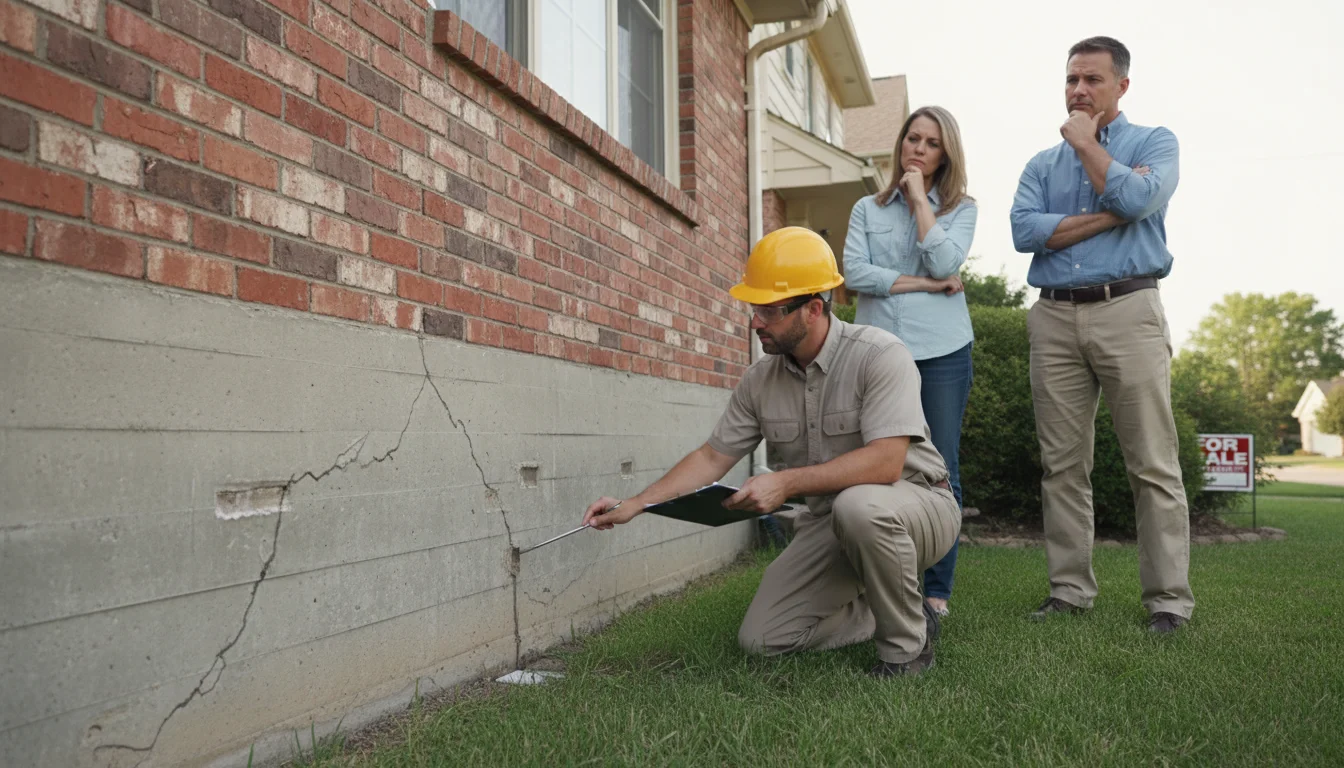
Should You Fix the Foundation Before Selling?
When Fixing Makes Sense
If the damage is minor and the repair cost is low — say under $10,000–$20,000 — fixing it before listing can be worth it. A repaired home qualifies for traditional financing, attracts more buyers, and can sell at or near full market value.
Most foundation repairs range from $5,000 to $35,000 depending on the severity. In extreme cases, costs can reach $40,000–$80,000. If you’re in a strong seller’s market and your home has good equity, spending on repairs can pay off.
When Selling As-Is Makes More Sense
Honestly, not everyone has the time or money to fix a major foundation problem. If you’re dealing with a divorce, an inherited property, a job relocation, or financial hardship, a fast sale may matter more than squeezing out the highest price.
Selling as-is means you skip the repairs, lower the price to reflect the condition, and let the buyer take on the work. You save time, avoid stress, and still close. It’s a real, practical option — not a last resort.
Understanding how property condition affects home value helps you decide whether repairs will pay off or whether an as-is sale makes more financial sense for your situation.
Your Options for Selling a Home With Foundation Problems
Selling to a Cash Buyer
Cash buyers are by far the easiest option for homes with foundation problems. They don’t need a lender to approve the home’s condition. No appraisal. No lender-required repairs. They just make an offer and buy it as-is.
This is the most common route for sellers who need to move quickly or can’t afford to fix the problem. A good cash home buyer will look at the home, factor in the cost of repairs, and make you a fair offer based on the current condition.
If you’re in that position right now, contact us today for a no-pressure cash offer on your home — no repairs needed.
Listing With a Real Estate Agent
You can still list a home with foundation damage using a real estate agent. However, the pool of buyers gets smaller. Most first-time homebuyers using FHA, VA, or USDA loans won’t qualify because lenders won’t approve homes with serious structural issues unless repairs are made first.
Your best audience becomes real estate investors, cash buyers, and buyers using renovation loans like the FHA 203(k). A skilled agent who has experience with distressed properties can market to this group effectively.
Pricing and Disclosing a Home With Foundation Issues
How to Price It Right
Pricing is where many sellers get stuck. Here’s a simple way to think about it: start with what similar homes in your area sell for in good condition — those are your comps. Then subtract the estimated cost of foundation repair.
If comps show $300,000 for move-in ready homes and your foundation needs $30,000 in repairs, pricing around $260,000–$275,000 is usually fair. Some sellers try to price too close to full market value, and the home just sits. Be realistic upfront — it saves you months of headaches.
| Repair Severity | Estimated Cost | Recommended Price Adjustment |
|---|---|---|
| Minor cracks (cosmetic) | $500–$3,000 | Minimal — disclose and note |
| Moderate cracking/water | $5,000–$15,000 | Reduce price by repair cost + buffer |
| Bowing walls/sinking | $15,000–$40,000 | Significant reduction; target cash buyers |
| Major structural failure | $40,000–$80,000+ | Cash-only sale; deep discount likely |
Your Legal Duty to Disclose
In almost every state in the U.S., you are legally required to disclose known material defects — and foundation problems absolutely count. This isn’t optional.
According to the Consumer Financial Protection Bureau (CFPB), buyers have the right to receive full and accurate information about a property’s condition before purchasing. Hiding known defects can lead to lawsuits after closing — and that’s a far worse outcome than a lower sale price.
Always be upfront. Share any inspection reports, repair estimates, or engineering assessments you have. Buyers who want as-is homes appreciate honesty. It builds trust and keeps deals from falling apart.
Getting a Structural Engineer Inspection
Why You Need a Professional Assessment
Before you do anything else — before you price, before you list, before you call a buyer — hire a licensed structural engineer. Not a handyman. Not a contractor. A structural engineer gives you an official assessment of the damage, what caused it, and what it will cost to fix.
That report becomes your best friend during the sale. It shows buyers exactly what they’re dealing with. It shows you’re not hiding anything. And it gives cash buyers the data they need to make a fast, informed offer.
What Happens If You Skip the Inspection
If you skip the professional inspection and a buyer’s inspector finds something serious during the sale, the deal often collapses. Or the buyer comes back demanding a massive price cut at the last minute — sometimes called a renegotiation — and you have no leverage to push back.
Getting ahead of the issue puts you in control. You already know what it costs. You’ve priced the home fairly. There are no surprises. That’s the kind of transparent sale that actually closes on time.
You can learn more about the common situations that lead homeowners to sell quickly and whether your situation calls for a fast, as-is sale over a traditional listing.
According to the U.S. Department of Housing and Urban Development (HUD), buyers of distressed properties should always conduct thorough due diligence — and that same rule applies to sellers preparing their homes for market.
Conclusion
Selling a house with foundation issues is absolutely possible. The key is to know what you’re dealing with, be honest with buyers, price the home realistically, and choose the right type of buyer for your situation. For most people with serious structural damage, a cash buyer is the fastest, simplest path to a clean sale. If your home needs major work and you want to sell without the stress of repairs, we’re here to help. Reach out today for a free, no-obligation offer.
Frequently Asked Questions
Can I sell a house with foundation issues without fixing them?
Yes. You can sell as-is by pricing the home to reflect the damage. Cash buyers and real estate investors regularly purchase homes with foundation problems without requiring any repairs first.
Do I have to tell buyers about foundation problems?
Yes. In almost every U.S. state, you are legally required to disclose known material defects, including foundation damage. Hiding this can lead to lawsuits after closing.
How much does foundation repair cost?
Costs typically range from $5,000 for minor repairs to $80,000 or more for major structural issues. Getting a quote from a licensed structural engineer before listing gives you accurate numbers to work with.
Will a bank give a mortgage on a house with foundation issues?
Usually not for serious structural damage. FHA, VA, and USDA loans require homes to be structurally sound. This is why most buyers of homes with foundation problems pay cash or use renovation loans like the FHA 203(k).
How much will foundation issues lower my home’s sale price?
On average, foundation problems can reduce a home’s value by 10–15% or more, depending on severity. However, pricing correctly and targeting the right buyers (investors, cash buyers) can help you sell efficiently without extended time on market.