
I’ve watched investors buy into neighborhoods that looked like goldmines, only to realize months later that the changes happening around them weren’t what they expected. Gentrification can be a powerful opportunity. But it can also bring real risks — rising costs, tenant displacement, new regulations, and community pushback — that can hurt your returns if you’re not paying attention. Knowing the red flags early is what separates smart investors from sorry ones.
What Is Gentrification and Why Should Investors Care?
Gentrification is when a lower-income neighborhood starts changing because wealthier people and new businesses move in. Property values and rents go up. Old residents often get pushed out. The area looks better, but the social cost can be high — and so can the investment risk if you don’t know what you’re walking into.
For property investors, gentrification can look like opportunity. And sometimes it is. But if you buy at the wrong time, overpay during a speculative spike, or end up in a neighborhood with strong anti-displacement laws, your cash flow and exit strategy can fall apart fast. The key is spotting the warning signs before they become expensive problems.
The Difference Between Gentrification and Healthy Revitalization
Not all neighborhood change is gentrification. Sometimes an area improves because of community investment, better schools, and local business growth — and that’s healthy. Revitalization tends to lift residents along with property values. Gentrification, on the other hand, often replaces existing residents entirely.
According to the National Low Income Housing Coalition, one key difference is whether lower-income residents are included in the improvements or displaced by them. As an investor, you want to understand which process you’re investing in, because they carry very different legal, ethical, and financial risks.
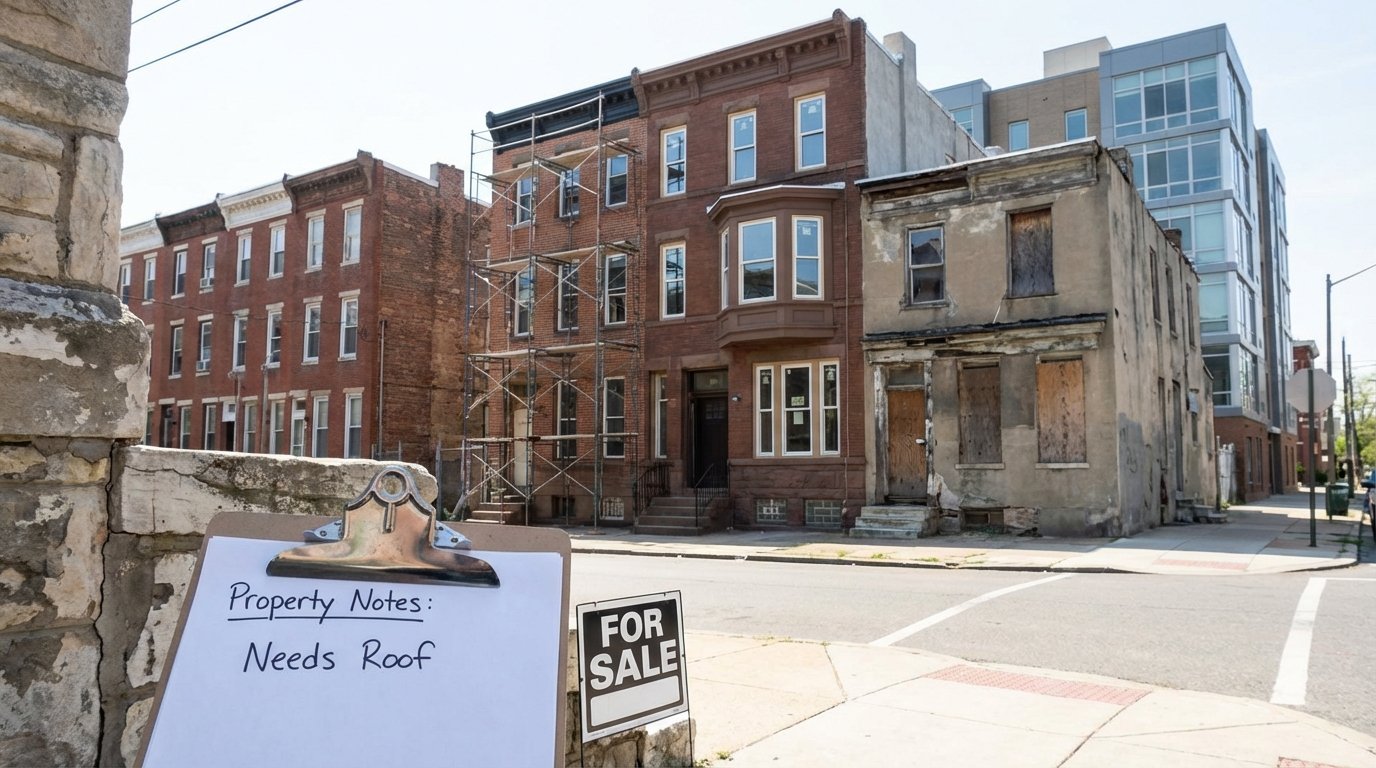
Early Red Flags That Gentrification Is Coming — and the Risks It Brings
The tricky thing about gentrification is that the early signs look like green lights for investors. New coffee shops, rising rents, renovated homes — all good things, right? Well, maybe. But each of these can also be a warning that prices are already inflated, regulations are incoming, or community resistance is building. Let me walk you through what to actually watch out for.
Rapid Price Spikes That Outpace Real Demand
One of the biggest red flags I watch for is when property prices in a neighborhood rise much faster than what the local income levels or rental market can support. This kind of speculative price run is unsustainable. It’s driven by hype, not real demand — and when the hype fades, values can drop sharply.
If you’re buying in an area where home prices have jumped 20–30% in just one or two years but local median household income hasn’t moved, be very careful. You may be buying at the top of a speculative wave. The people who buy early in a genuinely up-and-coming area profit most. Latecomers often get stuck holding overpriced properties.
Heavy Institutional Investor Activity
When you start seeing large real estate investment firms, LLCs, and out-of-town developers buying up properties in bulk in a neighborhood, that’s a signal worth taking seriously. Institutional buyers tend to move fast, overpay to control territory, and then push for higher rents aggressively.
For smaller individual investors, this creates a problem. You’re now competing with entities that have deeper pockets, legal teams, and long-term holding strategies. They can afford to run properties at a loss for years while waiting for the neighborhood to fully gentrify. You probably can’t. When the big players move in, your margins often shrink.
Community and Political Red Flags to Watch
Here’s something I wish I had paid more attention to early in my investing: community sentiment. It sounds soft, but it directly affects your hard numbers. Strong community opposition to gentrification has led to rent control laws, eviction moratoriums, and zoning changes that can seriously cut into returns. I’ve seen investors lose cash flow almost overnight because of a new city ordinance they didn’t see coming.
Growing Tenant Displacement and Community Pushback
When longtime residents start speaking publicly about being priced out of their neighborhood, pay attention. This kind of community friction very often leads to local policy changes. City councils respond to organized pressure from residents. What might follow is rent control, just-cause eviction protections, or affordable housing mandates that apply to your properties.
According to a study published by Georgetown Law’s Poverty Journal, gentrification typically leads to forced displacement of lower-income residents and communities of color — and those impacts are increasingly drawing legislative responses at city and state levels across the U.S. If you own rental properties in an area where displacement is already visible, you may be one council vote away from new restrictions on your investment.
Zoning Changes and New Development Rules
New zoning activity is both an opportunity signal and a warning sign. On one hand, upzoning (allowing taller or denser buildings) can increase your property’s value. On the other hand, it might mean a 12-story apartment complex is about to go up next door — flooding the rental market and driving down your rents.
Cities experiencing gentrification pressure also sometimes downzone or add historic preservation restrictions to protect existing neighborhood character. That can limit what you can do with a property you just bought. Always check the local zoning map and any pending planning commission changes before you close a deal in a rapidly changing neighborhood.
| Red Flag | What It Looks Like | Investor Risk |
|---|---|---|
| Rapid price spikes | 20–30%+ price rise with no income growth | Buying at speculation peak, value correction risk |
| Institutional buyer surge | LLCs and investment firms buying in bulk | Competition, shrinking margins |
| Community protest or media coverage | Public organizing against displacement | New rent control or eviction laws incoming |
| Rapid zoning changes | Upzoning, new development projects nearby | Increased rental supply, falling rents |
| Vacancy speculation | Homes sitting empty after purchase | Market distortion, anti-speculation taxes |
| Rising property taxes | Tax assessments catching up to new values | Operating cost increases, cash flow squeeze |
Financial Red Flags That Gentrification Creates for Investors
Beyond the social and political risks, gentrification creates very specific financial pressures that can quietly destroy your investment returns. These are the ones most investors only notice after the damage is already done.
Rising Property Taxes Eating Into Cash Flow
When a neighborhood gentrifies, property assessments go up. That’s great if you’re selling. It’s a headache if you’re holding. Property tax bills can rise significantly within just a few years of a neighborhood turning, sometimes faster than you can raise rents to compensate.
I’ve talked to landlords who bought in gentrifying neighborhoods in cities like Austin and Denver, only to find their annual property tax bill doubling in three or four years while their rental income grew only modestly. The cash flow they projected when they bought completely changed. Always model out what rising property taxes could do to your numbers over a 5–10 year hold period before buying in a transitioning area.
Vacancy Speculation and Market Distortion
One sign of late-stage gentrification risk is when you see properties being bought and left empty. Investors buy them expecting to profit from future value increases, with no intent to rent them out. This is called real estate speculation, and it distorts the market in dangerous ways.
According to the National Low Income Housing Coalition, some cities have already started taxing vacant properties to fight speculation — Oakland, CA passed a vacancy tax that passed with 68% of the vote. If you own property in an area where speculation is rampant, vacancy taxes and anti-speculation regulations could soon affect you too, even if you plan to rent your property out.
Here are the specific financial risks every investor should track in a gentrifying market:
- Property tax spikes — Assessments can double in 3–5 years in hot gentrifying zones
- Rental income ceiling — Rent control caps your upside if laws pass mid-investment
- Exit strategy risk — Buyer pool may shrink if affordability collapses in the area
- Renovation cost inflation — As the neighborhood attracts contractors, labor and material costs rise
- Increased competition for tenants — New luxury units entering the market pull renters away
- Speculative price collapse — If the area fails to fully gentrify, early prices may not hold
Before buying into any neighborhood showing signs of gentrification, run a thorough property lien search to make sure there are no existing debts, unpaid taxes, or encumbrances on the title. Properties in transitioning neighborhoods sometimes carry complicated title histories that can trap investors.
It’s also worth understanding the full picture of what drives property values up or down in any area. Our guide on factors that drive property value appreciation gives you the foundational knowledge to evaluate whether a neighborhood’s growth is sustainable or just speculative hype.
If you’re unsure how to read the signs in a specific market you’re looking at, reach out to our team and we can help you assess the risk and opportunity before you commit.
Conclusion
Gentrification is one of the most complex forces in real estate investing. It can create real wealth — but only if you get in at the right time and understand the risks clearly. The red flags I’ve covered here aren’t reasons to avoid transitioning neighborhoods altogether. They’re reasons to go in with your eyes open.
Watch for rapid price spikes that don’t match local income growth. Pay attention to institutional investor activity. Track local policy changes and community sentiment. And always do the math on property taxes over a 10-year horizon, not just at today’s rates. That kind of careful thinking is what separates investors who thrive in gentrifying markets from those who get burned. Have you experienced any of these red flags firsthand? I’d genuinely love to hear your story in the comments.
Frequently Asked Questions
Is gentrification always bad for property investors?
Not always. Gentrification can significantly increase property values and rental income if you buy early enough in the process. The risks appear when investors buy during or after peak speculation, when prices are already inflated. The key is understanding where a neighborhood is in the gentrification cycle. Early-stage entry often profits. Late-stage entry carries much higher risk of overpaying or facing new regulatory restrictions.
What are the biggest financial risks of investing in a gentrifying neighborhood?
The main financial risks are rapidly rising property taxes, new rent control laws that cap your rental income, increased competition from new luxury developments entering the market, and speculative price corrections if the neighborhood fails to fully transition. Cash flow projections can change dramatically within just a few years in a fast-gentrifying area.
How can I tell if a neighborhood is in early or late-stage gentrification?
Early-stage signs include a few renovated homes, the first independent coffee shops or art spaces, and modest price increases. Late-stage signs include luxury condominiums, national chain stores replacing local businesses, dramatic rental price increases, visible community protests against displacement, and heavy institutional investor activity. Buying in the early stage is where most of the profit potential lies.
Can city laws limit what I can do with a property in a gentrifying area?
Yes, absolutely. Cities facing displacement pressure often respond with rent control ordinances, just-cause eviction protections, affordable housing mandates, and even vacancy taxes. These laws can apply to existing properties retroactively in some cases. Always research the local political climate and any pending housing legislation before investing in a neighborhood experiencing rapid gentrification.
What should I do before buying in a neighborhood showing gentrification red flags?
Before buying, research local zoning changes, property tax trends, any pending rent control proposals, and recent sales activity by institutional buyers. Run a full title and lien search on the property. Model your cash flow under multiple scenarios, including higher property taxes and rent control caps. And speak with local real estate agents who know the neighborhood well to understand where it is in its gentrification cycle.