
A lot of homeowners with a mortgage on their home worry that selling will be complicated. They think having a loan means they cannot sell, or that the process will take forever. But honestly, selling a home with an active mortgage is completely normal. Most home sales happen exactly this way. The part that trips people up is not knowing what actually happens to that loan at closing.
Can You Sell Your Home If You Still Have a Mortgage
Yes, absolutely. You do not need to pay off your mortgage before you can list your home for sale. According to Bankrate, selling a home with an outstanding mortgage is very common and happens every single day. The key thing to understand is that having a mortgage does not block the sale. What matters is whether you have enough equity to pay the loan off when you close.
Equity is the difference between what your home is worth and what you still owe. If your home is worth $600,000 and you owe $350,000, you have $250,000 in equity. That equity is what covers your loan payoff, your closing costs, and your agent fees. Whatever is left after all that is your profit.
The process works the same whether you are selling to a traditional buyer going through a lender, or selling to a cash buyer. The mortgage still gets paid off. But in a cash sale, the whole thing moves much faster and with fewer moving parts.
What a Payoff Statement Is and Why You Need One
Before you can sell, you need to know exactly how much you owe. This is not just your current balance. It includes interest that has built up, any fees, and any prepayment penalties that might apply to your loan.
The document that gives you that full number is called a payoff statement or payoff quote. You request it from your lender. They will tell you the exact amount needed to fully pay off your mortgage as of a specific date, usually valid for 7 to 30 days. When your closing date is set, your title company or escrow agent will request this directly from your lender so the funds get wired correctly.
One thing to know is that your monthly statement balance and your payoff amount are not the same number. The payoff quote includes prorated interest up to the closing date. Always use the official payoff statement when doing your math on what you will net from the sale.
What Happens to Your Mortgage at Closing in a Cash Sale
This is where a cash sale actually makes things simpler than a traditional sale. Here is the basic flow.
Once a cash buyer makes an offer and you accept, the transaction moves to closing. In a cash sale, there is no lender on the buyer’s side, which means no appraisal contingency, no underwriting delays, and no loan approval process dragging things out. Closings that take 45 to 60 days in a financed deal can happen in 7 to 14 days in a cash deal.
At closing, the escrow agent or title company handles everything. They collect the funds from the buyer. From that pool of money, they pay off your mortgage directly to your lender. They also pay any other liens on the property like a second mortgage or a HELOC if you have one. Whatever is left after those payoffs and after closing costs are deducted is your net proceeds, and that gets sent to you by wire transfer or cashier’s check.
Your lender then releases the lien on the property. The title transfers to the buyer clean and clear. You are done.
Things That Affect Your Mortgage Payoff in a Sale
A few things can change how straightforward this process is. It is worth knowing about them before you go to market so you are not surprised at the closing table.
The first is prepayment penalties. Some loan types, particularly certain older loans or non-conventional loans, include a fee for paying off the mortgage early. Most standard conventional loans originated in the last several years do not include these, but you should confirm by checking your loan documents or calling your lender. If a penalty applies, it will be included in your payoff statement.
The second is prorated interest. Your mortgage interest is calculated daily. When you pay off your loan mid-month at closing, you owe interest only for the days you actually had the loan that month. The escrow agent calculates this automatically. It is usually a small amount and not something to stress over.
The third is your escrow account balance. If your lender has been collecting property taxes and homeowner’s insurance in an escrow account, you may have a positive balance sitting there when you sell. Lenders are required to refund that overage to you after the loan is paid off. According to Rocket Mortgage, any unused funds in your escrow account are typically returned to you after closing.
Side-by-Side: Cash Sale vs. Traditional Sale When You Have a Mortgage
| Step | Traditional Financed Sale | Cash Sale |
|---|---|---|
| Offer to close timeline | 45 to 90 days typically | 7 to 21 days in most cases |
| Appraisal required | Yes, buyer’s lender requires it | No appraisal needed |
| Mortgage payoff process | Handled at closing by title company | Same, handled at closing by title company |
| Risk of deal falling through | Higher, financing can collapse | Lower, no financing contingency |
| Escrow refund after closing | Yes, within 30 days if applicable | Yes, within 30 days if applicable |
| Prepayment penalty risk | Same as cash sale | Same as traditional sale |
What to Do If You Owe More Than Your Home Is Worth
This situation is called being underwater on your mortgage, or having negative equity. It means the loan balance is higher than what the home would sell for. This happens less often in markets like Los Angeles where home values have stayed strong, but it does come up.
If this is your situation, you have a few options. You can bring cash to closing to cover the gap between the sale price and the payoff amount. You can ask your lender about a short sale, where the lender agrees to accept less than what is owed in exchange for releasing the lien. Or in some cases, people choose to wait, hold the property, and let appreciation bring equity back before selling.
A cash buyer will not change the math on an underwater mortgage. The payoff still needs to happen. But cash buyers often move faster and with less friction, which can matter a lot if you need to resolve the situation quickly.
What Sellers Often Miss When Preparing to Sell With a Mortgage
One of the most common things sellers do not think about is keeping up with their mortgage payments right up until closing. This is important. Do not stop making payments just because you have an offer in hand or a closing date set.
If you skip a payment, you can pick up a late fee and a negative mark on your credit right at the moment you may need clean credit for your next home purchase. The payoff statement will account for any outstanding payments, so skipping one does not save you anything. It just causes problems.
Another thing to watch for is the expiration date on your payoff statement. These statements are usually valid for 7 to 30 days. If your closing gets pushed past that window, you will need a fresh payoff quote. In a cash sale, closing dates are generally very predictable and controlled, so this is less of an issue than it can be with a financed buyer whose loan approval timeline might shift.
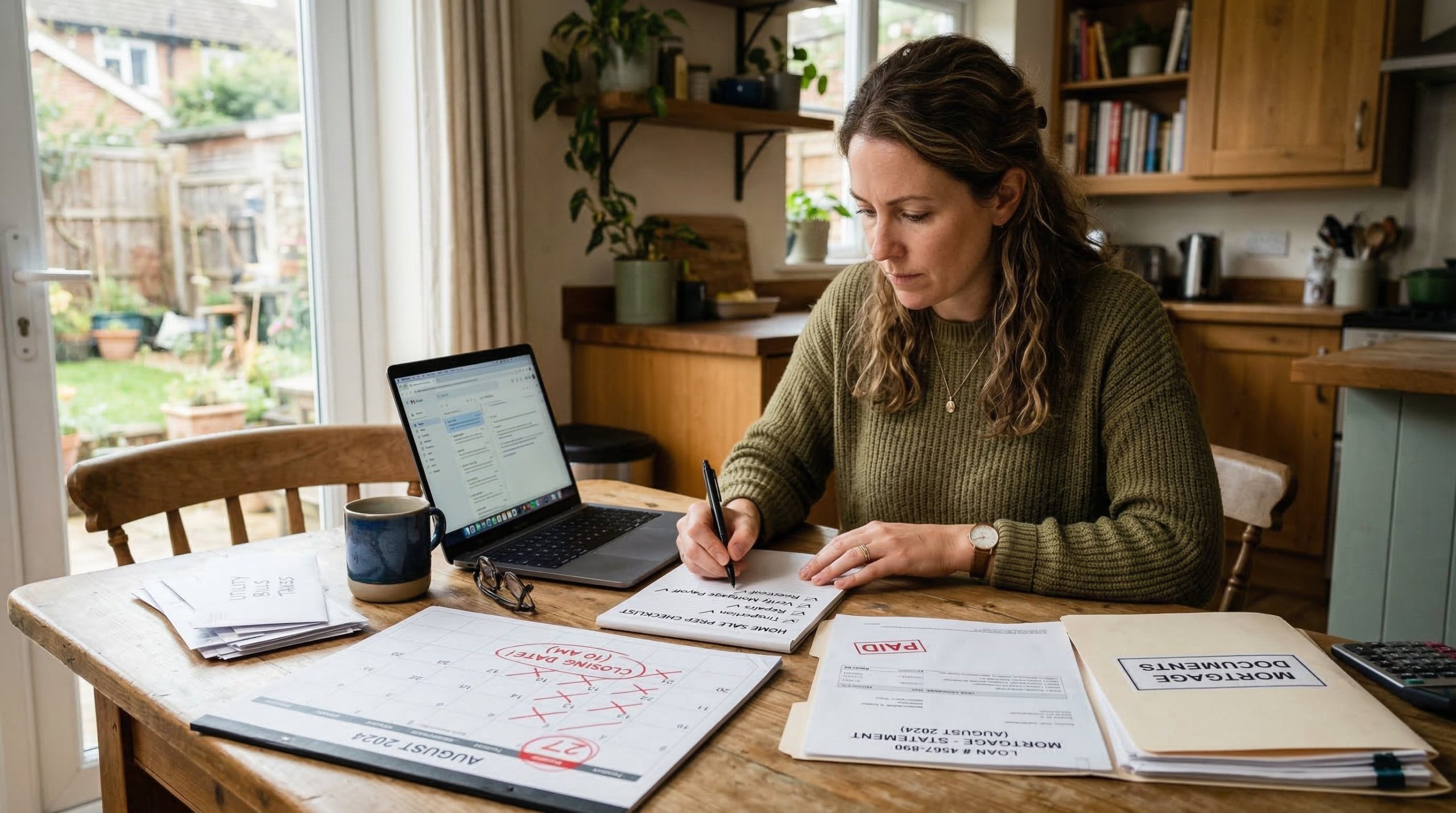
Here is a quick checklist of steps sellers with a mortgage should take before closing.
- Contact your lender and request a payoff statement as soon as you have a closing date in sight.
- Check your loan documents for any prepayment penalty language before you commit to a sale price and timeline.
- Keep making your regular monthly payments until the closing date. Do not skip.
- If you have a second mortgage or a HELOC, request payoff quotes for those as well.
- After closing, watch for your escrow refund. It typically arrives within 30 days of the loan being paid off.
- Ask your title company or escrow agent to confirm the lien release has been recorded with the county after the sale closes.
Why a Cash Sale Can Be the Cleanest Path When You Have a Mortgage
When you sell to a cash buyer, you are removing one major source of uncertainty from the process. The biggest reason financed deals fall apart is that the buyer’s loan does not go through. The appraisal comes in low, the buyer’s financial situation changes, or the lender’s underwriting finds an issue. All of that puts your mortgage payoff timeline at risk.
A cash buyer does not have any of those problems. They have the funds. There is no lender on their end. The deal moves on a timeline you can actually plan around. For sellers who are juggling a mortgage payoff, a move, and possibly a new home purchase at the same time, that certainty is worth a lot.
According to the Consumer Financial Protection Bureau, mortgage payoff and lien release processes are handled through your lender and the escrow or title company. Understanding how this works helps sellers feel in control of the process rather than confused by it.
If you are thinking about selling your home and want to understand what a fast, straightforward cash sale looks like from start to finish, visit our sell your house fast in Los Angeles page to see how we work.
If you are worried about whether your sale price will fully cover your mortgage payoff and closing costs, our post on traditional versus cash home sales breaks down the real numbers so you can compare clearly.
Have questions about your specific situation? Reach out through our contact page and we will walk you through what to expect.
Conclusion
Selling a home with a mortgage is not complicated once you understand how it works. The loan gets paid off at closing from the proceeds of the sale. The lien gets released. The title transfers clean. You get whatever is left after the payoff and selling costs.
A cash sale speeds this process up and removes the biggest risks that come with waiting on a buyer’s financing. If you have equity in your home and want to sell fast without the uncertainty of a financed deal, a cash buyer is usually your simplest path forward.
Keep making your payments, get your payoff quote, and work with a title company that knows what they are doing. The rest takes care of itself.
Frequently Asked Questions
Do I have to pay off my mortgage before I can sell my home?
No. You do not need to pay off your mortgage before listing your home. In fact, most homes that sell each year are sold with active mortgages still on them. When your home sale closes, the proceeds from the buyer go to your lender to pay off the remaining balance. Your title company or escrow agent handles this automatically. You simply receive whatever is left after the payoff and after closing costs are taken out.
What is a payoff statement and when should I request one?
A payoff statement is an official document from your lender that shows the exact amount needed to fully pay off your mortgage as of a specific date. It includes your remaining principal, accrued interest up to the payoff date, and any applicable fees or prepayment penalties. You should request one as soon as you have a realistic closing date in mind. Most payoff statements are valid for 7 to 30 days, so timing matters. In a cash sale, you can usually get a fresh quote quickly and plan around a firm close date.
Does a cash sale change how my mortgage gets paid off?
Not really. The mortgage payoff process works the same whether the buyer is paying cash or using a loan. At closing, the escrow agent collects the funds and wires your mortgage payoff amount directly to your lender. What a cash sale does change is the timeline and the certainty. Without a lender on the buyer’s side, there is no risk of financing falling through, no appraisal to worry about, and no loan underwriting delays. Cash sales typically close in 7 to 21 days compared to 45 to 90 days for a financed sale.
What happens to my escrow account when I sell my home?
If your lender has been collecting money in an escrow account for property taxes and homeowner’s insurance, any remaining balance in that account gets refunded to you after your mortgage is paid off. Lenders are required to return this overage. The refund typically arrives within 30 days of the loan being closed out. Make sure your contact information is current with your lender so the check or wire transfer reaches you without delay after closing.
What if I owe more on my mortgage than my home is worth?
This is called being underwater or having negative equity. If you are in this situation, selling still has options. You can bring cash to closing to cover the gap between your payoff amount and the sale price. You can ask your lender about a short sale, where they agree to accept less than what is owed. Or you can hold the property and wait for the market to build your equity back up. If you need to sell quickly, a cash buyer can at least remove the financing uncertainty from the equation, but the payoff gap still needs to be resolved through one of these approaches. Talking to your lender early is the most important first step.