
Every Dallas homeowner who is thinking about selling eventually hits the same question. Should I list with an agent and wait for the best offer, or should I sell to a cash buyer and be done with it in two weeks? There is no one right answer. The right choice depends on your home, your timeline, and what you actually need to walk away with. This guide lays out both sides honestly so you can make the call that makes sense for you.
What Listing on the Open Market Actually Involves in Dallas
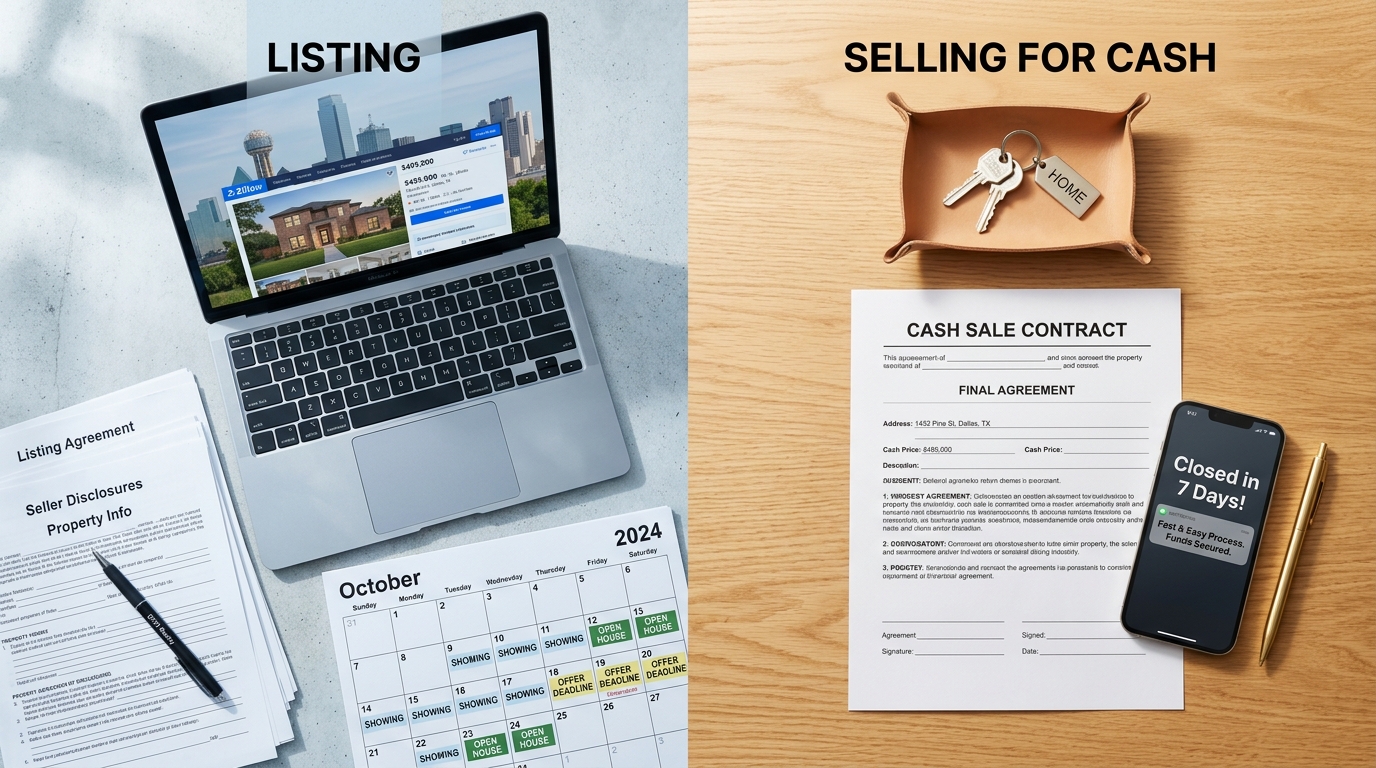
The Real Process of a Traditional Dallas Home Sale
A traditional listing in Dallas means hiring a real estate agent, preparing the home for sale, photographing it, putting it on the MLS, holding open houses and showings, negotiating offers, managing the inspection period, and waiting for the buyer’s lender to process the loan. On a good day with a motivated buyer in a clean market, all of that takes 45 to 60 days from listing to closing. On a bad day, it takes longer and sometimes ends with the deal falling apart before you get there.
The process requires you to have the home in showing condition consistently, which means keeping it clean, vacating for showings on short notice, and addressing anything that comes up during the inspection that the buyer insists on before they will proceed. You also pay agent commissions that typically run 5 to 6 percent of the sale price in Texas, which comes directly out of your proceeds at closing.
Most sellers go through at least one or two issues during a traditional sale. A low appraisal. A buyer whose loan falls through. A repair request that turns into a renegotiation of price. These are not rare edge cases. They are regular parts of the traditional sale process that most agents will tell you upfront to expect.
What You Can Realistically Expect to Get from a Traditional Listing
The main reason sellers choose the traditional listing route is price. When a home is in good condition, priced correctly, and hits the market at the right time of year, a traditional listing will almost always produce a higher sale price than a cash offer. That is just the reality of the math. More buyers competing for your home means higher prices.
In Dallas, the premium you might earn from a traditional listing versus a cash sale varies depending on the condition of the home, the neighborhood, and current market conditions. In a strong seller’s market with limited inventory, the gap can be significant. In a softer market with longer days on market, the gap shrinks because you are not getting the competitive offers that drive prices above asking.
The honest calculation is never just about the listing price. It is about the net proceeds after commissions, after any repair credits you gave the buyer, after the carrying costs of holding the home for 45 to 60 days, and after the stress and disruption of the showing process. That full picture often looks meaningfully different from the headline number your agent projected when you first listed.
What Selling for Cash in Dallas Actually Involves
How the Cash Sale Process Really Works
A cash sale to a Dallas investor or professional home buying company is a much shorter and more predictable process. You reach out, share information about your home, receive an offer within a few days, sign a contract, and close through a title company in 7 to 21 days. There are no lenders, no appraisals, no MLS listings, and no parade of strangers through your home over the course of weeks.
Most cash buyers purchase homes as-is, which means you are not required to make repairs before closing. The offer price already reflects the condition of the home. If the buyer is experienced and operating in good faith, the offer you get on day one is close to the offer you accept at closing. There is no post-inspection renegotiation where the price drops by another $8,000 after a buyer’s agent and inspector have had their say.
The speed and simplicity of a cash sale are real. But they come with a price trade-off that is also real. Cash buyers pay less than what a well-marketed traditional listing would bring in because they need to account for their own costs, the repairs they will need to make, and their profit. How much less varies, but sellers should go in expecting an offer somewhere in the range of 70 to 85 percent of what the home would sell for in perfect condition on the open market.
Who Benefits Most from a Cash Sale in the Dallas Market
Cash sales are not the right answer for every seller. But for certain situations, they are genuinely the smartest path. Sellers who benefit most from going the cash route in Dallas tend to fall into a few clear categories.
Sellers with homes in poor condition who would face significant repair demands from traditional buyers. Sellers who need to close quickly because of relocation, divorce, foreclosure, or financial hardship. Sellers who inherited a property they do not want to manage or maintain during a long listing period. Landlords who are tired of managing rentals and want out without the complications of showing a tenant-occupied home to dozens of retail buyers.
For more context on when the direct investor route makes the most sense, check out our post on avoiding realtor fees by selling your Dallas property directly to an investor.
A Head-to-Head Comparison of Listing vs. Selling for Cash in Dallas
The Numbers Side of the Decision
The best way to make this decision is to put real numbers on both sides and compare them honestly. Here is a simplified comparison using a $300,000 home in average condition in the Dallas market.
| Factor | Traditional Listing | Cash Sale |
|---|---|---|
| Sale price | $300,000 (full market value) | $240,000 to $255,000 (80 to 85 percent of market) |
| Agent commissions | $15,000 to $18,000 (5 to 6 percent) | $0 in most cases |
| Pre-sale repairs | $3,000 to $10,000 or more | $0 |
| Closing costs | $2,000 to $4,000 | Often covered by buyer |
| Holding costs (60 days) | $3,000 to $6,000 in mortgage, taxes, insurance | Near zero with 14-day close |
| Estimated net proceeds | $263,000 to $277,000 | $240,000 to $255,000 |
In this example, the gap between the two options is real but smaller than the headline numbers suggest. And this assumes the traditional sale goes smoothly. If the buyer’s loan falls through and you have to relist, or if the appraisal comes in low and you renegotiate, or if the inspection produces a $10,000 repair request, the traditional listing numbers erode further.
According to the National Association of Realtors, deal fall-throughs, renegotiations, and extended timelines are common in traditional home sales and represent real financial costs to sellers that are often underestimated when comparing options.
The Non-Money Side That Most Sellers Underestimate
The financial comparison matters, but it is not the only thing that matters. The stress, disruption, and uncertainty of a traditional listing have real costs that do not show up on a spreadsheet.
Being ready for showings on short notice for weeks. Living in a home that feels like it belongs to someone else because it has to stay perfectly staged. Getting emotionally attached to an offer and then watching it fall apart when the loan does not go through. Negotiating with a buyer’s agent who is working hard to squeeze every dollar they can out of the inspection report. These are genuine experiences that affect the quality of your life during the selling process and they are worth factoring into your decision.
A cash sale is not stress-free, but it is a much more contained and predictable experience. You get an offer, you evaluate it, you either accept or negotiate, and within two to three weeks it is done. For sellers who have a lot going on in their lives or who do not want the process dragging on for months, that predictability has real value.
How to Decide Which Path Is Right for Your Dallas Home
Questions That Help You Make the Right Call
Making this decision well comes down to being honest about your own situation rather than going with what sounds better in theory. Here are the questions worth sitting with before you choose a direction.
- How much time do I actually have? If you need to close in the next 30 days because of another situation in your life, a traditional listing is probably not going to work. If you have 90 days and flexibility, the math may favor going to market.
- What condition is the home in? If it needs significant work, the traditional listing pool shrinks and the inspection process becomes a bigger risk. Cash buyers are the more reliable option for homes with real issues.
- What will I net after all costs, not just the sale price? Run the actual numbers. Account for commissions, repairs, holding costs, and potential renegotiation. The gap between the two options is often smaller than you expect once you do the full math.
- How much disruption can I tolerate during the process? If showings, staging, and an uncertain timeline sound miserable given everything else you have going on, a cash sale offers a much calmer path.
- Am I emotionally ready for a deal to fall through? Traditional sales fall through. If you are not prepared for the possibility of starting over after you thought you had a buyer, that is worth weighing before you commit to listing.
Our post on what Dallas homeowners need to know about selling to cash buyers is a good resource for understanding how to evaluate a cash buyer before you commit to working with one, which is an important part of making this choice successfully.
According to the Consumer Financial Protection Bureau, understanding all the costs involved in a home sale, including the closing disclosure, helps sellers make genuinely informed decisions rather than reacting only to the offer price without knowing what they will actually walk away with.
And according to the Federal Trade Commission, sellers should always verify any buyer they work with regardless of whether they are going the traditional or cash route. Scams exist in both channels and protecting yourself starts with basic due diligence before you sign anything.
If you want to talk through your specific situation and get a real picture of what a cash offer would look like for your home, visit our Dallas Texas page or contact us here and we will give you honest information without any obligation to move forward.
Conclusion
There is no universally right answer between listing and selling for cash in Dallas. A traditional listing will get you more money on paper when conditions are right, but it comes with more time, more uncertainty, more costs, and more stress. A cash sale will get you less on paper but more predictability, speed, and simplicity, and the actual net proceeds difference is often smaller than sellers expect once everything is added up. Know your situation, run the real numbers, and pick the path that fits your life, not just the one that looks best in theory.
Frequently Asked Questions
Can I get a higher price by listing instead of selling for cash in Dallas?
Usually yes, the listing price on a traditional sale will be higher. But the net proceeds after agent commissions, repair costs, closing costs, and holding time are often closer than the headline numbers suggest. For homes in great condition with plenty of time, listing usually wins on price. For homes that need work or for sellers who need to move fast, the gap frequently closes or even reverses once all costs are counted.
How fast can I close if I choose to sell for cash in Dallas?
Most cash sales with an experienced Dallas buyer close in 7 to 21 days from the signed contract. The main factor that determines the timeline is how quickly the title search comes back and whether there are any complications on the title side. With a clean title and an organized seller, 10 to 14 days is realistic.
Will I still pay closing costs if I sell to a cash buyer?
Many cash buyers in Dallas offer to cover the seller’s closing costs as part of the deal, which is part of what makes the net proceeds closer to the traditional listing option than the raw offer numbers suggest. Always confirm this in writing before you sign a contract and make sure you understand the full breakdown of what you will receive at closing.
What happens if the traditional buyer’s loan falls through after I accept their offer?
If a buyer’s financing falls apart and they exercised a financing contingency, they typically get their earnest money back and you are left to relist. This is one of the most common and frustrating parts of a traditional sale. It can happen even late in the process after weeks of everyone thinking the deal was on track. Cash buyers eliminate this risk entirely because there is no lender involved.
Is there a middle option between a full traditional listing and a cash sale?
Yes. Some sellers list on the MLS while simultaneously talking to cash buyers, which gives them market data and a fallback at the same time. Others list with a discount broker to reduce commission costs while still reaching traditional buyers. And some sellers negotiate directly with known investors in their area without going through a formal listing at all. The right structure depends on your specific situation, timeline, and what you are most trying to achieve from the sale.