
When I first started looking into tiny home living, I assumed the hardest part would be downsizing. I was wrong. The hardest part is finding a place to legally put the thing.
Land requirements for tiny homes vary so much from one county to the next that what’s perfectly legal in one ZIP code might get you a citation in the one next door. This guide will walk you through everything you need to know — zoning laws, building codes, utility hookups, and how to find land that actually works for your situation.
Why Land Requirements for Tiny Homes Are So Complicated
Tiny homes don’t fit neatly into any existing category in most local zoning codes. Depending on how it’s built and whether it has wheels, your tiny home might be classified as a single-family dwelling, an accessory dwelling unit (ADU), a manufactured home, an RV, or something else entirely.
Each classification comes with its own set of rules for where you can place it, what permits you need, and how it must be built. And because zoning is almost entirely local, there is no single national standard to follow. You have to research your specific city, county, and state.
The Two Main Types of Tiny Homes
Before we get into land requirements, it helps to understand the two main categories of tiny homes, because the rules are very different for each:
- Tiny Home on a Foundation (THOF): Built on a permanent foundation. Typically regulated like a traditional house. Must meet local building codes (usually the IRC or state equivalent).
- Tiny Home on Wheels (THOW): Built on a trailer chassis. Often classified as an RV or recreational vehicle. Regulated under different rules than permanent structures.
The type you choose will determine which land you can use and what approvals you’ll need. This is one of the first decisions you need to make before you start looking for property.
Zoning Laws: What They Are and Why They Matter
Zoning laws control how land can be used. Cities and counties divide their territory into zones — residential, commercial, industrial, agricultural — and each zone has rules about what can be built there and how big it can be.
For tiny homes, the key questions zoning laws answer are: Can I place a structure this small here? Is it considered a permanent residence? Can I live in it full-time?
Local governments can permit tiny homes in three ways:
- By-right: No special approval needed, as long as you meet the code requirements
- Conditional use permit: Requires approval from a planning commission
- Special exception: Requires approval from the zoning board
Before you buy land, check whether tiny homes are allowed by-right, require a permit, or aren’t allowed at all. Calling your local planning and zoning department directly is the fastest way to get a clear answer.
Minimum Square Footage Requirements
This one catches a lot of people off guard. Many counties have minimum dwelling size requirements that might prevent your tiny home from being legal at all.
Here’s a sample of how much these vary:
| Location | Minimum Size | Notes |
|---|---|---|
| Some rural counties | No minimum | Varies widely |
| California (general) | 120 sq ft (one room) | Each additional room: 70 sq ft min |
| San Benito County, CA | 150–400 sq ft | Park models must meet ANSI 119.5 |
| Gold Beach, OR | 200–600 sq ft | Must connect to city sewer |
| Spur, TX | No minimum (under 900 sq ft) | Must connect to city utilities |
| St. Petersburg, FL | 375–700 sq ft | Must meet county building code |
| Some towns | 800+ sq ft | Effectively bans tiny homes |
The 2018 International Residential Code added Appendix Q specifically for tiny homes, which relaxes certain requirements for homes 400 square feet or under. But Appendix Q only applies if your state has adopted the 2018 IRC and your local government specifically references Appendix Q in its ordinance. Many haven’t yet.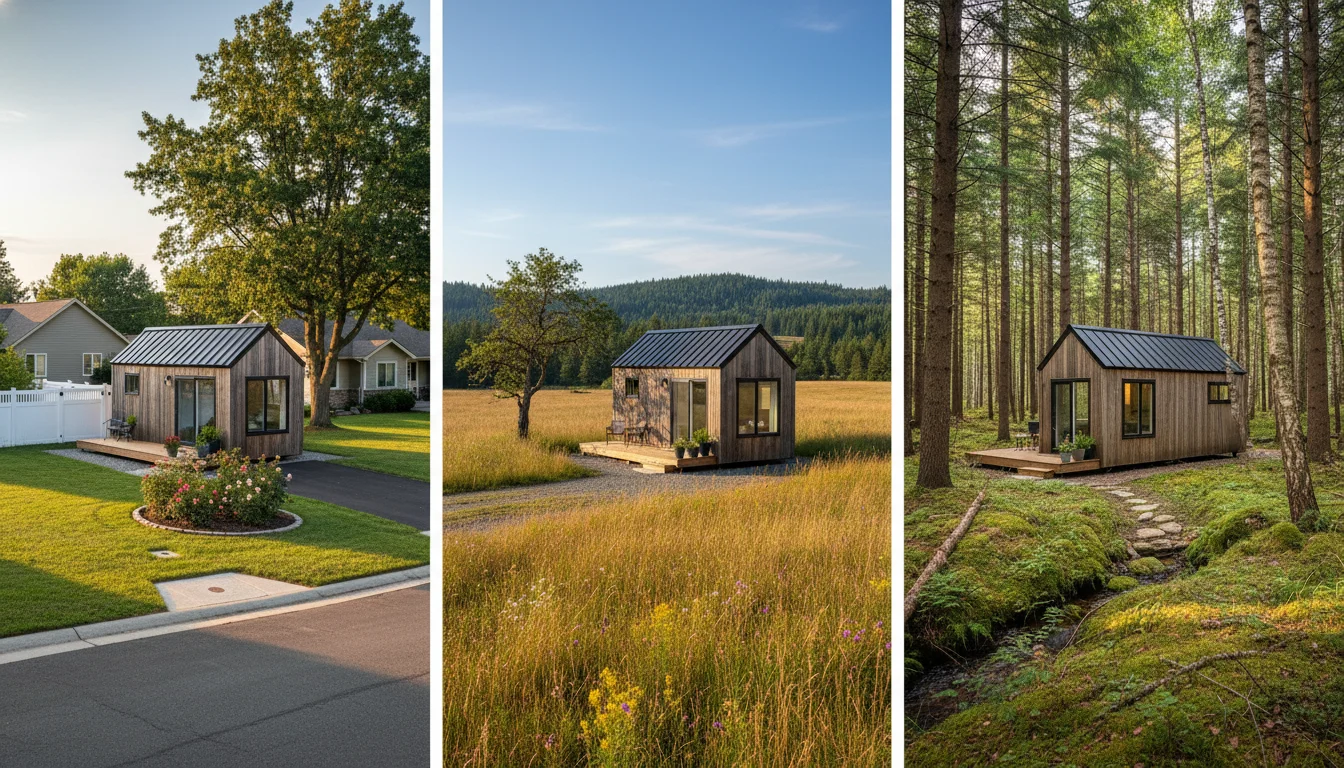
Types of Land Where Tiny Homes Are Allowed
Not all land is the same. Here’s a breakdown of the main land types and what to expect for tiny home placement.
Residential Lots
Standard residential lots are the most common option, but also the most regulated. Many have minimum dwelling size requirements that exclude tiny homes. However, if you already own a home on the lot, you might be able to add a tiny home as an ADU (accessory dwelling unit).
ADU rules have been loosening in many states — especially California, where state law now requires most municipalities to allow ADUs on single-family lots. A tiny home on a permanent foundation that meets local ADU requirements is often the most legally straightforward path in urban and suburban areas.
Rural and Agricultural Zones
Rural land typically offers more flexibility for tiny homes. Agricultural (A-1) zones are often the most lenient, and some rural counties have no minimum dwelling size at all. This is where off-grid tiny home living is most feasible.
The tradeoff: rural land may lack water, sewer, and electrical hookups. You may need to drill a well, install a septic system, or set up solar power — all of which add cost and complexity. Before buying rural land, always verify what utilities are available or what permits you’ll need to install your own.
Mobile Home Parks and Manufactured Home Communities
Some manufactured home communities and mobile home parks allow tiny homes, especially if they’re on foundations or meet park model standards. These communities already have utility hookups in place, which simplifies setup significantly.
The catch: you’re renting the lot, not owning the land. This affects your long-term financial picture. Check out our guide on buying a mobile home for more on the pros and cons of park living.
Tiny Home Communities and Cottage Clusters
A growing number of dedicated tiny home communities are being developed across the country. These are specially zoned developments where multiple small dwellings share land and infrastructure. They often allow for lower lot sizes and more flexible design standards than traditional neighborhoods.
Colorado, for example, has developed a state-led certification process that helps tiny homes meet structural and safety standards, paving the way for more community developments. These types of developments can also be structured as PUDs (Planned Unit Developments), which allow for site-specific zoning adjustments.
Tiny Homes on Wheels: A Special Case
THOWs (tiny homes on wheels) are treated very differently from foundation-based tiny homes. In most jurisdictions, they’re classified as RVs rather than permanent residences.
This means you generally cannot park a THOW on a residential lot and live in it full-time — at least not without jumping through some hoops. Most states won’t acknowledge THOWs as permanent living arrangements outside of designated RV parks, tiny home communities, or cottage clusters.
In Florida, for example, some counties allow THOWs but require them to be moved every 45 days and registered with the state DMV. In California, THOWs on wheels cannot be used as permanent residences in most jurisdictions (though they can make great Airbnb rentals).
THOWs do hook up to utilities, but in a more flexible way — water via a hose or well, sewer via a dump station or RV sewer hookup, and 30–50 amp shore power. This flexibility is great for temporary setups but creates legal problems for permanent residency.
Building Permits and Inspections
A tiny home on a permanent foundation will almost always require a building permit. The permit process typically involves:
- Submitting architectural or engineering plans to the local building department
- Paying permit fees (varies by jurisdiction)
- Scheduling inspections at key stages of construction (foundation, framing, electrical, plumbing, final)
- Receiving a Certificate of Occupancy before moving in
Tiny homes often face a specific challenge with building codes: the standard IRC was written with traditional homes in mind. Requirements like minimum room sizes, ceiling heights, and egress windows don’t always fit the compact layout of a tiny home. Appendix Q of the 2018 IRC addresses some of these issues specifically for homes under 400 sq ft, but it’s not universally adopted.
Before starting any construction, always do a property lien search to make sure the land you’re buying is free of encumbrances that could complicate your build.
Utility Hookup Requirements
Even if your tiny home is legally permitted, you’ll need to connect to utilities — or prove you have viable alternatives. Here’s what to plan for:
Water and Sewer
In most jurisdictions, permanent dwellings must connect to municipal water and sewer systems if they’re available. If you’re in a rural area without city services, you’ll need to install a private well and a septic system. Both require permits and inspections.
Note: composting toilets are not permitted as the sole waste treatment in many jurisdictions. Check local rules before planning an off-grid system.
Electrical
Electrical hookups must meet local safety standards, typically the National Electrical Code (NEC). Permit and inspection are required. If you’re going off-grid with solar panels, you’ll still need to comply with local code requirements for the electrical system design.
Setbacks
Most zoning codes require structures to be set back a certain distance from property lines, roads, and other structures. Setback requirements can vary significantly — sometimes 5 feet, sometimes 25 feet. If your lot is small, setbacks can severely limit where you can place your tiny home.
Before you buy any land, verify the setback requirements with your local planning department. Understanding easement laws is also critical — easements can affect where you’re allowed to build even within your own property lines.
State-Specific Tiny Home Rules: A Quick Overview
While all tiny home regulations are ultimately local, some states have clearer frameworks than others. Here’s a quick snapshot:
| State | Tiny Home Friendliness | Key Notes |
|---|---|---|
| Texas | Relatively friendly (rural) | Multiple placement options in rural counties; no state-level size minimum |
| California | ADU-friendly | State law forces ADU allowance; Title 24 energy standards apply; THOWs limited |
| Florida | Accepting but regulated | County-by-county rules; 375–700 sq ft in some areas; 45-day THOW movement rules |
| Colorado | Progressive | State certification process; zoning overlays expanding |
| Oregon | Mixed | Strong off-grid community; strict building codes; varies by county |
| New York | Restrictive | Urban areas especially strict; rural areas more flexible |
No matter what state you’re in, always verify requirements at the local level. State-level laws create frameworks, but the actual rules come from your county or city.
How to Research Land Before You Buy
Here’s a step-by-step approach that I recommend to anyone serious about placing a tiny home:
- Step 1: Identify the zoning code for the specific parcel you’re interested in using your county’s GIS (Geographic Information System) website
- Step 2: Call the local planning and zoning department and ask directly if your type of tiny home is permitted on that parcel
- Step 3: Ask about minimum square footage requirements and what code the home must meet
- Step 4: Ask about setback requirements and lot size minimums
- Step 5: Confirm utility availability (water, sewer, electric) or get quotes for alternative systems
- Step 6: Check for HOA restrictions if the land is in a planned community
Don’t skip the due diligence step. A few hours of research before you buy can save you years of legal headaches. Learn how to find your property lines for free as part of your pre-purchase research process.
Financing a Tiny Home Purchase
Financing is one of the biggest hurdles in the tiny home world. Traditional lenders are often hesitant to finance tiny homes because they fall outside standard property categories.
Your best options depend on how the home is classified:
- Tiny home on a permanent foundation (titled as real property): May qualify for a conventional mortgage, FHA loan, or USDA rural housing loan
- Tiny home on a foundation without real property title: Personal loan or construction loan
- THOW (classified as RV): RV loan or personal loan; mortgage financing not available
- Park model home: Chattel loan or personal loan
The more “permanent” and “real property” your tiny home is, the more financing options you’ll have. If you want help navigating the purchase process, our team at BuyYourProperties is here to help. Contact us and tell us what you’re looking for.
Conclusion
Land requirements for tiny homes are one of the most complex parts of the tiny home journey. The rules vary by state, county, city, and even neighborhood — and they change frequently as more communities warm up to the idea of smaller, more affordable housing. The key is to research before you buy, not after.
Do your zoning homework, confirm utility access, get the right permits, and work with a real estate professional who understands alternative housing. The right piece of land is out there — you just need to know where to look and what to ask. If you need guidance finding land that works for your tiny home plans, reach out to our team and we’ll help you get started.
Frequently Asked Questions
Can I put a tiny home on any land I own?
Not necessarily. You need to verify that the land’s zoning classification allows for the type of tiny home you want to place. Many residential zones have minimum dwelling size requirements that exclude tiny homes, and some areas restrict tiny homes entirely. Always check with your local planning department before buying land.
Is it legal to live in a tiny home on wheels full-time?
It depends on your location. THOWs are usually classified as RVs, and most jurisdictions don’t allow permanent full-time residency in RVs outside of designated RV parks or tiny home communities. Some states have more progressive rules, so check your local and state regulations carefully.
What is the minimum size for a tiny home?
There is no single national minimum. The 2018 IRC Appendix Q applies to homes 400 square feet or under and relaxes some standard code requirements. But local minimums vary widely — from no minimum in some rural areas to 800 square feet in some towns. California requires at least one room of 120 sq ft plus 70 sq ft for each additional room.
What is an ADU and can a tiny home qualify?
An ADU (accessory dwelling unit) is a secondary housing unit on the same lot as a primary residence — think backyard cottage or garage apartment. Many tiny homes on permanent foundations can qualify as ADUs if they meet local size and use requirements. ADUs are often allowed by right in residential zones, especially in states like California that have pushed for more ADU-friendly laws.
Do I need a building permit for a tiny home?
Yes, in virtually all jurisdictions, placing a tiny home on a permanent foundation requires a building permit. You’ll need to submit plans, pay fees, pass inspections, and receive a Certificate of Occupancy before moving in. THOWs may not require a building permit but do require other registrations and approvals depending on your state.
External Resources: