
You don’t have to fix everything before you sell. If your house has problems — old plumbing, a leaky roof, a kitchen that looks like it’s from 1985 — you can still sell it. And you can sell it fast. This guide shows you exactly how to sell your house as-is, step by step, in simple terms.
What Does “As-Is” Actually Mean?
The Real Definition of an As-Is Home Sale
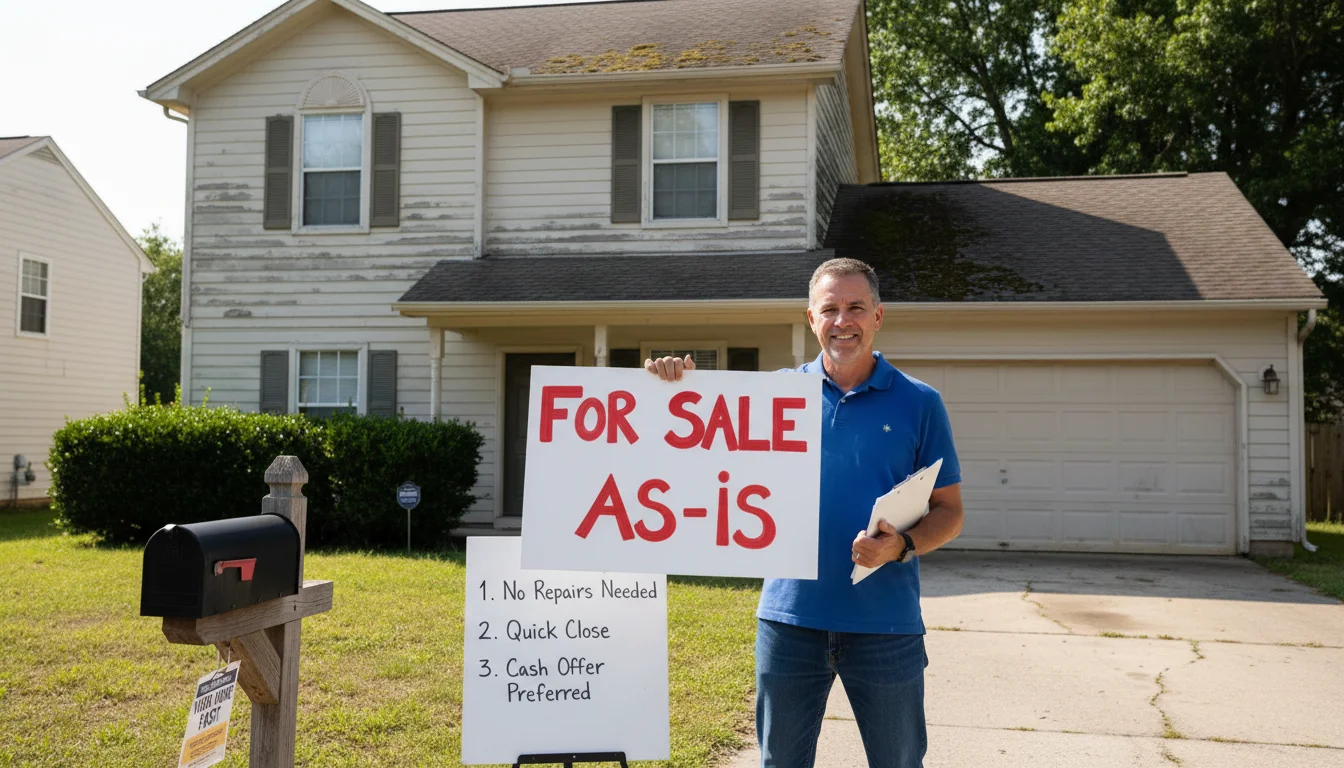
Selling a home as-is means you’re selling it in its current condition. You’re not promising to fix anything. You’re not cleaning it up or upgrading it before the sale. What buyers see is what they get.
According to U.S. News & World Report, selling as-is doesn’t mean you hide problems. You still have to disclose any known issues with the home. But you’re making it clear you won’t repair them before closing.
Some people think “as-is” means the home is a disaster. That’s not always true. Sometimes a homeowner just wants a fast, simple sale without dealing with contractors and inspection negotiations. I’ve seen beautiful homes sell as-is simply because the owner wanted to move on quickly.
Who Usually Sells a House As-Is?
People sell as-is for all kinds of reasons. The most common ones are:
- Going through a divorce and need to split assets fast
- Inherited a home they don’t want to manage or repair
- Facing foreclosure and need to sell before the bank takes over
- Home needs expensive repairs they simply can’t afford
- Relocating for work and can’t wait months for a traditional sale
- Downsizing after retirement and want a clean break
These are real, common situations. And in most of them, selling as-is is the smartest and fastest path forward.
The Pros and Cons of Selling As-Is
Why Selling As-Is Can Be a Smart Move
The biggest advantage is time. You skip the repair process, which can take weeks or even months. You list the home, find a buyer who’s okay with the condition, and move forward. Simple.
According to Bankrate, an as-is sale can also lead to a smoother closing because both sides already know the home won’t have repairs made, so there’s less back-and-forth negotiation about fixes.
It’s also less emotionally draining. You’re not waiting for contractors to show up, not arguing about what gets fixed and what doesn’t. You just sell.
The Downsides You Should Know
The main downside is price. Homes sold as-is usually sell for less than move-in ready homes. Buyers know they’re taking on the repair costs, so they adjust their offers accordingly. This doesn’t mean you’ll give it away, but you need to have realistic expectations.
Here’s a quick comparison:
| Factor | Selling As-Is | Making Repairs First |
|---|---|---|
| Sale Price | Lower (reflects condition) | Higher (move-in ready) |
| Time to Sell | Faster | Slower (repairs take time) |
| Upfront Cost | None | High (renovation costs) |
| Buyer Pool | Investors, cash buyers | All buyers |
| Stress Level | Low | High |
How to Sell Your House As-Is: Step by Step
Step 1: Get a Pre-Listing Inspection
I know this sounds backwards. You’re not repairing anything, so why get an inspection? Here’s why: it helps you know exactly what you’re working with. When buyers ask about the condition, you have a real report to show them. Transparency builds trust, and trust keeps deals from falling apart.
It also helps you price the home correctly. If the roof needs $20,000 in work, you can price the home $20,000 lower and be upfront about why. No surprises. No drama at closing.
Understand how property condition affects home value so you can price your as-is home competitively and attract serious buyers.
Step 2: Know Your Selling Options
You have a few different ways to sell an as-is home. Each one works differently and fits different situations:
- Sell to a cash buyer: Fastest option. No repairs needed. Offer in 24-48 hours. Close in 7-21 days.
- List with a real estate agent: Takes longer but may get you a slightly better price
- Sell FSBO (For Sale By Owner): No commission, but you handle everything yourself
- Auction: Quick, but unpredictable pricing
For most as-is sellers who need to move fast, a cash buyer is the simplest answer. Learn about the common situations that lead homeowners to sell quickly to see if your situation fits this path.
Step 3: Price It Right
Pricing an as-is home is tricky. Go too high and buyers ignore it. Go too low and you leave money on the table. The sweet spot is pricing it to reflect the condition honestly.
Look at what similar homes in your area have sold for, then subtract the estimated cost of repairs. If comps show $300,000 for move-in ready homes and your home needs $40,000 in repairs, pricing around $255,000–$270,000 is usually realistic.
Step 4: Be Transparent About the Home’s Condition
Don’t hide problems. Ever. Most states require sellers to disclose known defects. Even if yours doesn’t, hiding issues is a fast way to kill a deal at the inspection stage — or worse, face legal trouble after closing.
Be clear in your listing. Buyers who want as-is homes already know they’re getting a fixer. They’re not looking for perfect. They’re looking for honest.
Working With Cash Buyers for an As-Is Sale
Why Cash Buyers Are the Best Fit for As-Is Homes
Cash buyers are used to buying homes that need work. They don’t need a lender to approve the property condition. They have their own money, so they can buy homes that traditional banks won’t finance.
This is huge for as-is sellers. If your home has a bad roof, foundation issues, or mold, a regular buyer using a mortgage will likely get blocked by their lender. A cash buyer? They just buy it.
According to HomeLight, cash buyers often close in as little as 10 days, making them the fastest option for as-is sellers who need to move quickly.
What to Watch Out for When Selling As-Is
Not every offer is a good offer. Some buyers will try to renegotiate the price after the inspection. They make a fair offer, then come back and say, “We found problems, we want $30,000 off.” That’s a red flag.
Set clear expectations before you sign. If you’re selling as-is, put it in writing that no further price reductions will be made after the inspection. A good buyer will respect that.
Also understand all the costs you’ll face when selling a house so there are no surprises when it’s time to close.
Ready to Take the Next Step?
How to Get Started With Your As-Is Sale
The first step is simple: get an offer. Talk to a cash buyer, get a pre-listing inspection, and decide what selling option works best for your timeline and financial situation.
You don’t need to spend weeks getting ready. You don’t need to repaint the walls or replace the carpets. You just need to make a decision and take action.
Understanding closing timelines for home sales will help you plan your move once you have an accepted offer in hand.
Ready to explore your options? Contact us today for a free, no-obligation consultation on selling your house as-is.
Conclusion
Selling your house as-is is a real, practical option — not a last resort. With the right approach, honest pricing, and the right buyer, you can close fast and move on without the stress of repairs. Know your options, be transparent, and don’t settle for the first lowball offer you get. You deserve a fair deal, even in an as-is sale.
Frequently Asked Questions
Do I have to disclose problems when selling as-is?
Yes. Selling as-is doesn’t mean hiding defects. You must disclose any known issues with the home. It simply means you won’t be making repairs before or after the sale. Transparency protects both you and the buyer.
Will I get less money selling as-is?
Yes, usually. As-is homes sell for less because buyers account for repair costs. However, when you factor in savings on repairs, agent fees, and carrying costs, the difference is often smaller than you’d think.
Can I sell as-is with a real estate agent?
Absolutely. A good agent experienced with as-is sales can market your home to the right buyers — investors, flippers, and cash buyers — and help you get the best price for its current condition.
How long does an as-is sale take?
It depends on who you sell to. A cash buyer can close in 7–14 days. Selling through an agent to a traditional buyer may take 30–60 days or more, even for as-is properties.
What if the buyer’s inspector finds problems during an as-is sale?
Buyers can still do an inspection during an as-is sale. If they find issues, they can choose to walk away, but they cannot force you to make repairs if you’ve sold it as-is. Make sure this is clearly stated in the contract.