
The One Factor Most Home Buyers Underestimate — School Districts
Here’s something that surprises a lot of first-time buyers: even if you don’t have kids and have no plans to send anyone to school, the quality of the school district near your home can still make or break your investment. I’ve seen buyers skip this step entirely, then struggle to sell years later because families wouldn’t touch their neighborhood. School districts shape more than just education. They shape home values, selling speed, and long-term stability.
Why School Districts Have Such a Big Impact on Property Values
It comes down to demand. Families with children actively search for homes in high-performing school districts. And families are willing to pay more to get access to those schools. When a large group of buyers compete for homes in the same area, prices go up. It’s basic supply and demand.
According to research from the National Bureau of Economic Research (NBER), for every $1 increase in per-pupil school spending in a district, home values in that community increase by about $20. That’s a powerful multiplier. A school that gets better funding tends to produce better outcomes, and buyers notice and pay for that.
Do Buyers Without Children Actually Care About School Ratings?
More than you’d think. Even buyers who have no intention of sending kids to school still care about school districts — because they know future buyers will. Resale value is always somewhere in a smart buyer’s thinking. Homes in well-rated school zones are easier to sell, sell faster, and command higher prices. That’s true whether the current owner has children or not.
Research from the National Association of REALTORS® (NAR) found that 30% of buyers aged 33–42 — the group most likely to have young children — list school district quality as a top factor when selecting a neighborhood. That’s nearly one in three buyers in that age group. If you’re selling to that demographic, school ratings matter a lot.
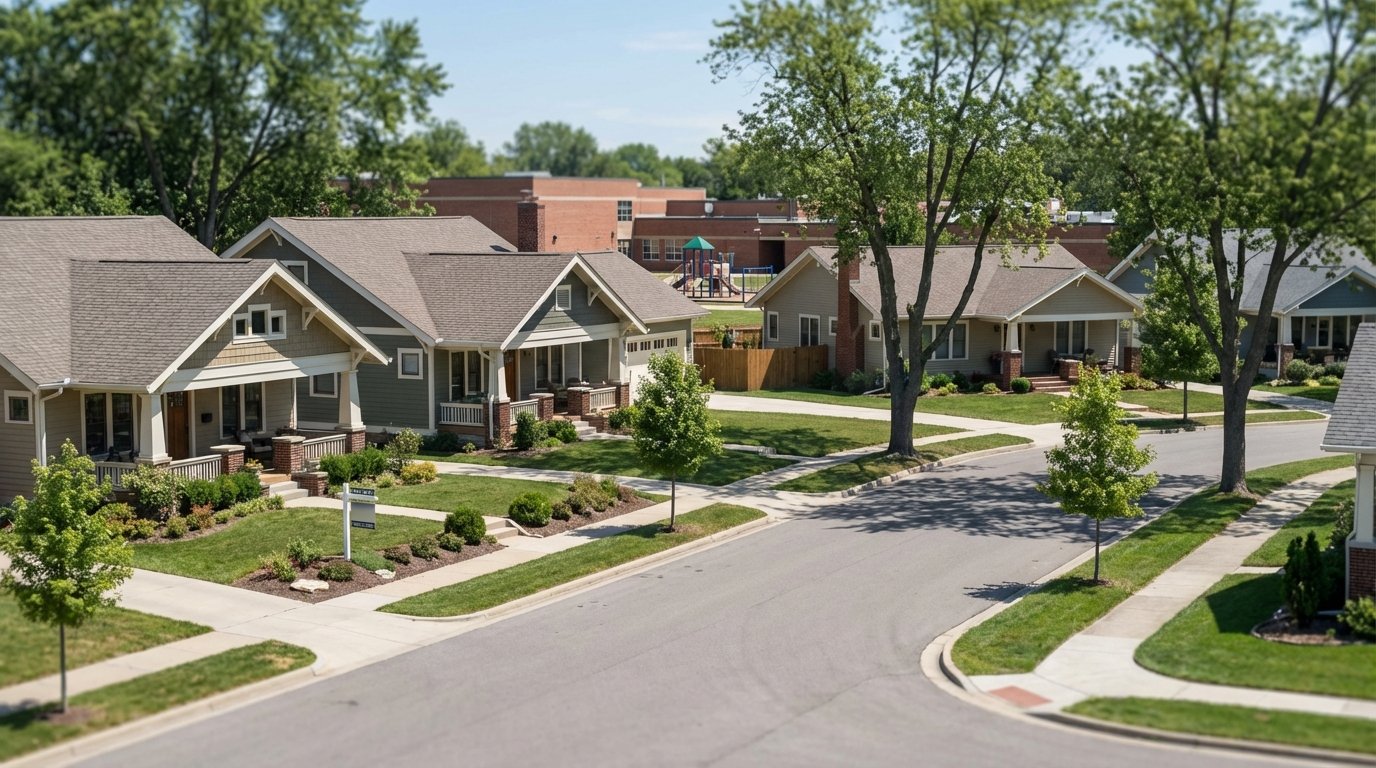
How Much More Do Homes in Top School Districts Cost?
The price difference can be dramatic. Homes near schools with a GreatSchools rating of 9 or 10 can cost over 78% more than comparable properties in surrounding counties. That’s not a small premium. That’s a fundamentally different price tier.
Real Numbers: What School Quality Does to Home Prices
The premiums are real and well-documented across different regions:
- Homes near top-rated schools (GreatSchools rating 9–10) cost over 78% more than surrounding county averages
- In the Northeast, some districts command premiums of over 100% versus metro medians
- A 5% improvement in a school’s test scores correlates with a 2.5% increase in nearby home values
- Homes in strong school districts sell an average of 8 days faster than those in weaker districts
- Every $1 spent on public schools raises community home values by $20, per the National Bureau of Economic Research
How Quickly Do Home Values React to School Rating Changes?
Faster than most people expect. When a school’s performance improves, nearby home values often increase within 6 to 12 months. The market reacts quickly because buyers and real estate agents monitor school ratings actively. A school that climbs from a 6 to an 8 on GreatSchools can trigger a noticeable bump in local home prices within a year.
The reverse is also true. A district that loses funding, sees test scores fall, or gets a lower rating can put downward pressure on nearby home values in the same timeframe. This is why I always advise buyers to look at the direction the school is trending, not just its current rating.
School Districts and Home Resale Value Over Time
This is where it gets really interesting for investors and long-term homeowners. It’s not just about selling quickly at a higher price today. Strong school districts tend to protect home values during market downturns in a way that weaker districts simply don’t.
Why Homes in Good School Zones Hold Value During Recessions
During a market slowdown or recession, demand for homes in strong school districts drops less sharply than in weaker areas. Families with school-aged children still need housing near good schools — that demand doesn’t go away just because the economy slows. So homes in these districts experience smaller price declines and recover faster.
Homes in top-tier school zones (rated 4–5 stars) experienced less severe value declines during recessions compared to homes in less desirable districts (rated 1–3 stars). That’s a real protection for your investment in tough times. If you’re buying a home as a long-term investment, school district quality is one of the best hedges you have.
School Districts and Neighborhood Stability
There’s another layer here that gets overlooked. Good school districts attract a specific type of homeowner — families who plan to stay, invest in their properties, and take pride in the neighborhood. This creates a positive cycle: well-maintained homes lead to higher neighborhood standards, which attract more quality buyers, which keeps values climbing.
Weaker school districts tend to attract more renters than owner-occupants. Higher renter ratios often mean less property maintenance, lower community investment, and slower home value growth over time. That’s not a universal rule, but it’s a real pattern I’ve seen in market after market.
| School District Quality | Typical Price Premium | Days to Sell | Recession Resilience |
|---|---|---|---|
| Highly Rated (8–10) | 30–78%+ above metro median | ~8 days faster than average | Strong — holds value better |
| Mid-Rated (5–7) | Close to metro median | Average market pace | Moderate — some vulnerability |
| Lower-Rated (1–4) | Often below metro median | Longer sell times | Weaker — deeper declines possible |
If you’re purchasing a home and want to understand how the buying process works step by step, our guide on the escrow process step by step breaks down exactly what happens from offer acceptance to closing — it’s a must-read before you sign anything.
How to Research School Districts Before You Buy
You don’t have to take anyone’s word for it. School district quality is measurable, and the data is publicly available. The trick is knowing where to look and what to look for beyond just the overall rating number.
Best Ways to Evaluate a School District
Start with rating platforms like GreatSchools.org or Niche.com. These give you a quick overview of academic performance, parent reviews, and student-to-teacher ratios. But don’t stop there. Look at test score trends over the past 3–5 years. A school that is consistently improving is more valuable than one that peaked and is now declining.
Check the funding situation. Are local property taxes supporting the school well? Is the district receiving strong state aid? Schools that are well-funded tend to attract and retain better teachers, which directly affects educational quality and, by extension, home values.
Also check school zone boundaries carefully before buying. District lines don’t always follow obvious geography, and being just one street outside a top-rated zone can mean a significant difference in your home’s value and resale potential. Real estate agents familiar with the local market are your best resource for understanding exactly which streets fall within which zones.
What to Watch Out For When Buying Near a School District
Don’t forget the hidden costs. Homes in highly rated districts almost always come with higher property taxes because the school funding model in most U.S. states ties school budgets to local property tax revenue. You need to factor that into your long-term budget before you fall in love with a property.
Also be careful about district boundary changes. School zones can be redrawn, and being “grandfathered in” doesn’t always transfer to new owners. If you’re buying primarily because of the school district, verify that the zone boundaries are stable and check if there are any redistricting plans being discussed locally.
When researching a home’s title and legal history before purchase, a property lien search is essential to ensure there are no hidden claims or debts that could affect your ownership. Protecting your title protects your investment.
You may also want to explore our guide on factors that drive property value appreciation to understand the full picture of what makes a home grow in value over time — school districts are just one piece of a larger puzzle.
If you’re unsure how school district quality in a specific area might affect the value of a home you’re considering, contact our team and we’ll help you dig into the local data before you make an offer.
Conclusion
School districts are one of the most powerful but underappreciated drivers of home resale value. A home in a top-rated district sells faster, commands a higher price, and holds its value better during economic downturns. Even if you don’t have children, you’ll be selling to someone who does — or someone who knows future buyers will care. Either way, the school district matters to your bottom line.
Do your homework on school ratings before you buy. Look at trends, not just current scores. And always factor in property taxes and zone boundaries before you commit. Getting this right is one of the smartest moves you can make in real estate. I’d love to hear your experience — have school districts affected a buying or selling decision for you?
Frequently Asked Questions
How much more do homes in top school districts sell for?
Homes near schools with a GreatSchools rating of 9 or 10 can sell for over 78% more than comparable homes in surrounding counties, according to Realtor.com data. Premiums vary by region — they tend to be largest in coastal markets like California and the Northeast, and somewhat smaller in the Midwest and Sun Belt — but a meaningful premium exists in almost every U.S. market.
Do school districts affect home values even if I don’t have kids?
Yes. Even buyers without children should pay attention to school districts because future buyers will. Homes in desirable school districts attract more buyers, sell faster, and maintain their value better during market downturns. School rating is one of the most reliable signals of long-term resale value and neighborhood stability.
How fast do home values change when a school rating improves?
Home values in a community often begin to respond within 6 to 12 months of a school’s rating improving. Buyers and real estate agents track school ratings closely, so improvements quickly get reflected in demand and prices. A 5% improvement in school test scores correlates with roughly a 2.5% increase in nearby home values.
Are there hidden costs to buying in a good school district?
Yes. Homes in highly rated school districts typically come with higher property taxes because most U.S. states fund public schools largely through local property tax revenue. The school’s quality is partly paid for by the homeowners in that zone. Always check the annual property tax bill before purchasing a home in a desirable school district.
Can school zone boundaries change after I buy a home?
Yes, they can. School districts periodically redraw attendance boundaries due to enrollment changes, new school construction, or redistricting decisions. Being “grandfathered in” to a zone does not always transfer to new owners. Before buying in a specific zone, check with the district for any planned redistricting and verify that the property will remain in the same attendance zone after a sale.