
What Does It Mean to Finance a Non-Traditional Home?
Buying a tiny or modular home sounds exciting — until you try to get a loan. Most people don’t realize that non-traditional homes like tiny houses and modular homes often don’t fit neatly into the normal mortgage box. Banks have rules. And these homes sometimes break those rules just by being small or built in a factory.
But here’s the good news — financing options do exist. You just need to know where to look and what to expect.
Tiny Homes vs. Modular Homes: Key Differences
Before you start looking for a loan, it helps to know what type of home you’re buying. These two types of homes are very different — and lenders treat them differently too.
A tiny home is usually under 400 square feet. It can sit on a permanent foundation or be on wheels. If it’s on wheels, most banks see it like an RV — not a house. That changes everything about your financing options.
A modular home is built in sections inside a factory, then transported and assembled on a permanent foundation. Because it’s placed on a foundation, most lenders treat it just like a regular house. That means you can often use a standard conventional mortgage, FHA loan, or even a VA loan.
| Feature | Tiny Home (on wheels) | Modular Home |
|---|---|---|
| Size | Under 400 sq ft | Varies (can be large) |
| Foundation | Wheels or trailer | Permanent foundation |
| Lender View | Personal property / RV | Real property |
| Mortgage Eligible? | Usually no | Yes, in most cases |
| Best Loan Type | Personal loan, RV loan | Conventional, FHA, VA |
Why Traditional Mortgages Often Don’t Work
I’ve talked to many people who were surprised when their bank turned them down for a tiny home loan. The reason? Most mortgage lenders have a minimum loan amount — often $50,000 or more. A tiny home might only cost $30,000 to $60,000 total, according to Bankrate’s 2025 guide on tiny home financing. That’s too small for many lenders to bother with.
On top of that, if your tiny home is on wheels, it’s not considered real estate. And banks usually only lend money against real estate. So the whole system works against you from the start.
Modular homes, on the other hand, have fewer of these problems. Once placed on a permanent foundation, they’re legally considered real property — just like a stick-built house.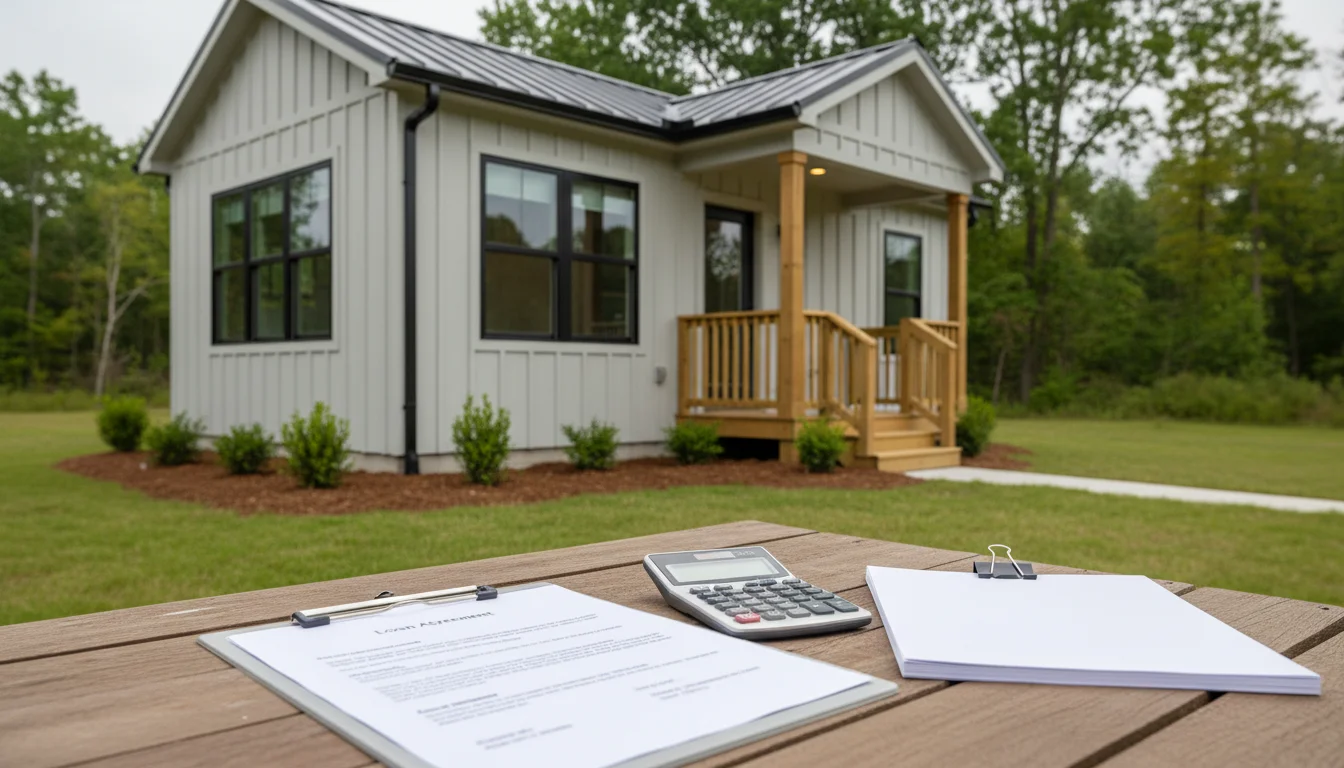
Best Loan Options for Tiny Homes
If you’re set on a tiny home, don’t worry. There are real options out there. They just look a little different from a traditional mortgage.
Personal Loans for Tiny House Buyers
The most popular way to fund a tiny home is with a personal loan. These loans don’t require your home as collateral. You can borrow anywhere from $1,000 to $100,000 depending on your credit score and the lender. According to U.S. News & World Report, you may need a credit score in the mid-700s for large personal loan amounts without collateral.
The downside? Interest rates on personal loans are usually higher — anywhere from 6% to 36% — and the repayment terms are shorter, often just 2 to 7 years. But for many tiny home buyers, this is the most accessible path.
Honestly, if you have good credit and can handle slightly higher monthly payments, a personal loan can get you into your tiny home quickly with very little hassle.
RV Loans: For Tiny Homes on Wheels
If your tiny home is on wheels and built by an RVIA-certified builder, you may qualify for an RV loan. This is a great middle ground — the rates are lower than personal loans, and the terms can stretch out longer.
To use this option, your home must be certified by the Recreational Vehicle Industry Association (RVIA). Not all builders are certified, so check before you buy. RV loans typically require a 10–20% down payment and involve an inspection process.
Here are some key things to know about tiny home financing options:
- Personal loans are the most flexible — no collateral needed, and amounts up to $100,000 are available
- RV loans offer lower rates but require RVIA certification for the home
- FHA Title I loans allow up to $25,000 for property improvements, including building an ADU (tiny home in a backyard)
- Home equity loans or HELOCs work well if you already own property and want to add a tiny home to your land
- Builder financing is available through some tiny home manufacturers who partner with lenders directly
- Seller financing is possible for buyers who don’t qualify for traditional loans — terms are agreed directly between buyer and seller
- Credit unions may offer more flexible terms than big banks, especially for smaller or unusual loan amounts
How to Finance a Modular Home
Financing a modular home is much easier than financing a tiny home. Because modular homes are placed on permanent foundations and built to the same local building codes as traditional houses, most lenders treat them the same way.
Conventional Loans, FHA, VA, and USDA Options
If you’re buying an already-built modular home, the process looks just like buying a regular house. You can apply for a conventional mortgage, which typically requires a credit score of at least 620. With a better score — say 680 or higher — you’ll get better rates.
FHA loans are a popular choice for first-time buyers. They allow a down payment as low as 3.5%, and the credit score minimum is just 580 (or 500 with a 10% down payment). The Federal Housing Administration backs these loans, which makes them easier to get.
Veterans can use VA loans with no down payment at all. USDA loans are available for modular homes in eligible rural areas and also offer low or zero down payment options. According to the U.S. Department of Housing and Urban Development (HUD), modular homes that meet local building codes and are permanently affixed to land qualify for standard mortgage programs.
If you’re also thinking about how to handle the sale of your existing property while buying a new one, the team at Buy Your Properties — Cash Home Buyers in Los Angeles can make the process much easier by giving you a fast cash offer for your current home.
Construction Loans for New Modular Builds
If you’re building a new modular home from scratch, you’ll likely need a construction loan first. This short-term loan covers the cost of the build — the factory work, transportation, site prep, and foundation. Once the home is complete, it converts into a regular permanent mortgage.
Construction loans usually have higher interest rates and require a larger down payment. They also come with inspection requirements as the build moves forward. But they’re the standard way to finance a brand-new modular home.
Keep in mind — you’ll also need to factor in the cost of the land (if you don’t already own it), foundation work ($6,000–$30,000+ depending on type), utility connections, and permits. These costs add up fast, so build them into your budget from day one.
For more insight into how property purchases work in general, check out our post on The Escrow Process: A Step-by-Step Guide for Home Buyers.
What Lenders Look At When You Apply
Whether you’re buying a tiny home or a modular one, lenders want to see a few key things before they say yes.
Credit Score, Down Payment, and DTI Ratio
Your credit score matters a lot. For conventional modular home loans, most lenders want at least 620. For FHA loans, 580 works. For personal loans on a tiny home, higher is better — aim for 700+ to get the best rates.
Your debt-to-income (DTI) ratio is the next big thing. This is how much of your monthly income goes toward paying debts. Most lenders want this to be under 43–50%. If you have a lot of debt, work on paying some of it down before applying.
For the down payment, it depends on the loan type. FHA loans need just 3.5%. Conventional loans may need 3–20%. Personal loans need no down payment at all — but higher rates balance that out.
Foundation Type and Permanent Placement
This is huge. For any mortgage-style loan, your home must be on a permanent foundation. If a modular or tiny home is sitting on a concrete slab, piers, or a full basement — great. If it’s still on wheels, you’re limited to RV loans or personal loans.
Also, the home must be classified as real property, not personal property. This means it needs to be titled as real estate — which usually requires a permanent foundation and a legal connection to the land.
Another useful read if you’re going through this process: How to Buy a Mobile Home with Bad Credit — it covers credit-related strategies that also apply to non-traditional home purchases.
Tips to Improve Your Chances of Approval
Getting approved for a non-traditional home loan takes a little extra prep work. Here’s what I’d suggest doing before you apply.
Work with Specialized Lenders
Not all banks understand modular or tiny home financing. Many big lenders have never dealt with these types of homes and might just say no out of habit. Instead, look for lenders who specialize in non-traditional or prefab homes. Credit unions are often more flexible than big banks. Some tiny home builders also have lending partnerships that make the process much smoother.
According to the Modular Building Institute, the modular construction market is growing rapidly, and more lenders are getting comfortable financing these homes every year.
Get Pre-Approved and Know Your Budget
Before you start looking at homes or builders, get pre-approved for a loan. This tells you exactly how much you can borrow and shows sellers and builders you’re serious.
Also, be realistic about the total cost. The home itself is just one part. You’ll also pay for the land, foundation, site prep, utilities, permits, and possibly transport. Add all of those up before you decide how much you need to borrow.
If you’re thinking about investment potential, you might also enjoy reading our guide on Investment Opportunities with Buy Your Properties — it’s a great next step for anyone thinking beyond their first non-traditional home purchase.
And as always, if you have questions about selling your current home before making a move, contact us at Buy Your Properties — we’re here to help you through every step of your real estate journey.
Conclusion
Financing a tiny or modular home doesn’t have to be impossible — it just requires a bit more homework than a traditional mortgage. Modular homes are the easier path, since they qualify for FHA, VA, conventional, and USDA loans once placed on a permanent foundation. Tiny homes on wheels need creative solutions like personal loans, RV loans, or builder financing. Whatever route you take, understanding your options is the first and most important step. Do your research, improve your credit if needed, work with lenders who get it, and you’ll find a path that works for you.
Frequently Asked Questions
Can I get a regular mortgage for a tiny home?
In most cases, no. Traditional mortgages require a minimum loan amount (often $50,000+) and a permanent foundation. Tiny homes on wheels don’t meet these requirements. However, tiny homes on a permanent foundation may qualify. Personal loans and RV loans are more common for tiny house buyers.
Are modular homes harder to finance than regular homes?
Not really. Once a modular home is placed on a permanent foundation, most lenders treat it the same as a stick-built home. You can apply for FHA, VA, conventional, and USDA loans with similar terms and rates.
What credit score do I need to finance a tiny or modular home?
For FHA loans on modular homes, you need at least 580 (or 500 with 10% down). For conventional loans, aim for 620 or higher. For personal loans on tiny homes, having a score above 700 will get you the best rates and terms.
What is the cheapest way to finance a tiny home?
Builder financing through a tiny home company’s lending partner is often the most accessible option. If your builder is RVIA certified, an RV loan may offer lower rates. If you already own property, a home equity loan or HELOC is typically the cheapest financing route available.
Do I need to own land to get a modular home loan?
Yes, for most permanent mortgage programs. Lenders typically require you to own the land where the modular home will be placed — or purchase it as part of the loan. If you don’t already own land, you may need a separate land loan first, then roll it into a construction-to-permanent loan.