
You found a buyer. You signed the contract. You started packing boxes. And then the call came. The deal fell through. This is not a rare story in Los Angeles. It happens every week, to sellers who did everything right, because the real problem was never the home. It was the financing.
In a market as expensive and competitive as Los Angeles, financing fall-throughs are one of the most frustrating parts of selling a home. And the numbers are more serious than most sellers realize before they list.
How Often Do Deals Actually Fall Apart
According to data published by the National Association of Realtors, in 2024, around 5% of home sale contracts were fully canceled and another 13% were delayed before reaching closing. That means roughly 1 in 5 contracts hits a serious problem before it closes.
In Los Angeles specifically, the numbers can run even higher. Home prices here are well above the national average, which means buyers are stretching their finances further. A small change in their credit score, a shift in interest rates, or a job hiccup can knock them out of approval range entirely.
Data from the real estate market shows that in some price ranges, particularly homes under $300,000, nearly 20% of contracts collapse before closing. At higher price points common in LA, the risk is still real, though buyers tend to have slightly more financial cushion.
The Main Reasons Financing Falls Through
I have talked to many sellers who were blindsided by a failed deal. In almost every case, one of the same few reasons was to blame. Here is what actually causes mortgage financing to collapse after a contract is already signed:
- The buyer loses their job or changes employers between contract and closing
- A new debt, like a car loan or credit card charge, lowers their debt-to-income ratio
- A missed bill payment drops their credit score below the lender’s minimum
- Interest rates rise enough to push the monthly payment out of their budget
- The lender tightens approval guidelines after the pre-approval was issued
- The home fails the lender’s property condition requirements
The tricky part is that pre-approval letters are not guarantees. A buyer can be pre-approved in January and denied in March if anything changes in their financial picture. Sellers have no control over any of this.
The Appraisal Problem That Kills Deals in LA
Los Angeles is a market where prices move fast. Bidding wars push offers above asking price all the time. But lenders will only finance up to the appraised value of a home. If the appraisal comes in lower than the agreed purchase price, the deal hits a wall.
When there is an appraisal gap, three things can happen. The buyer pays the difference in cash. The seller lowers the price to match the appraised value. Or the deal dies. Many buyers in LA simply do not have extra cash sitting around to cover a $30,000 or $40,000 appraisal gap, especially after already budgeting for their down payment and closing costs.
What Appraisal Gaps Cost Sellers in Time and Money
Here is a table showing how an appraisal gap plays out at different price points and what sellers typically face:
| Agreed Sale Price | Appraised Value | Gap | Likely Outcome |
|---|---|---|---|
| $550,000 | $520,000 | $30,000 | Price cut or deal lost |
| $700,000 | $665,000 | $35,000 | Renegotiation or collapse |
| $950,000 | $900,000 | $50,000 | Buyer walks or seller drops price |
According to the Rocket Mortgage report, appraisal issues caused delays in 6% of recent home sales, and in several cases they ended the deal completely. In a market like LA where prices regularly exceed comparable sales data, this is a very real risk.
The Ripple Effect of a Fallen Deal on Sellers
When a deal falls apart at the last minute, the damage is not just emotional. It is financial. You have lost weeks, sometimes months. You may have already moved out or started a new mortgage somewhere else. Your home has to go back on the market, and now buyers start asking what went wrong with the last deal.
This is something I hear from sellers often. The second time on the market feels completely different. The home has a small cloud over it, even if nothing is wrong. And the seller is exhausted, more desperate, and more likely to accept a lower price just to make it end.
This is exactly why more LA sellers are turning to cash buyers instead of going through the traditional financing process. When you sell to a cash buyer, there is no lender. No pre-approval that can fall apart. No appraisal gap. No waiting 45 to 60 days wondering if the deal is still alive.
If you want to understand the full cost difference between a traditional sale and a cash offer, our breakdown of why a lower cash offer can net you more than a higher listing price walks through the real math.
Why Cash Sales Skip All of These Problems
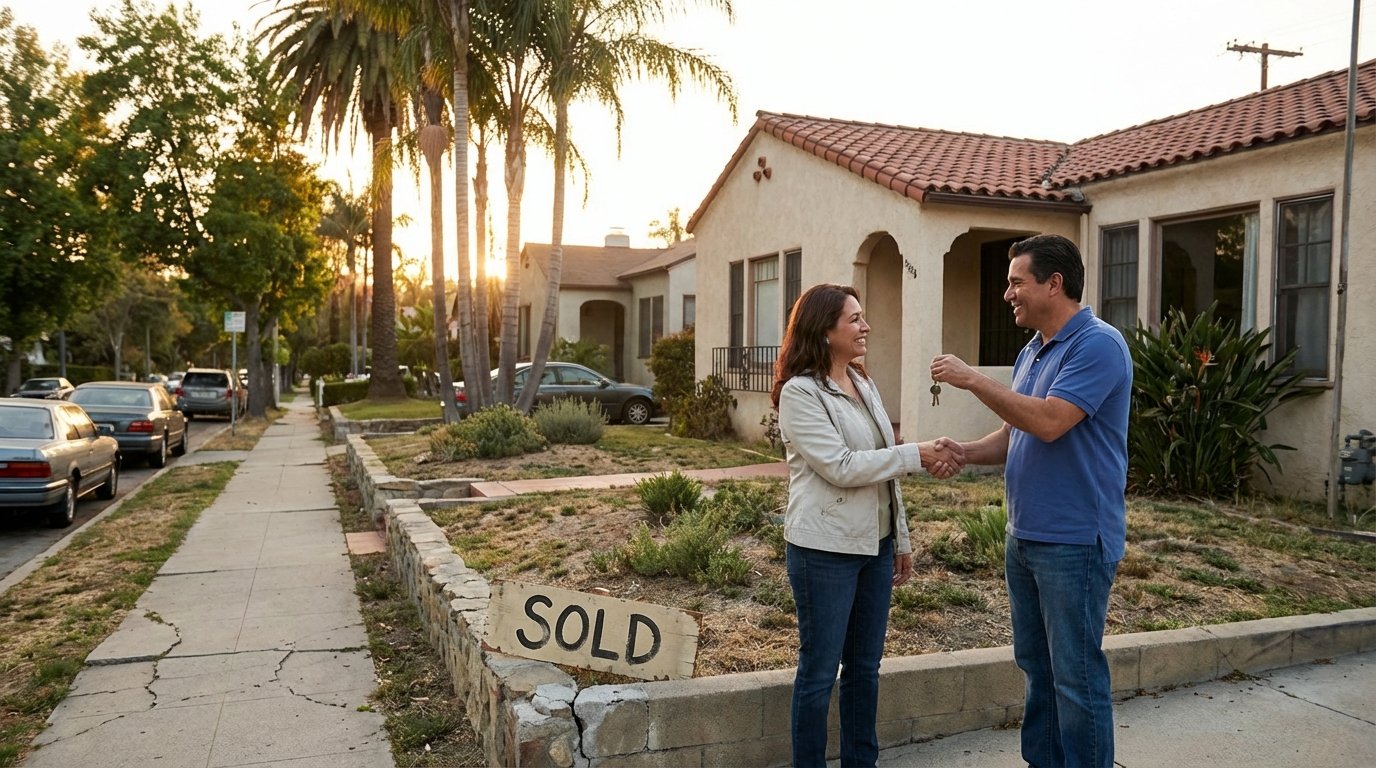
A cash sale removes almost every single cause of a financing fall-through. There is no mortgage approval to chase. No lender waiting on paperwork. No appraisal requirement tied to a loan. No debt-to-income checks happening in the background.
Cash buyers can close in 7 to 14 days in most cases. For a seller who has already been through one failed deal, that certainty is worth a lot. You know when it closes. You plan around it. You move on.
We have worked with many sellers in Los Angeles who came to us after a financing fall-through. The relief they feel when they get a firm cash offer with a specific closing date is real. No more waiting. No more uncertainty.
To see how a cash sale compares to listing with an agent, our post on real estate agent vs cash buyer and which is right for you covers the key differences clearly.
And if you want to talk about your specific situation and find out whether a cash offer makes sense for your home, our team is ready to help. You can reach us anytime through our contact page.
Conclusion
Financing fall-throughs are one of the most painful parts of selling a home in Los Angeles. You do everything right, accept an offer, and then watch it collapse because of something completely out of your control. It happens more often than most sellers expect, and the damage it causes is both financial and emotional.
The good news is you do not have to put yourself through that risk. Selling to a cash buyer means no financing, no appraisal gaps, no last-minute loan denials. You get a real offer, a real date, and a clean path to closing.
According to Bankrate, financing issues remain the number one reason home sales fail to reach closing. Knowing this, it is worth asking whether the traditional sale route is really the safest path for your situation.
Frequently Asked Questions
How often do home sale deals fall through in Los Angeles?
Nationally, about 5% of contracts are fully canceled and 13% are delayed before closing, according to 2024 NAR data. In LA, where buyers are more financially stretched and home prices are high, the risk of a deal falling apart is even greater. Appraisal gaps and financing denials are especially common in competitive bidding situations.
What is the most common reason a home sale falls through?
Financing problems are the top cause. A buyer can be pre-approved and still get denied if their financial situation changes between contract signing and closing. This includes job changes, new debts, credit score drops, or interest rate increases that make the monthly payment unaffordable.
What happens to the seller when a deal falls through?
The seller has to relist the home, often at a disadvantage because buyers wonder why the previous deal did not close. The seller also loses time, sometimes months, and may face higher carrying costs during that period. It is stressful and can force sellers into accepting lower offers later.
Can I protect myself from a financing fall-through as a seller?
You can ask for stronger pre-approval documentation from buyers, require proof of funds, or accept only buyers who are further along in the approval process. But the most reliable protection is selling to a cash buyer, since there is no lender involved at all.
Is a cash sale really faster and more certain than a traditional sale?
Yes. A cash sale typically closes in 7 to 14 days. There is no mortgage approval process, no appraisal required by a lender, and no financing contingencies that can unravel at the last minute. For sellers who want certainty over everything else, a cash offer is the most reliable path to closing.