
Most Dallas homeowners know they have to pay property taxes every year. But when you get ready to sell, a lot of questions pop up fast. Who pays the taxes for the year you sell? What happens if you have not paid them yet? Can unpaid taxes stop your sale from closing? This guide breaks all of that down so you are not caught off guard when closing day comes around.
How Property Taxes Work in Dallas Before You Ever List
The Basics of Texas Property Tax That Every Seller Should Know
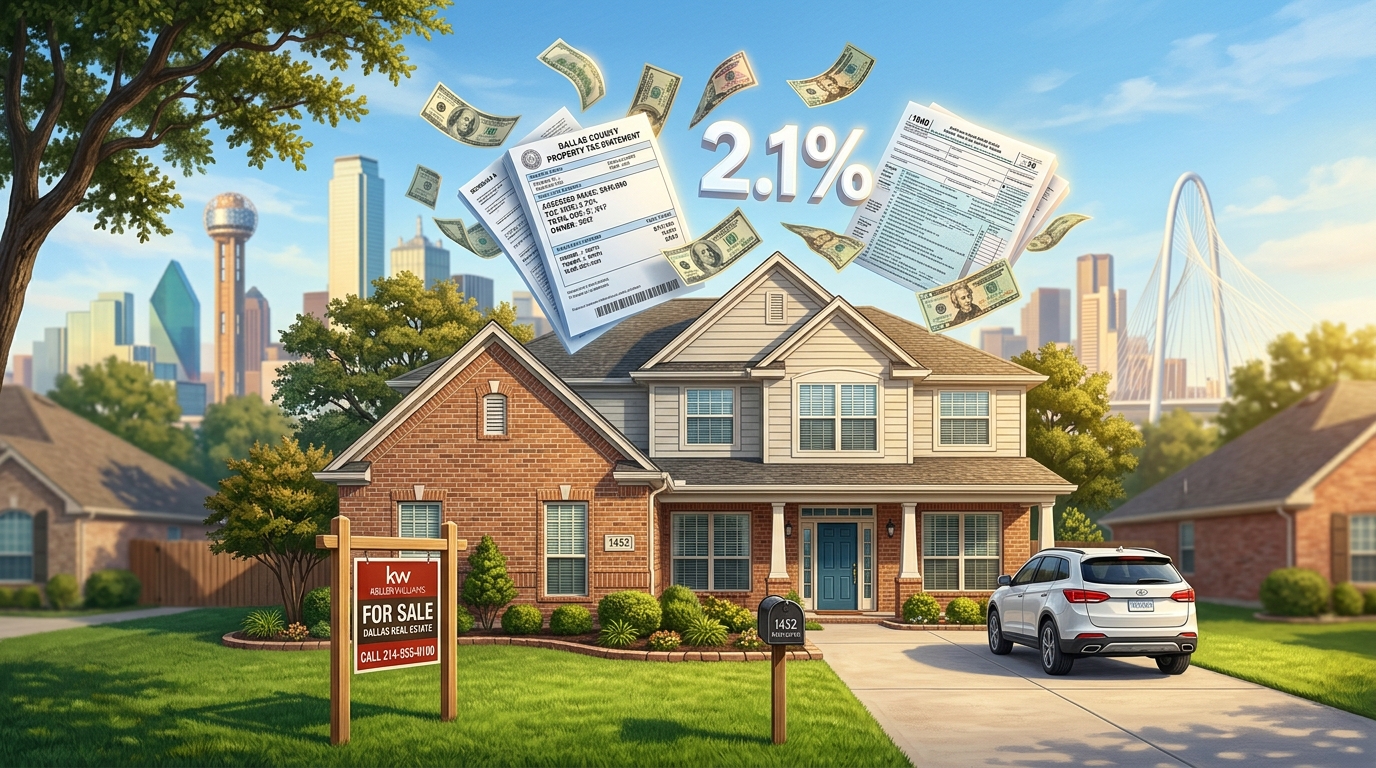
Texas is one of the states with no income tax at the state level. The trade-off is that property taxes are higher here than in many other places in the country. In Dallas County, the effective property tax rate typically runs somewhere between 2 and 2.5 percent of the assessed value of your home, though the exact number depends on your specific location and which taxing jurisdictions apply to your property.
Texas property taxes are paid in arrears. That means the taxes you pay in 2026 are actually for the 2025 tax year. This matters a lot when you are selling because it affects how the taxes are handled at closing and how much you will owe or receive as a credit.
According to the Texas Comptroller of Public Accounts, property taxes in Texas are assessed and collected at the local level, with each county appraisal district responsible for setting values and each taxing unit, including cities, counties, school districts, and special districts, setting its own tax rate. In Dallas, multiple taxing units can apply to a single property at once.
What the Dallas County Appraisal District Does and Why It Matters When You Sell
The Dallas Central Appraisal District, also known as DCAD, is the entity that determines the assessed value of your home each year. That assessed value is what your property tax bill is based on. If DCAD says your home is worth $350,000 and the combined tax rate for your area is 2.2 percent, your annual tax bill is roughly $7,700.
When you sell, a buyer’s lender may look at your current DCAD assessed value as part of their appraisal process. If your home has gone up significantly in market value but has not been reassessed recently, there can be a gap. That gap does not always affect your sale directly, but it can affect what the new owner pays in taxes after they take ownership, which some buyers factor into their offers.
You can look up your property’s current assessed value and tax history at any time through the DCAD website. Doing this before you list gives you a clear picture of where things stand and helps you prepare for the questions buyers and their agents may ask.
How Property Taxes Are Handled at Closing in a Dallas Home Sale
The Tax Proration Process and How It Works
Because Texas property taxes are paid in arrears and the bill for the current year is not due until January 31 of the following year, you will not be handing over a tax bill at closing. Instead, the taxes get prorated.
Tax proration means the seller pays for the portion of the tax year they owned the property, and the buyer covers the rest. Here is how the math works in a simple example.
Say your annual property tax bill is $7,200 and you close on your home sale on June 30. You owned the property for the first 181 days of the year. Your share of the taxes is 181 divided by 365, multiplied by $7,200, which works out to roughly $3,568. That amount is credited to the buyer at closing so they have funds set aside to pay the full tax bill when it comes due.
The title company or closing attorney handles this calculation as part of the closing statement. You do not have to do the math yourself, but knowing how it works prevents you from being surprised when you see a line item on your settlement statement showing a tax proration deduction from your proceeds.
When You Have Unpaid Property Taxes and What That Means for Your Sale
Unpaid property taxes in Texas become a lien on your property automatically. You do not have to do anything for a tax lien to attach. It just happens when taxes go past due. And a lien has to be paid off before the property can transfer to a new owner with a clean title.
The good news is that in most cases, the unpaid taxes are simply paid out of the closing proceeds. The title company calculates the outstanding balance including any penalties and interest, pays the taxing authority directly from the sale, and the buyer receives a clear title. You walk away with whatever is left after the tax balance and other closing costs are settled.
The more complicated situation is if your unpaid taxes have grown to the point where they exceed what you would net from the sale. In that case, you may need to negotiate with the taxing authority or look at other options before the sale can go forward. This is rare but it does happen, especially on properties that have been neglected for years.
To understand your full financial picture before you commit to a selling strategy, our post on how to calculate your home equity in 5 minutes can help you quickly figure out what you are actually working with after taxes and other costs are accounted for.
Property Tax Exemptions That Affect Dallas Home Sellers
What Happens to Your Homestead Exemption When You Sell
If you have lived in your Dallas home as your primary residence, you are almost certainly taking advantage of the homestead exemption. This exemption reduces the taxable value of your home, which lowers your property tax bill. In Texas, the general homestead exemption can save you a meaningful amount each year depending on your local rates.
When you sell your home, your homestead exemption stays in place through the end of the tax year in which you sold, even if you have already moved out. The new buyer will need to apply for their own homestead exemption when they move in. Their exemption applies starting January 1 of the year after they purchase, as long as they file before May 1.
This means the buyer will not have the same tax benefit in the first partial year they own the home. That can sometimes be a point of negotiation, particularly if the new buyer is coming from out of state and does not realize how the Texas homestead exemption timeline works.
Other Exemptions and Special Situations Worth Knowing About
Beyond the standard homestead exemption, Texas offers additional property tax relief for certain homeowners. These include exemptions for seniors aged 65 and older, veterans with service-connected disabilities, and homeowners with qualifying disabilities. If you have been receiving any of these exemptions, the way they interact with a sale can be a little different from the standard homestead situation.
For example, the over-65 exemption in Texas comes with a property tax freeze that locks in the school district portion of your taxes. When you sell, that freeze goes away for the new owner unless they also qualify. For a buyer who was counting on inheriting your frozen tax rate, finding out that is not how it works can be a surprise. Being upfront about this before the offer stage prevents confusion later.
Here is a quick reference table showing how the most common exemptions affect the selling process in Dallas.
| Exemption Type | Who Qualifies | What Happens When You Sell |
|---|---|---|
| General Homestead | Primary residence owners | Stays through end of tax year you sell |
| Over-65 Exemption | Homeowners aged 65 or older | Ends at sale, new owner must qualify independently |
| Disabled Person | Homeowners with qualifying disability | Ends at sale, new owner must reapply |
| Veteran Exemption | Veterans with service-connected disability | Does not transfer, buyer must qualify separately |
| Agricultural Exemption | Properties used for farming or ranching | May trigger rollback taxes if use changes at sale |
If you are not sure which exemptions apply to your property or how they will affect your sale, the Texas Comptroller website has detailed guidance on each exemption type and what happens when a qualifying property changes hands.
Federal Capital Gains Taxes and What Dallas Sellers Often Get Wrong
The Home Sale Tax Exclusion Most Sellers Can Use
Property taxes are one thing. Federal capital gains taxes are a completely separate issue that trips up a lot of sellers. When you sell a home for more than you paid for it, the profit is generally considered a capital gain and may be subject to federal tax. But most homeowners who have lived in their home for at least two of the past five years can exclude a significant portion of that gain.
According to the Internal Revenue Service, single filers can exclude up to $250,000 of capital gain from the sale of a primary residence, and married couples filing jointly can exclude up to $500,000. If your profit from the sale falls below those thresholds, you owe nothing in federal capital gains tax. This applies to a huge number of Dallas sellers, especially those who bought their homes years ago at lower prices.
There are specific rules about what counts as your cost basis and what expenses you can add to it, including the cost of major improvements you made to the home over the years. Keeping records of those costs can reduce your taxable gain even further.
When Capital Gains Taxes Actually Do Apply to Your Dallas Sale
If you have owned your home for a very long time and it has appreciated significantly, or if you are selling a property that was not your primary residence, capital gains taxes become more relevant. Investment properties, rental homes, and second homes do not qualify for the primary residence exclusion.
I have seen sellers get caught off guard by this when they inherited a rental property or vacation home and expected the same tax treatment as a primary residence sale. It does not work that way. Gains on non-primary residences are taxable at either short-term or long-term capital gains rates depending on how long you owned the property.
Here is a simple breakdown to help you understand where you stand before you sell.
- Owned and lived in the home as your primary residence for 2 or more of the last 5 years? You likely qualify for the exclusion and owe little to no federal capital gains tax on the gain up to the threshold.
- Selling a rental or investment property? Your gain is taxable. The rate depends on how long you owned the property and your income level, but long-term capital gains rates are currently 0, 15, or 20 percent for most taxpayers.
- Selling an inherited property? You get a stepped-up basis to the fair market value at the date of death, which often reduces or eliminates taxable gain even if the original owner bought it decades ago.
- Selling a home you owned for less than one year? Short-term capital gains rates apply, which are the same as your ordinary income tax rate. This rarely applies to Dallas homeowners but it matters for quick flips and recent buyers who need to sell fast.
- Not sure where you fall? A tax professional or CPA who understands real estate transactions can give you a number before you close so there are no surprises at tax time.
For a clear picture of what you will actually walk away with after taxes and closing costs, our post on how to sell your Dallas home fast in a shifting Texas market covers the bigger selling picture and helps you think through the financial side of your decision.
And according to the Consumer Financial Protection Bureau, your closing disclosure will show you a detailed breakdown of every cost and credit involved in your transaction, including the tax proration. Reviewing that document carefully before closing day helps you understand exactly where your money is going.
If you want to talk through your specific situation before you commit to a selling strategy, visit our Dallas Texas page or contact us here and we can walk you through the process from start to finish.
Conclusion
Property taxes are one of those things that can quietly eat into your proceeds if you are not paying attention. The good news is that Texas has a clear system, and if you understand how proration works, what your exemptions cover, and what happens with any unpaid balances, you can go into your Dallas home sale fully prepared. Capital gains taxes at the federal level are a separate thing to think about, but most primary residence sellers find they owe little to nothing once they understand the exclusion rules. Get your numbers straight before you list and you will avoid the most common surprises that catch sellers off guard at the closing table.
Frequently Asked Questions
Who pays property taxes at closing in a Dallas home sale?
Both the buyer and seller share responsibility for the taxes based on how much of the year each party owned the home. The taxes are prorated at closing, and the seller’s share is deducted from their proceeds and credited to the buyer. The title company handles this calculation as part of the closing statement.
What happens if I still owe property taxes when I sell my Dallas home?
Unpaid property taxes in Texas create an automatic lien on the property. At closing, the outstanding balance including any penalties and interest is paid directly to the taxing authority out of the sale proceeds. As long as your home is worth more than what you owe in taxes and other costs, the sale can still go forward and the lien is cleared at closing.
Does the buyer take over my homestead exemption when they buy my Dallas home?
No. Exemptions do not transfer from seller to buyer. Your homestead exemption stays in place through the end of the tax year in which you sold the home. The buyer must apply for their own exemption by May 1 of the following year to receive benefits starting January 1 of that year.
Will I owe capital gains tax when I sell my Dallas home?
Probably not if it has been your primary residence for at least two of the last five years. The federal exclusion allows single filers to exclude up to $250,000 of gain and married couples filing jointly to exclude up to $500,000. If your profit falls below those amounts, you owe nothing in federal capital gains tax. Consult a tax professional for your specific situation.
Can a property tax lien prevent my Dallas home from closing?
A lien will not prevent the sale from closing in most cases. It just means the lien has to be paid off at closing before the title can transfer free and clear. The title company coordinates the payoff. The only exception is if the lien amount is so large that it cannot be covered by the sale proceeds, which would require a separate resolution before the sale could proceed.