
Your house isn’t perfect. Maybe the kitchen is outdated, the carpet is from 1992, or the backyard looks like nobody has touched it in years. But here’s the thing — ugly houses sell every single day. The secret isn’t fixing everything. It’s knowing how to market what you have in a way that gets the right buyers excited. And that’s exactly what this guide is going to show you.
Why “Ugly” Houses Are Harder to Sell — And How Marketing Fixes That
Most buyers can’t picture a space differently. They walk into a home — or more likely scroll past it online — and if the first impression is bad, they’re gone in seconds. That’s the real problem with distressed properties and fixer-uppers. It’s not the house itself. It’s the presentation.
I’ve seen homes with cracked walls and outdated fixtures sell in under two weeks, and homes in perfect condition sit for months. The difference almost always comes down to how they were marketed. Good marketing doesn’t hide the flaws — it shifts the buyer’s focus to the potential value, the price point, and the opportunity.
The Right Buyer for an Ugly House Already Exists
Here’s something most sellers don’t realize: there’s an entire group of buyers out there actively looking for homes like yours. Real estate investors, house flippers, first-time buyers on a tight budget, and DIY enthusiasts are all scanning the market for below-market-value homes with good bones.
Your job isn’t to convince every buyer your home is beautiful. Your job is to get your home in front of the people who already want exactly what you’re selling. The right marketing strategy makes that happen fast.
What Makes a House Look “Ugly” to Buyers?
Ugly is mostly about first impressions. Things like dark photos, clutter in listing images, bad curb appeal, or a confusing listing description all make buyers skip past your home before they even give it a chance.
Honestly, a lot of “ugly” is just poor presentation. Remove the clutter, fix the lighting in photos, and write a description that talks about opportunity instead of problems — and suddenly the same house looks completely different. We haven’t changed the house. We’ve changed the story.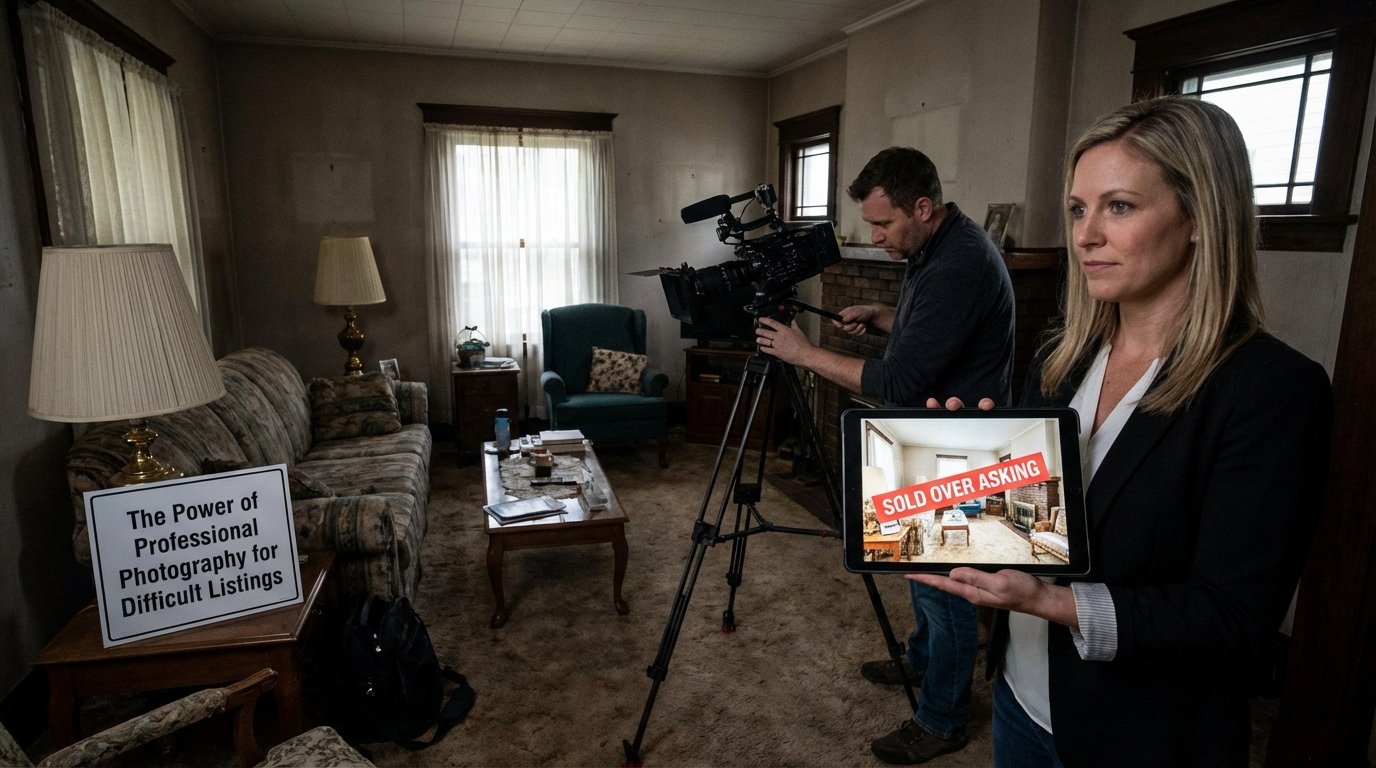
The Power of Professional Photography for Difficult Listings
If there’s one thing I’d tell every seller of a challenging home, it’s this: do not skip professional photography. I know it feels like a waste of money when the house isn’t looking its best. But the data tells a very different story.
According to the National Association of Realtors (NAR), listings with professional photos sell 32% faster and receive up to 61% more online views than those with amateur images. For an ugly house, that extra attention is everything. More views mean more chances to find your specific buyer.
Virtual Staging: The Game-Changer for Ugly Interiors
Virtual staging is one of the smartest tools available for selling a difficult home. Instead of spending thousands on physical furniture and décor, a professional editor takes your empty or cluttered room photo and digitally adds furniture, cleans up the space, and even changes paint colors — all within 24 hours and for a fraction of the cost.
According to NAR data, 82% of buyer’s agents say staging makes it easier for buyers to visualize a property as their future home, and virtually staged properties sell up to 75% faster than empty spaces. For a home that doesn’t look great in person, showing buyers what it could look like is often the single biggest thing you can do to drive interest.
Drone Photography and Twilight Shots: Unexpected Wins
If your home’s exterior isn’t the best, consider drone photography. Aerial shots show the lot size, the neighborhood, proximity to parks or schools — things that matter to buyers beyond the house itself. Properties featuring aerial photos sell 68% faster than those without, according to photography industry research cited by PhotoUp’s 2025 real estate photography statistics report.
Twilight photography is another trick I’ve seen work well. Exterior shots taken at dusk with warm interior lights glowing through the windows create a feeling of warmth and comfort, even if the paint is peeling a little. Those kinds of images get attention. They make buyers stop scrolling.
How to Write a Listing Description That Sells Potential, Not Problems
Your listing description is doing more work than most sellers realize. It’s not just words on a page — it’s the story you’re telling buyers before they ever step foot inside. For a home with cosmetic issues, this story needs to be told carefully and honestly.
Words That Attract the Right Buyers
There’s a big difference between saying “needs work” and saying “priced to reflect TLC needed — great opportunity for investors or handy buyers.” Both are honest. But one invites curiosity and one scares people off. Here’s a quick look at how to reframe common issues in your listing copy:
| Problem Description (Avoid) | Opportunity Description (Use This) |
|---|---|
| “Needs complete renovation” | “Priced well below market — ready for your personal touch” |
| “Old kitchen and bathrooms” | “Blank slate to design your dream kitchen and baths” |
| “Overgrown yard” | “Large, private lot with landscaping potential” |
| “Outdated throughout” | “Original finishes — great bones, move-in ready with updates” |
| “Small rooms” | “Cozy layout with efficient use of space” |
| “No updates since 1980s” | “Investor special — solid structure, priced to sell fast” |
The goal is to be honest but frame things in a way that talks to the buyer who would actually love this home. Don’t oversell it. Just speak to its value.
Highlight the Location, Lot, and Bones — Not Just the Finish
I’ve worked with sellers who were so embarrassed about their home’s interior that they forgot to mention the good stuff. A great school district. A huge backyard. Solid construction. A quiet street. An attached garage. These things matter enormously to buyers — and they don’t require renovation.
Lead with location and lot size if they’re strong. Mention the structural condition if it’s sound. Buyers who are considering a fixer-upper want to know the foundation is solid and the roof isn’t about to cave in. Give them that confidence and let the cosmetics become a selling point — not a liability.
Smart Digital Marketing Strategies to Reach Fixer-Upper Buyers
The days of putting a home on Zillow and waiting are over — especially for a property that needs work. For ugly houses, you need to be intentional about where you market and who you’re marketing to.
Video Marketing: The Most Underused Tool for Tough Listings
Video is powerful for ugly homes because it lets you control the narrative. A well-made walkthrough video can show the layout, the size of the rooms, the natural light — things still photos can’t always capture. You can narrate as you walk through, explaining what you’d do with each space. Buyers who watch videos are far more likely to make an offer.
According to the National Association of Realtors, property listings with videos receive 403% more inquiries than listings without. And 73% of homeowners say they’re more likely to list with an agent who uses video. For a home that looks rough in photos, video gives you a chance to show more context and build genuine buyer interest.
Target Investors and Flippers with the Right Channels
For distressed properties and fixer-uppers, your best buyers aren’t browsing Zillow on a Sunday afternoon. They’re in real estate investor Facebook groups, on BiggerPockets forums, on local investor email lists, and attending real estate meetups. Marketing directly to this audience cuts through the noise.
Some simple ways to reach investor buyers:
- Post in local real estate investor Facebook groups with honest details about the property, price, and condition.
- List on investment-focused platforms in addition to the MLS — wholesaler networks, investor databases, and off-market property sites.
- Create a short Instagram Reel or TikTok showing a “before” walkthrough of the property with estimated renovation costs overlaid. These get huge organic reach.
- Send to a VIP email list of investors and cash buyers who want early access to below-market deals.
- Host a live virtual open house via Facebook or YouTube Live, narrating the space in real time and answering questions from interested buyers directly.
- Partner with local real estate investors and wholesalers who may already have buyers looking for exactly this type of property.
Low-Cost Physical Fixes That Make a Big Marketing Difference
You don’t have to renovate the whole house. But a few small, cheap improvements can completely change how the home photographs and how buyers feel when they arrive. I always say: don’t over-invest in the house, but don’t under-invest in the presentation.
Curb Appeal on a Budget
The outside of your home is the first thing buyers see — in photos and in person. You don’t need to redo the whole facade. A few targeted fixes can make an enormous difference in how the listing looks online and how buyers feel when they pull up for a showing.
Simple and affordable curb appeal improvements that photograph well include mowing and edging the lawn, adding a fresh welcome mat, painting or replacing the front door (a new front door costs $100–$400 and has one of the highest ROIs of any home improvement), clearing out overgrown bushes, pressure washing the driveway and walkway, and adding a few potted plants near the entry. None of these changes cost a lot. But they change the feeling of the home immediately — both in person and in photos.
Inside the Home: What to Clean, Declutter, and Stage
For interiors, the single most impactful thing you can do before the photographer comes is declutter. Completely. Empty surfaces. Clear counters. Remove personal photos and extra furniture. An empty, clean room photographs better than a furnished room full of stuff — even if the paint is old and the floors are scratched.
Then deep clean everything. Buyers notice smells as much as they notice visuals — and a clean-smelling home creates a positive emotional response even in a rough property. Open all the blinds and curtains on photo day to let in as much natural light as possible. Good light makes even the most outdated rooms look warmer and more inviting.
If you’d prefer to skip all of this and just sell your home fast without any of the prep work, our cash home buying team in Los Angeles buys homes as-is, no photos or staging required. Or if you want to understand how pricing an ugly home works, check out our guide on choosing the perfect listing price for your home. And if you’re looking to bring more buyers to the table through digital channels, our post on digital marketing strategies for selling property covers everything in detail. Any questions about your specific situation? Contact us anytime — we’re happy to help.
Conclusion
An ugly house is not an unsellable house. With the right marketing strategy, the right photos, the right language in your listing description, and the right channels to reach your ideal buyer, a fixer-upper can sell quickly and for a fair price. You don’t need to spend a fortune renovating. You need to spend smartly on presentation and get in front of the buyers who already want what you have. That’s the real secret — and now you have it.
Frequently Asked Questions
Can you really sell an ugly house without fixing it?
Yes, absolutely. Many buyers — especially investors, house flippers, and first-time buyers on a budget — are actively looking for homes that need work. The key is pricing the home correctly to reflect its condition, marketing it to the right audience, and presenting it honestly but with focus on its potential and strengths rather than its flaws.
What is virtual staging and does it work for ugly homes?
Virtual staging is the process of digitally adding furniture and décor to room photos so buyers can see what the space could look like. It works incredibly well for homes with empty or outdated interiors because it helps buyers visualize the potential. According to NAR data, 82% of buyer’s agents say staging makes it easier for buyers to picture themselves in the home, and virtually staged homes sell up to 75% faster than unstaged ones.
What kind of buyers look for fixer-upper homes?
Several types of buyers specifically look for homes that need work: real estate investors who plan to renovate and resell, house flippers who want below-market deals, first-time buyers who want to build equity through sweat equity, and DIY homeowners who prefer to customize a home themselves. Marketing directly to these groups through investor networks, social media, and off-market channels is often more effective than waiting for retail buyers to come along.
Does professional photography really help sell an ugly house?
Yes — perhaps more than for a move-in-ready home. Professional photos maximize what’s good about the property, use lighting and angles that make spaces look larger and brighter, and ensure the listing stands out online. Listings with professional photos receive up to 61% more views and sell 32% faster than those with amateur images, according to NAR research. More views means more chances to find the right buyer.
What are the cheapest things I can do to improve a home’s marketability?
The highest-impact, lowest-cost improvements are: a deep clean of the entire home, decluttering and removing personal items before photos, mowing and trimming the lawn, pressure washing the driveway and entry, painting or replacing the front door, and opening all blinds and curtains on photo day for maximum natural light. These actions cost very little but dramatically change how a home looks in listing photos and how buyers feel during showings.