
So You Want to Move Your Mobile Home — What Will It Really Cost?
Moving a mobile home sounds simple at first. You own it, it has wheels, so you just drive it to the new spot, right? Well, not quite.
The truth is, moving a mobile home takes planning, permits, professionals, and real money. Whether you are moving across town or across the state, the costs can surprise you if you are not ready.
In this guide, I will walk you through everything you need to know about mobile home moving costs — from single-wide to triple-wide, short distance to long-distance, and everything in between.
What Is a Mobile Home Move, Exactly?
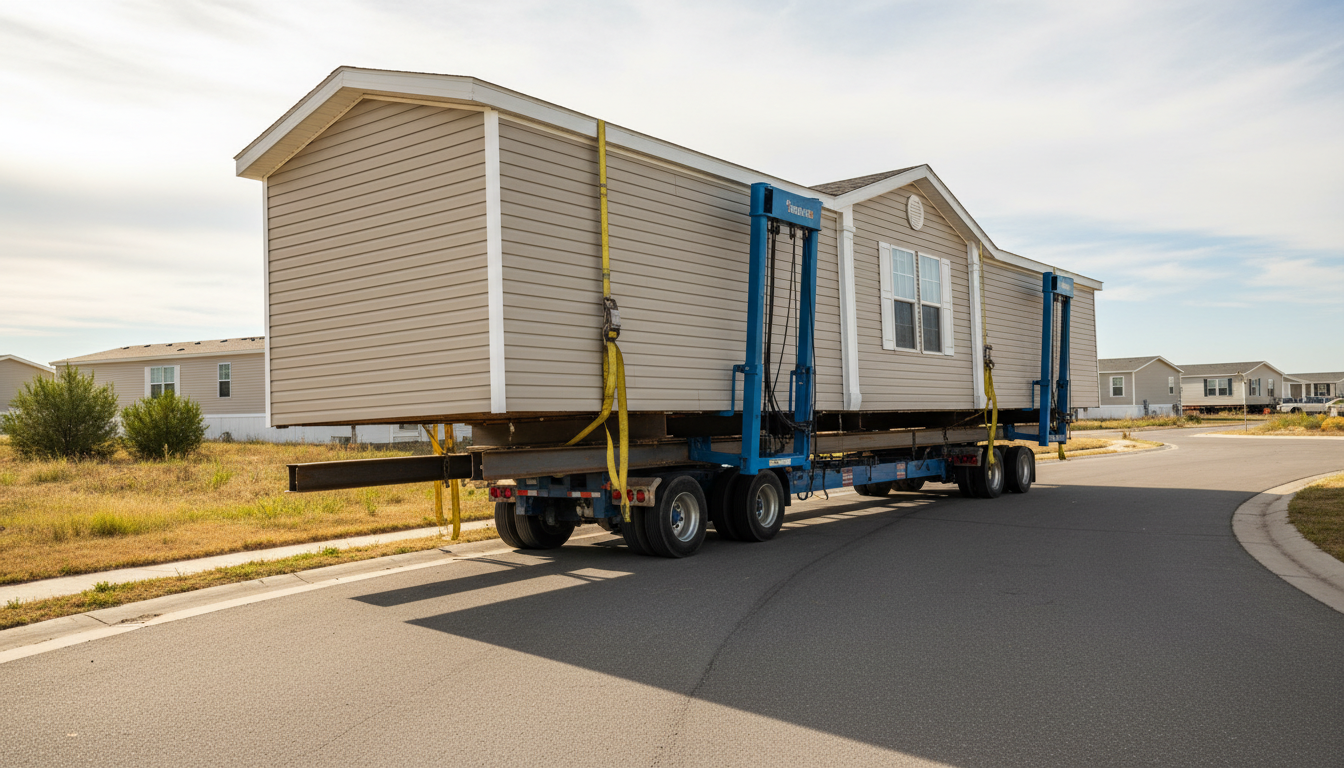
A mobile home move means a professional moving company attaches your home to a truck, drives it to a new location, and disconnects it there.
There are two main types of moves: transport-only and full-service.
A transport-only move just covers the driving part. You disconnect the utilities yourself before the move and reconnect them after. A full-service move includes everything — disconnecting utilities, transporting, setting up, and reconnecting at the new location.
Can You Move Any Mobile Home?
Not all mobile homes can be moved. Older homes, especially those with a lot of wear, may not survive a move. Your mover will check the condition of the home and the steel chassis before agreeing to transport it.
Homes that have been on a permanent foundation for many years may also be harder to move. Always get a professional inspection before planning a move.
Average Cost to Move a Mobile Home by Size
The biggest factor in your cost is the size of your home. Here is a breakdown based on current 2024–2025 data.
| Home Type | Short Distance (under 50 miles) | Long Distance (over 50 miles) |
|---|---|---|
| Single-Wide | $3,000 – $9,000 | $5,000 – $15,000 |
| Double-Wide | $7,000 – $13,000 | $8,000 – $20,000+ |
| Triple-Wide | $20,000+ | $20,000+ |
According to Extra Space Storage’s moving guide, mobile home moving costs typically range from $3,000 to $20,000 or more, depending on several key factors. A full-service move that includes setup at the new site adds another $3,000 to $8,000 on top of that.
I will be honest — when I first looked into this, I thought it would be a few hundred dollars and a big truck. The reality was quite different. These are serious logistical operations.
What Is Included in a Transport-Only Move?
When you pick a transport-only option, the moving company will:
- Attach your home to a special towing vehicle
- Get all required permits along the route
- Carry liability insurance for the move
- Drive the home to the new site
- Unhook the home at the destination
You are responsible for making your home move-ready before they arrive. That means disconnecting all utilities, removing decks, porches, and skirting, and making sure the home is secured for travel.
What Does a Full-Service Move Include?
A full-service move covers more ground. The crew handles:
- Disconnecting all utilities (water, gas, electricity)
- Removing skirting, tie-downs, and exterior add-ons
- Transport and all required permits
- Setting up the home at the new location
- Reconnecting utility hookups
This option is more expensive but much easier on you. If you are not experienced with mobile home setup, full-service is usually worth the extra cost.
What Makes the Price Go Up or Down?
The final price on your quote depends on several things. Understanding these can help you plan your budget and even save money.
Distance Is the Biggest Driver of Cost
The farther the move, the more you pay. Your home will be driven on a truck — slowly — using a lot of fuel. Long-distance moves also mean more time, which means more labor costs.
Some movers charge per mile. Others charge a flat rate for zones. Always ask your mover how they calculate distance pricing before you sign anything.
A very long move might also require overnight stops, which adds to the cost. And if the route has restricted roads or low bridges, the mover may have to go the long way around — and charge you for those extra miles.
Permits, Escorts, and Inspections Add Up
Every state requires permits to move a mobile home. In some states, you need a permit for every county you pass through. These permits usually cost $50 to $150 each, but they can add up fast on a long trip.
If your home is extra-wide — like most double-wide or triple-wide homes — you may also need a police escort or a pilot car to guide the truck. This can add several hundred to a few thousand dollars depending on how far you are going.
Some states also require an inspection at the new site before you can occupy the home. That means an extra fee for the inspector. According to the HUD Manufactured Housing Office, homes must meet installation standards at the new site — including proper blocking, leveling, and anchor assembly tie-downs for wind resistance.
Extra Costs You Might Not Think About
Beyond the main moving price, there are several other costs that can pop up. These catch a lot of people off guard.
- Site preparation – Your new land must be ready. That may mean clearing trees, grading the ground, or building a pad. This can cost $1,000 to $5,000 or more.
- New utility hookups – Connecting water, electricity, and sewage at the new site costs money too. Budget $1,000 to $3,000 depending on the location.
- Foundation work – If you want a permanent foundation, that is a separate project that can run $3,000 to $10,000 or more.
- Storage costs – If there is a gap between leaving the old site and arriving at the new one, you may need to store the home temporarily.
- Repairs after the move – Even the best movers sometimes cause small cracks or damage during transport. Budget a little extra for touch-ups.
How to Save Money on Your Move
I have seen people cut their costs significantly with a few smart moves. Here is what works:
First, get at least three quotes from different moving companies. Prices vary a lot, and comparing is worth the effort.
Second, move during the off-season if possible. Spring and summer are the busiest months. Fall and winter often come with lower rates.
Third, do as much prep work yourself as you can. The more you do before the movers arrive — like removing skirting or clearing the path to the home — the less you pay.
Before you plan any move, make sure you understand the property title process. Our guide on the escrow process step by step can help you think through the full picture of buying or selling with a manufactured home.
What About Moving to a Different State?
Moving across state lines adds a layer of complexity. Each state has its own permit rules, and you will need permits for every state you pass through. Your mover must know these rules and handle them.
You may also need to re-title your home in the new state. This involves paperwork and fees with the new state’s DMV or housing office. Plan for extra time and a few hundred dollars more in fees.
Is It Worth Moving Your Mobile Home?
Well, that depends on your situation. If the cost to move is less than buying a new home or starting over, then yes — it can absolutely be worth it.
For many people, their mobile home is paid off and in good condition. Moving it is a way to start fresh in a new area without a huge loan.
When Moving Does NOT Make Sense
There are times when moving is not the smart choice:
- If the home is older and in poor structural condition
- If the move will cost more than the home is worth
- If the chassis or foundation is damaged
- If the new site’s zoning laws may not allow the home
To check property rules in your new location before you move, read our guide on how to do a property lien search. It is a smart step before any property decision.
Getting the Right Moving Company
Not every trucking company can legally move a mobile home. You need a company licensed for manufactured home transport in your state.
Ask for proof of insurance, a breakdown of all fees, and references from past clients. A bad mover can damage your home badly, and recovering that cost can be a nightmare. Do not skip this step.
Conclusion
Moving a mobile home is more complex and more expensive than most people think. A single-wide move under 50 miles starts around $3,000. A double-wide long-distance move can hit $20,000 or more.
The key is to plan early, understand all the costs, and get multiple quotes. With the right preparation, moving your home to a new location can be a smooth, successful experience.
Have questions about your specific situation? Feel free to contact us and we will help you figure out the best path forward.
Frequently Asked Questions
How much does it cost to move a single-wide mobile home?
A single-wide move typically costs $3,000 to $9,000 for short distances under 50 miles. For longer moves, expect to pay $5,000 to $15,000 or more. Full-service options that include setup and utility reconnection cost more than transport-only services.
What permits do I need to move a mobile home?
You need a moving permit from every state and often every county you travel through. Your moving company will usually handle getting these, but the costs are passed on to you. Permit fees range from about $50 to $150 each, and they can add up on long trips.
Can I move a mobile home myself?
Technically possible in some cases for very small homes, but it is not recommended. Moving a manufactured home requires a special towing vehicle, permits, insurance, and experience. Most states require a licensed mover. Doing it yourself could result in damage to your home or legal trouble.
How long does it take to move a mobile home?
A short-distance move can take 1 to 2 days. A longer move may take several days. You also need to factor in time for permits, site preparation, and utility setup at the new location, which can stretch the total process to a few weeks.
Will moving my mobile home lower its value?
Not necessarily. If the home is moved carefully and set up properly on the new site, the value should not change much. However, if the home gets damaged during the move, or if the new site has worse zoning or land ownership terms, the value could be affected. Buying land you own is always better for home value than renting a space.