
Inheriting a home in Dallas can feel like a gift and a headache at the same time. The property is yours, but now you have to figure out what to do with it fast, especially if you live far away, if there are multiple family members involved, or if the home needs a lot of work. Cash buyers make this whole situation a lot easier, and once you see why, it is hard to argue with the logic.
What Happens When You Inherit a Home in Texas
The Basics of Inherited Property in Dallas
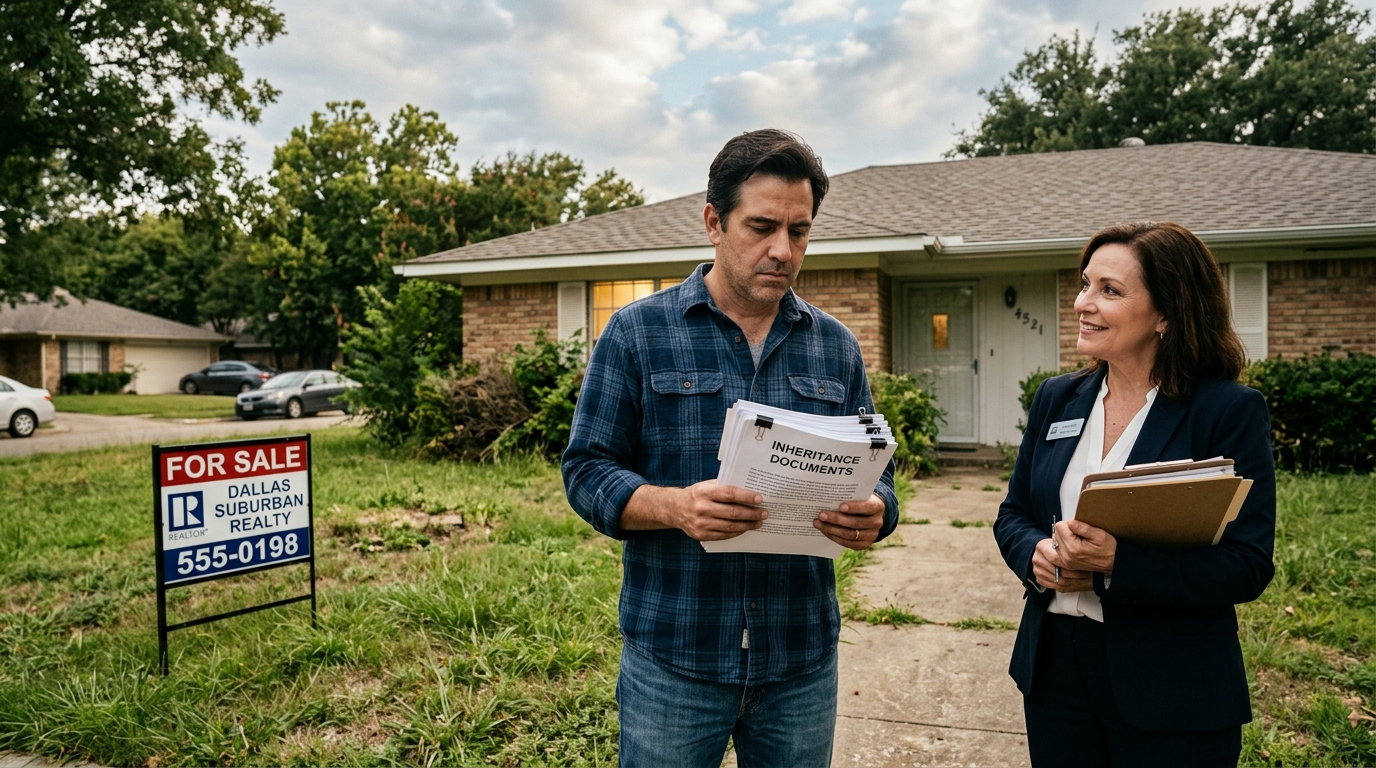
When someone passes away and leaves you their home, you do not automatically become the owner free and clear. There is usually a legal process involved first. In Texas, if the deceased had a will, the property typically goes through a court-supervised process called probate. Probate confirms the will is valid, pays any outstanding debts, and then transfers ownership to the heirs.
If there was no will, Texas has laws that determine how the property is distributed among family members. This process is called intestate succession. Either way, until the legal transfer is complete, you may not be able to sell the home at all. This is one of the first things you need to figure out when you inherit real estate in Dallas.
According to the Internal Revenue Service, estates and inherited property have specific federal tax rules that apply depending on the value of the estate and how it is transferred. Understanding these rules before you sell can save you from unexpected tax bills later.
Why Inherited Properties Are Different from Regular Home Sales
Most people who sell their homes have been living in them, maintaining them, and know every quirk and problem. With an inherited property, you might walk in for the first time in years and find deferred maintenance, outdated systems, or belongings the previous owner left behind. That is a very different starting point.
There is also an emotional side to it. Selling a family member’s home is not just a financial transaction. It is something that can bring up a lot of feelings, especially if other family members have opinions about what should happen to the property. Add a complicated probate process on top of that and it is easy to see why so many people feel overwhelmed before they even get started.
The Challenges That Come with Selling an Inherited Property in Dallas
Probate, Taxes, and Other Things That Slow You Down
Probate in Texas can take anywhere from a few months to over a year depending on the complexity of the estate and whether any disputes arise. During that time, the property still costs money to hold. There are property taxes to pay, utility bills to keep up with, homeowner’s insurance to maintain, and potentially a mortgage if the previous owner had one.
Every month that passes without a sale is another month of carrying costs eating into whatever you ultimately walk away with. This is one of the biggest reasons people who inherit property in Dallas want to move quickly once the legal process is finished. The longer the home sits, the more it costs just to own it.
According to the Texas Comptroller of Public Accounts, Texas has no state income tax but does rely heavily on property taxes, which means holding an inherited property in Dallas for even a few extra months can result in significant costs that come directly out of your eventual proceeds.
When Multiple Heirs Are Involved
This is where things can get really complicated. If your parent left the home to you and three siblings, all four of you now own a piece of that property together. That is called tenants in common ownership, and it means everyone has to agree before anything can happen with the property.
In my experience, the more family members involved, the more opinions there are about what to do. One person wants to sell fast. Another wants to renovate first. A third wants to keep it as a rental. And meanwhile the property taxes and bills keep adding up while everyone figures out how to get on the same page.
Cash buyers are often the cleanest solution in this situation because they can make a single offer that the whole group can evaluate together, close quickly, and split the proceeds without anyone having to manage a renovation project or a tenant relationship from a distance.
How Cash Buyers Handle Inherited Properties Differently
They Buy As-Is and Skip the Repair Headache
One of the biggest advantages of selling an inherited home to a cash buyer is that they buy the property exactly as it is. You do not have to paint, repair the roof, update the kitchen, or clean out 40 years of accumulated belongings before you can close.
Most professional cash buyers expect the home to have some issues. They factor condition into their offer price. And they have the resources and the crews to handle whatever they find once they take ownership. For a family that does not have the time, the money, or the emotional bandwidth to manage a renovation project on a property they are grieving, this is a real benefit.
If you are worried about what to do with the items left behind in the home, our post on what to do with leftover junk after a cash sale explains exactly how cash buyers typically handle personal property and belongings that stay in the home after closing.
And if you are wondering whether the condition of the home will make it hard to sell at all, check out our guide on selling a house as-is in Dallas TX to see how the as-is process works and what to expect from start to finish.
They Can Close Around Your Timeline and Family Situation
Cash buyers do not have a lender telling them when they have to close. They can move as fast or as slow as the situation requires. If the probate process is still wrapping up and you need a few extra weeks, that is usually not a problem. If everyone agrees and you want to close in 10 days, that can work too.
This kind of flexibility matters a lot when you are dealing with multiple heirs in different states, an estate attorney managing the transfer, and the emotional weight of settling a loved one’s affairs. Having a buyer who can adapt to your timeline instead of pushing you toward theirs makes the whole experience much more manageable.
According to the U.S. Department of Housing and Urban Development, understanding your rights and options before entering into a real estate transaction is one of the most important steps any seller can take. That applies even more when the seller is a group of heirs navigating an estate.
What to Know Before Accepting a Cash Offer on an Inherited Home
Understanding the Fair Market Value Before You Decide
A cash offer will almost always be below what the home might sell for on the open market with a traditional listing. That is the trade-off for speed, simplicity, and the as-is purchase. But before you accept any offer, you should have a reasonable sense of what the home is actually worth so you can evaluate whether the offer is fair.
You can get a rough number from online estimates or from asking a local real estate agent for a comparative market analysis. You can also order a formal appraisal if the value is uncertain. Knowing the real market value gives you a benchmark to compare offers against and helps you decide whether the convenience of a cash sale is worth the price difference in your specific situation.
How to Protect Yourself and the Other Heirs During the Process
Before you sign anything, make sure everyone who has an ownership stake in the property is in agreement. A signed contract with a cash buyer is not something you can easily back out of, so it is worth taking a little extra time upfront to get all the heirs aligned on terms, price, and timeline.
Here is a quick checklist of things to go through before you commit to a cash offer on an inherited property in Dallas.
- Confirm probate is complete or that the sale has been authorized by the probate court. You cannot legally close a sale on a property that has not been properly transferred to the heirs yet.
- Get all heirs to agree on a minimum acceptable price before you talk to buyers. Having a number everyone agrees on in advance prevents last-minute disputes when an offer comes in.
- Get at least two or three offers so you have something to compare. One offer tells you nothing. Multiple offers tell you where the real market is for your specific property.
- Have an estate attorney or title company review the contract before you sign. The paperwork should reflect the correct ownership structure and all heirs should be listed properly.
- Understand how the proceeds will be split and documented at closing. The title company will typically issue separate checks or wire transfers to each heir based on their ownership percentage.
- Ask the buyer about their experience with inherited properties. A buyer who has done this before will know how to work with estate attorneys, probate timelines, and multi-owner situations without creating extra headaches.
Here is a simple comparison of how a cash sale stacks up against a traditional listing for an inherited property in Dallas.
| Factor | Cash Buyer Sale | Traditional Listing |
|---|---|---|
| Time to close | 7 to 21 days | 45 to 90 days or more |
| Repairs required | None | Often required before listing |
| Carrying costs during sale | Very low | Higher due to longer timeline |
| Agent commissions | Usually none | Typically 5 to 6 percent |
| Family coordination needed | One offer, one decision | Multiple showings, ongoing decisions |
| Sale price | Below market value | Closer to full market value |
If you are ready to find out what a cash offer would look like for the inherited property you are dealing with, visit our Dallas Texas page or reach out to us directly and we will give you a straight answer about what to expect. No pressure, no obligation.
Conclusion
Inherited properties come with a unique mix of emotional, financial, and legal challenges that make the typical home sale process harder than it needs to be. Cash buyers in Dallas specialize in exactly these situations. They buy as-is, they close fast, they work around probate timelines, and they handle multi-heir situations without turning it into a drawn-out ordeal. If you have inherited a home in Dallas and you want to sell it without adding more stress to an already difficult time, a cash buyer is almost always worth a conversation.
Frequently Asked Questions
Can I sell an inherited home in Dallas before probate is complete?
In most cases, no. The property must be legally transferred to the heirs through the probate process before it can be sold. However, in some situations the probate court can authorize a sale before the process is fully complete. An estate attorney in Texas can tell you whether that option applies to your specific situation.
Do I have to pay capital gains tax when I sell an inherited property?
Inherited properties get what is called a stepped-up cost basis, which means your cost basis for tax purposes is set to the fair market value of the home at the time of the previous owner’s death rather than what they originally paid. This often significantly reduces or eliminates capital gains tax when you sell. Talk to a tax professional about your specific situation before you close.
What if one heir wants to sell and another does not?
All owners must agree for a sale to happen voluntarily. If heirs cannot agree, it is possible to go to court and request a partition action, which can force a sale. However, that process is expensive, time-consuming, and hard on family relationships. Most families find it worth the effort to reach a compromise before things get to that point.
Will a cash buyer deal directly with the estate attorney?
Yes. Experienced cash buyers who purchase inherited properties regularly are used to working through estate attorneys and title companies that handle probate transactions. They know the paperwork requirements and can coordinate with the attorney to make sure everything is done correctly at closing.
How do heirs split the proceeds from a cash sale?
The title company handles the distribution at closing. Each heir receives their share of the net proceeds based on their ownership percentage in the estate. The title company can issue separate checks or wire transfers to each party. Make sure the ownership stakes are clearly documented before closing so there are no disputes about the amounts.