
Selling a historic home in Boston is not the same as selling a regular house. There are rules, restrictions, and a whole different group of buyers who care about very specific things. If you want to sell as-is without dealing with restoration demands and long waiting periods, this guide will help you understand what you are working with and what your best options actually are.
What Makes a Historic Home Different to Sell in Boston
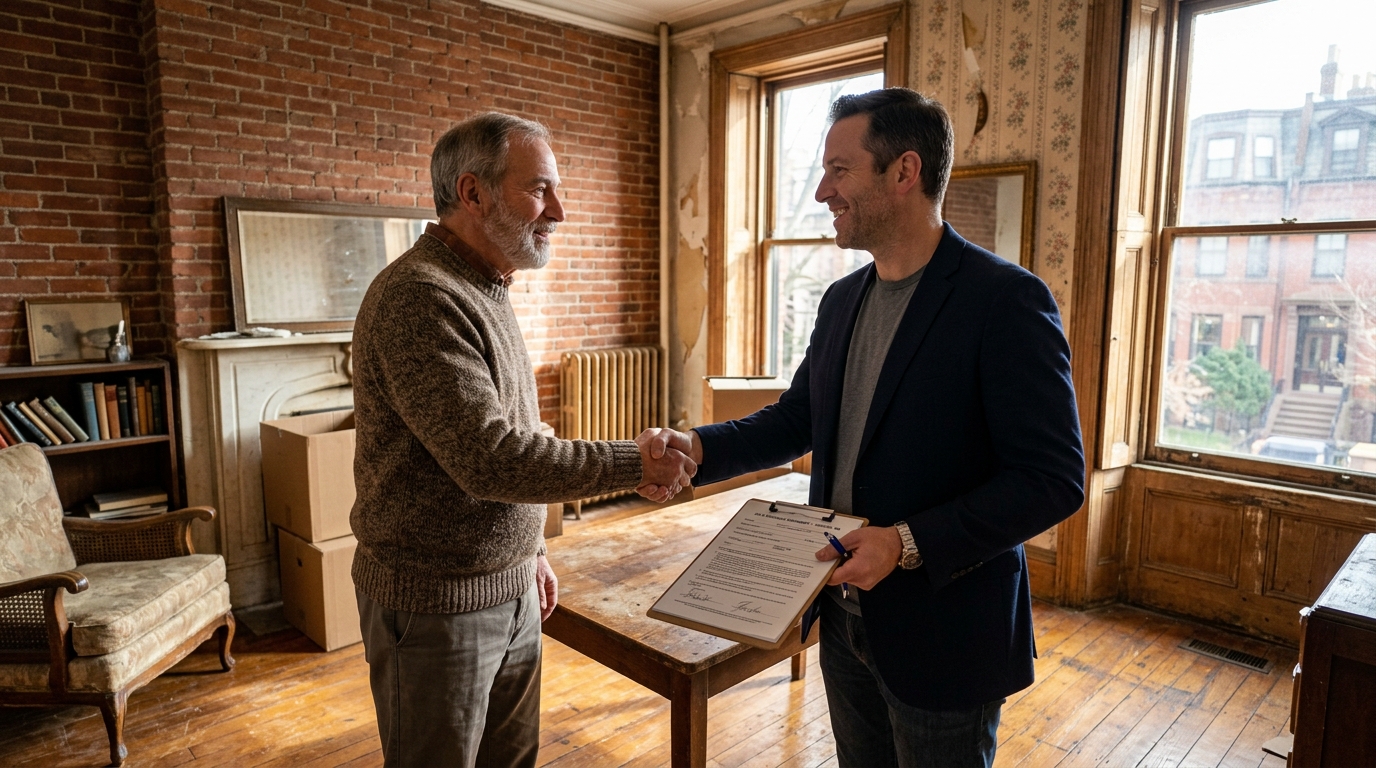
Boston has one of the richest collections of historic properties in the entire country. From Back Bay brownstones to Victorian triple-deckers in Dorchester, many homes in this city carry a history that regular buyers may not fully appreciate. That history also comes with legal and practical complications that most homeowners do not expect going in.
How Boston Defines a Historic Property
A home in Boston can be considered historic in a few different ways. It might be on the National Register of Historic Places, which is a federal designation. It might be inside a local historic district, which means it falls under the rules of the Boston Landmarks Commission. Or it might simply be a very old property in a neighborhood that has historic character, even without any formal designation.
Each category comes with different levels of restriction. The National Register mostly affects eligibility for tax credits. A Boston Landmarks Commission designation, however, comes with real rules about what can be changed on the exterior and sometimes certain interior elements. If your home has a formal designation, understanding what that means before you sell is genuinely important.
Why As-Is Sales Are More Common With Historic Homes
Restoring a historic home to a condition that satisfies traditional buyers and their lenders is expensive. We are talking about replacing original windows with period-appropriate alternatives, repairing historic plaster, maintaining original woodwork, and using approved materials throughout. These projects can cost tens of thousands of dollars and take months to complete.
Most sellers do not have the time, money, or interest to go through all of that before listing. That is why selling as-is is a practical choice for a lot of Boston homeowners with historic properties. You skip the restoration costs, skip the lengthy prep work, and sell the home to a buyer who understands exactly what they are taking on.
The Rules That Come With Selling a Historic Home in Boston
This is where things get specific, and honestly, where a lot of sellers get caught off guard. Understanding the rules before you list saves you time and prevents surprises during the sale process.
Historic Preservation Requirements Sellers Need to Know
If your home is within a local historic district, any exterior changes made before or during a sale need to be approved by the Boston Landmarks Commission. This includes things like window replacements, door changes, siding, and roof work. Even if you are selling as-is, you need to be transparent about any unapproved changes that were made to the property over the years, because the new owner will be responsible for bringing things into compliance.
The National Park Service, which oversees the National Register of Historic Places, provides federal guidelines on what qualifies as appropriate treatment for historic structures. These guidelines matter if the buyer plans to apply for historic tax credits or other incentives, which cash investors and renovation specialists sometimes do.
What Buyers Can and Cannot Change After They Buy
This is something many sellers forget to think about. If your home is in a designated historic district, the new owner cannot make major exterior changes without approval either. This limits the pool of buyers who are willing to take on the property. The buyers who are most comfortable with these restrictions are usually experienced real estate investors, preservation specialists, or renovation companies that have worked with Boston’s historic properties before.
These are often the same buyers who purchase as-is, which is one more reason why the as-is path and the historic home path overlap so often in Boston. If you have encountered title issues on the property, our guide on how to clear a title issue without hiring an expensive lawyer is worth reading before you list.
Why Selling As-Is Makes Sense for Historic Boston Homes
After looking at the costs and complications of a traditional listing for a historic home, selling as-is starts to look a lot more practical. Let me walk you through why the numbers usually favor this path.
The Cost of Restoring vs the Speed of Selling As-Is
Historic restoration work in Boston is expensive. Contractors who specialize in period-appropriate materials charge premium rates, and getting approvals from the Landmarks Commission takes time. A full exterior restoration on a Boston brownstone or Victorian can easily run $50,000 to $150,000 or more before you even touch the interior.
When you sell as-is to a cash buyer who understands what they are getting, you skip all of that. The buyer factors the restoration costs into their offer. You walk away without spending months and tens of thousands of dollars on a property you are trying to leave. For many Boston homeowners, the math strongly favors the as-is path.
You can also check our post on selling a fixer-upper as-is versus going the traditional route to see how the numbers compare in a real situation with detailed side-by-side figures.
How Cash Buyers Approach Historic Properties Differently
Experienced cash buyers who work in Boston’s historic neighborhoods understand what they are buying. They have dealt with the Landmarks Commission before. They know which contractors can do period-appropriate work, and they know how to navigate the approval process. That knowledge is exactly what makes them a good fit for historic properties that other buyers would find overwhelming.
These buyers are not scared off by old wiring, aging plumbing, or the fact that the original windows need work. They price their offer accordingly, and they close fast. For you as the seller, the experience is clean and simple compared to trying to find a traditional buyer willing to take on all of that responsibility.
What to Prepare Before Listing a Historic Home in Boston
Even in an as-is sale, a little preparation goes a long way. Being organized and transparent makes the process move faster and reduces the chance of unexpected problems during the title search or closing.
Documents and Records That Will Help Your Sale
Here are the things you should gather before reaching out to a cash buyer or agent:
- Any documentation showing whether the property is on the National Register or within a local historic district. Check with the Boston Landmarks Commission directly if you are unsure of your property’s status.
- Records of any past work done on the home, including permits, contractor receipts, and approval letters from the Landmarks Commission if applicable.
- Your current mortgage statement so you know your approximate payoff amount and whether the sale price will cover what you owe.
- Any known liens, unpaid taxes, or title complications. These will come up in the title search anyway, so knowing about them early saves time and reduces stress at closing.
- Any original architectural drawings, surveys, or historical documentation that came with the property. Cash buyers and investors often find these genuinely valuable.
- A list of all known issues with the home, from roof condition to basement moisture to any systems that are not working correctly. Being upfront builds trust and speeds up the offer process.
Honest Things to Disclose Upfront
Massachusetts law requires sellers to disclose material facts that affect the value or desirability of the property. For historic homes, this includes any known structural issues, any unapproved changes made to the exterior, and any ongoing disputes with the city or Landmarks Commission related to the property.
Being honest upfront protects you legally and makes the sale go smoother. Cash buyers especially appreciate straightforward sellers because it means fewer surprises during due diligence. You can also visit our FAQ page for more information on what sellers are typically expected to disclose during a cash sale of a Boston property.
Historic Home Sale in Boston: As-Is vs Traditional Listing
Here is a direct comparison between selling your historic Boston home as-is versus going the traditional listing route.
| Factor | As-Is Cash Sale | Traditional Listing |
|---|---|---|
| Restoration Costs Before Sale | None | Often $30,000 to $150,000 or more |
| Time to Close | 7 to 21 days | 60 to 90 days or more |
| Buyer Pool Size | Focused investors who know historic rules | Smaller, due to preservation restrictions |
| Agent Commission | None | 5% to 6% of sale price |
| Approval Requirements | Handled by buyer after purchase | May need to complete before listing |
| Deal Fall-Through Risk | Very low | Higher, especially with lender appraisals |
| Closing Costs | Often covered by buyer | Typically paid by seller |
Reading the Numbers for Historic Properties
The gap between an as-is cash offer and a fully restored traditional sale price can look big on paper. But when you subtract $50,000 to $100,000 in restoration work, 5% to 6% in agent commissions, months of carrying costs, and the real risk of the deal falling apart over a lender appraisal, the actual difference in what you walk away with is often much smaller than you expected.
According to the Consumer Financial Protection Bureau (CFPB), sellers often underestimate the full cost of a traditional home sale. For historic properties in Boston, where restoration costs compound on top of those standard fees, the as-is path is frequently the stronger financial choice when you do the full math.
Which Path Works Best for Your Situation
If you have the time, money, and appetite for a full restoration and a longer listing process, a traditional sale might get you a higher number at the top. But for most Boston homeowners with historic properties, the as-is cash sale is the path that actually makes sense once you run the real numbers honestly.
If you are ready to find out what your historic Boston home is worth in an as-is cash sale, contact our team today for a no-obligation offer. We work with historic properties and understand exactly what is involved from start to finish.
Conclusion
Selling a historic home in Boston as-is is a realistic, financially sound option for many homeowners. The preservation rules, the restoration costs, and the smaller traditional buyer pool all point toward the same conclusion. Cash buyers who understand historic properties are often the fastest, simplest, and most financially practical path forward. You do not need to spend six figures restoring a home before you sell it. A cash buyer who knows Boston’s historic market will price your property fairly and close quickly. Reach out today and let us show you what your home is worth without the stress of a long traditional listing.
Frequently Asked Questions
Do I need special permission to sell a historic home in Boston?
You do not need special permission to sell a historic property in Boston. The restrictions tied to historic designation apply to changes made to the property, not to the act of selling it. However, you should disclose any Landmarks Commission designations or restrictions to potential buyers, along with any unapproved changes made to the property over the years.
Can a cash buyer purchase a historic home as-is in Boston?
Yes, and experienced cash buyers do this regularly in Boston’s historic neighborhoods. These buyers understand the historic preservation rules, have relationships with contractors who specialize in period-appropriate work, and factor all of that into their offer. They are not put off by the restrictions and often move faster than traditional buyers who find historic properties overwhelming.
What restrictions do buyers face when buying a historic home?
If the property is within a local historic district, the new owner must get approval from the Boston Landmarks Commission before making exterior changes. Interior changes may also be regulated in some cases. Buyers listed on the National Register can apply for historic tax credits for approved renovation work, which is one reason experienced investors are often attracted to these properties.
Will I get a lower price if I sell my historic Boston home as-is?
An as-is cash offer will typically come in below what a fully restored traditional listing might achieve at peak conditions. However, once you subtract restoration costs, agent commissions, carrying costs over months, and the risk of a deal falling apart, many sellers find that the net difference is much smaller than expected. In some cases, the as-is path actually puts more money in your pocket when you do the full calculation.
How long does it typically take to sell a historic home in Boston?
With a cash buyer, a historic Boston home can close in 7 to 21 days. A traditional listing typically takes 60 to 90 days or longer, and that does not include the months you might spend on restoration work before listing. For sellers who need or want to move quickly, the cash sale timeline is substantially better in almost every case.