
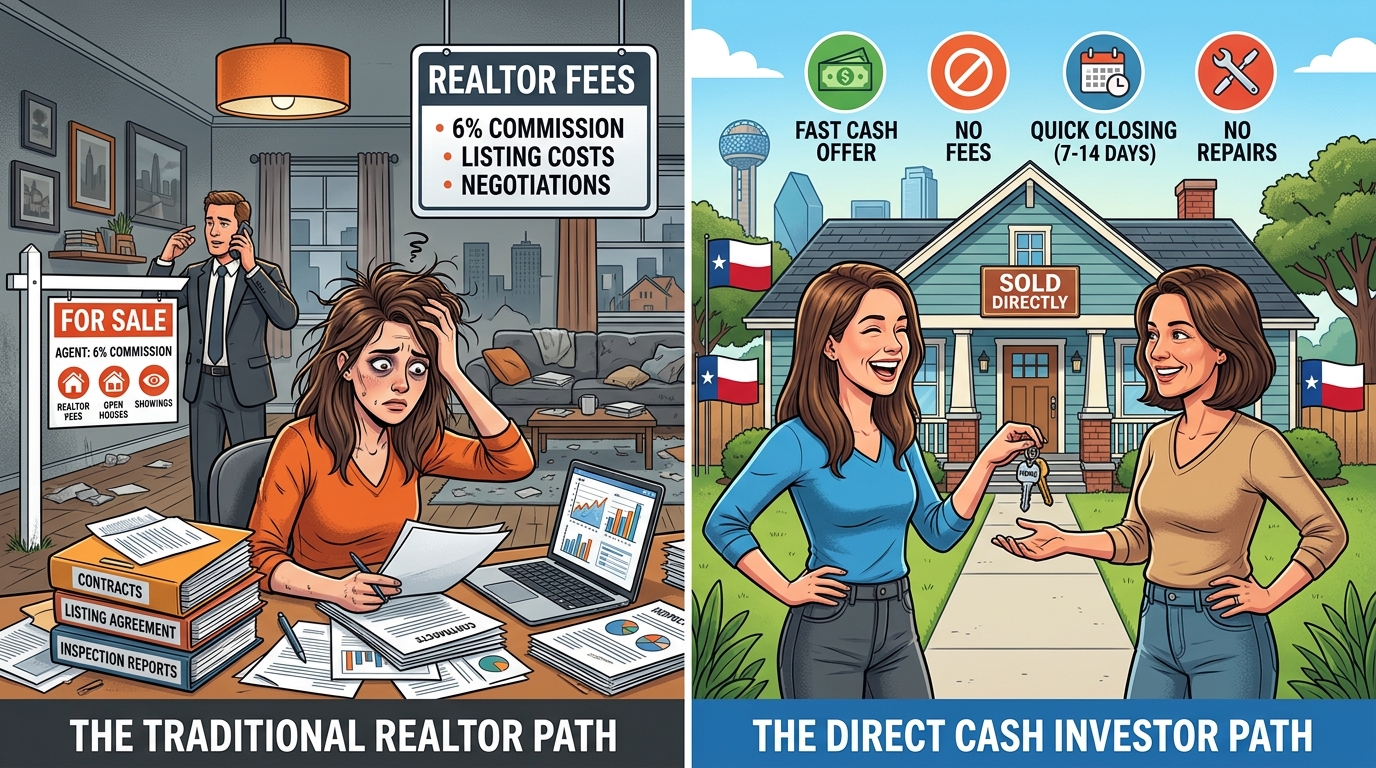
Real estate agent commissions in Dallas can eat up 5 to 6 percent of your sale price before you ever see a dollar. On a $300,000 home, that is $15,000 to $18,000 walking out the door. Selling directly to an investor skips that entirely. Here is exactly how it works, what to watch out for, and whether it makes sense for your situation.
What Realtor Fees Actually Cost Dallas Home Sellers
Breaking Down the Standard Commission Structure in Texas
In a traditional home sale, the seller pays the commission for both their own agent and the buyer’s agent. That combined rate typically sits between 5 and 6 percent of the final sale price. It is not split evenly between the two agents, but the full amount comes out of the seller’s proceeds at closing.
Texas does not set a maximum commission rate by law, which means everything is technically negotiable. In practice, though, most agents in the Dallas area work within that 5 to 6 percent range. Some discount brokers offer lower rates in exchange for fewer services, but even those typically run 3 to 4 percent total.
According to the National Association of Realtors, the typical seller pays significant commission costs that directly reduce net proceeds at closing. Understanding exactly what those costs are before you commit to a listing is one of the most important steps any seller can take.
What That 5 to 6 Percent Actually Looks Like in Real Dollars
The percentage sounds small until you do the math. Here is a quick breakdown of what agent commissions cost at different home values in the Dallas market.
| Home Sale Price | 5 Percent Commission | 6 Percent Commission | Your Net After Commission |
|---|---|---|---|
| $200,000 | $10,000 | $12,000 | $188,000 to $190,000 |
| $300,000 | $15,000 | $18,000 | $282,000 to $285,000 |
| $400,000 | $20,000 | $24,000 | $376,000 to $380,000 |
| $500,000 | $25,000 | $30,000 | $470,000 to $475,000 |
And this is before you factor in other closing costs, repairs the buyer requests after inspection, or the carrying costs of holding the home for 30 to 60 days while it is listed. The total cost of a traditional sale can easily run 8 to 10 percent of the sale price when you add everything together.
How Selling Directly to an Investor Works
The Process from First Contact to Closing
When you sell directly to a real estate investor, the process is simpler than most people expect. You make contact with the investor or their company, usually by phone, email, or through an online form. They ask you basic questions about the property including the address, the general condition, and your situation.
From there, the investor or a representative will typically visit the property or ask for photos to assess the condition. Within a few days, they come back with a cash offer. If you like the number, you accept and move to closing. If you do not, you walk away with no obligation and no fee paid to anyone. The whole process from first contact to a signed contract can often happen in a few days.
Closing is handled by a title company just like any other sale. The investor pays the closing costs in many cases, meaning you walk away with close to the full offer amount. No agent commission. No repair negotiations. No waiting on a lender to approve the buyer’s loan.
What Investors Are Actually Looking for in a Dallas Property
A lot of sellers assume investors only want heavily distressed properties. That is not really true. Investors in the Dallas market buy a wide range of properties including homes in decent condition that they can rent out, newer builds they can resell quickly, and yes, properties that need significant work that they plan to renovate.
What investors care about most is the math. They look at what the property will be worth after any improvements they plan to make, subtract their expected costs including repairs, carrying costs, and their profit margin, and arrive at what they are willing to pay. Your home does not have to be a disaster for an investor to be interested. It just has to make financial sense for both of you.
I have seen homeowners in perfectly maintained North Dallas homes go the investor route simply because they wanted to close in 10 days without dealing with showings, open houses, and the anxiety of waiting for a buyer to get financing. The commission savings and the speed together were worth more to them than the slightly higher price they might have gotten on the open market.
What You Give Up and What You Gain by Skipping the Agent
The Trade-Offs Most Sellers Do Not Think About
Going direct to an investor is not the right move for every seller, and being honest about the trade-offs helps you make a smarter decision. The biggest thing you give up is access to the full buyer pool. An agent lists your home on the MLS, markets it to thousands of potential buyers, and creates competition that can drive the price up. When you sell directly to one investor, you are negotiating with one buyer only.
Investors also typically pay below market value because they are taking on risk and need to make a profit. How far below depends on the investor and the property, but it is almost always less than what a well-marketed listing on the open market would bring in a normal timeframe.
What you gain is equally real. No agent commissions, which can be worth 5 to 6 percent by itself. No repair requirements before closing. No showings to schedule. No waiting for a buyer’s loan to clear. No risk of a deal falling through two days before closing because the lender denied the loan. And in many cases, the ability to choose your own closing date within a window of days rather than weeks or months.
When Going Direct to an Investor Makes the Most Sense
Based on what I have seen in this market, selling directly to an investor is almost always the right call in a few specific situations. If you need to close quickly because of a job relocation, a divorce, an impending foreclosure, or an estate that needs to be settled fast, the speed advantage of an investor sale is hard to beat.
It also makes sense if the home needs significant work and you do not have the capital to fix it before selling. Listing a home that needs a new roof, foundation repairs, or major HVAC work is going to be hard on the open market, and the repair requests after inspection will eat into your proceeds anyway. Selling to an investor who will take it as-is puts you in control of what you are agreeing to from day one.
For more context on how the Dallas market is moving right now and whether the timing favors a quick investor sale or a traditional listing, take a look at our post on how to sell your Dallas home fast in a shifting Texas market.
And if you want to understand exactly how quickly the process can move once you have an investor lined up, check out our guide on how fast you can close on a house in Dallas with a cash offer.
How to Find a Legitimate Investor Buyer in Dallas
What to Look for Before You Sign Anything
Not every person who calls themselves a real estate investor in Dallas is legitimate. Some are experienced professionals who have closed hundreds of deals and will treat you fairly from start to finish. Others are newer to the business and may struggle to actually close. And a small number are outright scammers who collect personal information or ask for upfront fees before they disappear.
Before you agree to anything, look up the company or individual. A real investor has a verifiable business history, can be found in public records or on business registration databases, has reviews from past sellers, and operates through a licensed title company. They will not pressure you to sign anything immediately, and they will not ask you to pay any fee before closing.
According to the Federal Trade Commission, home sale scams targeting sellers are consistently among the most reported forms of real estate fraud, and sellers who feel financially pressured are the most common targets. Knowing what to look for protects you before you get too deep into a conversation with someone who is not who they say they are.
Questions That Help You Tell a Real Buyer from a Questionable One
Asking the right questions early in the process will tell you a lot about who you are dealing with. Here is a list of things worth asking any investor or cash buyer before you agree to anything.
- How many properties have you closed in Dallas in the past 12 months? A legitimate buyer will have a real number and can usually point to specific addresses or neighborhoods.
- Which title company do you use to close your deals? A real buyer works with a licensed Texas title company every time. If they cannot name one, that is a problem.
- Can I speak with one or two sellers you have worked with before? Good buyers will have references. Scammers will not.
- Are there any fees I need to pay before or at closing? You should never pay fees to a buyer. All legitimate costs are handled at closing through the title company.
- Do you have proof of funds? A real cash buyer can show a bank statement or a letter from their financial institution confirming they have the funds available.
- How long is your due diligence period and what happens if you back out? Understanding the contract terms before you sign protects you if the deal falls apart.
According to the Consumer Financial Protection Bureau, sellers are entitled to a clear accounting of all closing costs and proceeds in any real estate transaction. If a buyer is not willing to work through a proper title company or is vague about costs, that is a red flag worth taking seriously.
When you are ready to take the next step, visit our Dallas Texas page to see how we work in your area or reach out to us directly and we will walk you through the whole process without any pressure.
Conclusion
Selling your Dallas property directly to an investor is a legitimate path that can save you thousands in commissions, eliminate repair headaches, and get you to closing in a fraction of the time a traditional listing takes. The key is going in with your eyes open, knowing the trade-offs, asking the right questions, and working only with buyers who can back up what they claim with real proof. For the right seller in the right situation, skipping the agent is one of the smartest financial moves available in the current Dallas market.
Frequently Asked Questions
Is it legal to sell my Dallas home directly to an investor without a real estate agent?
Yes, completely legal. Texas law does not require you to use a real estate agent to sell your home. You can sell directly to any buyer as long as the transaction is handled properly through a licensed title company and all required disclosures are made. An attorney can review the contract if you want extra peace of mind.
How much will an investor offer compared to market value?
Investors typically offer somewhere between 70 and 85 percent of market value depending on the condition of the property, the local market, and the investor’s own cost projections. The exact number varies. Getting multiple offers from different investors is the best way to make sure you are not leaving money on the table unnecessarily.
Do I still need to disclose property defects when selling to an investor?
Yes. Texas seller disclosure requirements apply regardless of who your buyer is. You are required to complete the Seller’s Disclosure Notice and disclose known material defects. Experienced investors actually appreciate honest disclosure because it helps them price accurately and avoid surprises after closing.
Who pays closing costs when selling to a Dallas investor?
Many investors offer to cover closing costs as part of the deal, which is part of the appeal. Always confirm this in writing before you sign. In some cases, costs are split or factored into the offer price. What matters is the net amount you walk away with, not just the headline offer number.
Can I sell to an investor if I still have a mortgage on the property?
Yes. Having a mortgage does not prevent you from selling to an investor. Your loan is paid off at closing from the sale proceeds, just like any other home sale. As long as the offer covers what you owe plus closing costs, the deal can move forward. If the offer is below what you owe, that is a different conversation you would need to have with your lender.