
You just accepted a cash offer on your home, and now you are standing in the middle of a house full of stuff you do not want to move. Old furniture, boxes of forgotten things in the garage, a broken lawnmower in the backyard. Most sellers start to panic at this point. But here is something that surprises a lot of people: when you sell to a cash buyer, leaving stuff behind is usually not a problem at all. In many cases it is actually expected.
Why Cash Buyers Are Different When It Comes to Personal Property
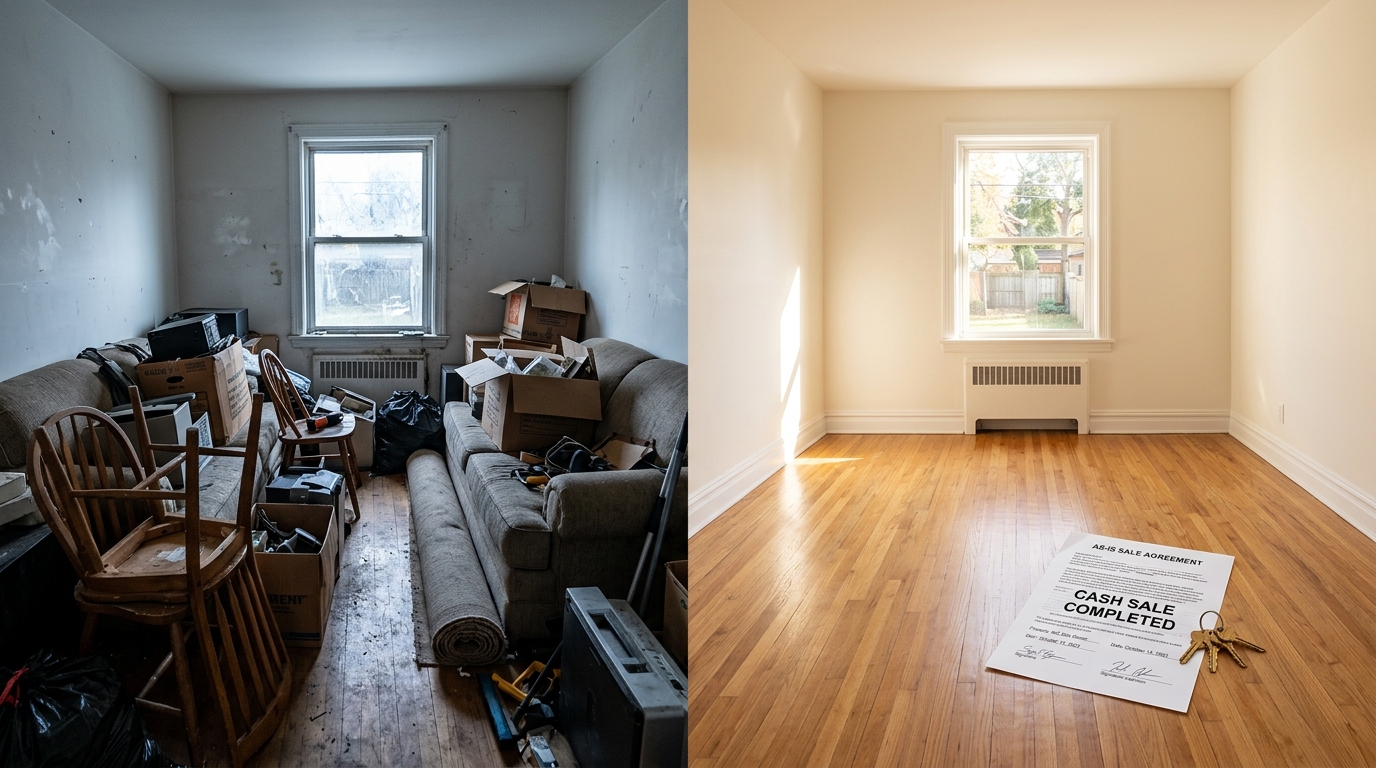
Traditional buyers typically want the home in broom-clean condition. That means everything goes with you when you leave. The new owners want a clean slate, and their lenders sometimes require a certain property condition before closing.
Cash buyers work differently. Most professional cash buyers purchase homes as-is. That includes the property in whatever state it is in when they buy it, and often that includes the stuff left inside. They have crews and processes to handle cleanouts because they do it all the time. For them, a house full of old furniture is a Tuesday afternoon, not a crisis.
This is one of the quiet advantages of a cash sale that most sellers do not find out about until they are already in the middle of the process. To understand how cash sales compare to traditional ones across the board, check out our guide on why your real estate agent might actually recommend a cash buyer.
What You Can Typically Leave Behind in a Cash Sale
I have worked with sellers who left almost everything. Beds, couches, kitchen appliances, tools in the garage, old clothes, even food in the pantry. And the cash buyer handled it all without a single complaint. That is not unusual.
Here is a general breakdown of what most cash buyers are willing to accept as part of the as-is purchase.
- Old furniture. Sofas, dressers, dining sets, beds and mattresses are some of the most common things sellers leave and buyers handle.
- Garage items. Tools, bikes, lawn equipment, holiday decorations and random boxes are almost always fine to leave.
- Appliances. Old washers, dryers, refrigerators and stoves that you were not planning to take anyway can usually stay.
- Yard debris and outdoor items. Broken equipment, old planters, patio furniture and miscellaneous backyard items are typically included in the as-is condition.
- Boxes and personal storage. If it is too much trouble to sort through, many cash buyers will take on the cleanout as part of the deal.
- Items of no monetary value. Old magazines, worn out linens, broken electronics and general household clutter are all things a cash buyer is prepared to deal with.
What You Should Always Take With You
Leaving junk is fine. Leaving valuable or personal items is a different story. Once you close and hand over the keys, whatever is in that house belongs to the new owner. So make sure you take anything that actually matters to you before the closing date.
| Leave It | Take It With You |
|---|---|
| Old furniture you do not want | Jewelry, cash, important documents |
| Broken appliances | Family photos and sentimental items |
| Garage tools and equipment | Prescription medications |
| Yard debris and outdoor clutter | Legal records and financial documents |
| Old clothing and linens | Items with significant resale or personal value |
| Boxes of forgotten household goods | Anything you plan to use in your next home |
The rule is simple. If you want it, take it. If you do not want it, leave it. Cash buyers are ready for both scenarios.
How to Confirm What the Buyer Will Accept Before Closing
Even though most cash buyers are comfortable with leftover items, it is always smart to have a quick conversation about it before closing day. You do not want any surprises on either side.
Ask the buyer or their representative directly. Something as simple as saying you plan to leave the washer and dryer and most of the garage items is usually enough to get a clear answer. Most will say that is completely fine. If they have specific items they want removed, they will tell you, and you can decide whether to arrange a pickup or adjust the terms slightly.
Getting this conversation out of the way early also helps with your moving timeline. If you know you do not have to empty the whole house, you can focus your energy on moving the things you actually care about and skip the rest. And if timing matters to you, our post on negotiating your moving date with cash buyers explains how to make sure the whole schedule works in your favor.
What Happens to Your Stuff After the Sale
Most cash buyers who purchase as-is homes have a standard cleanout process. They bring in a crew, sort through what is in the home, donate or recycle what can be reused, and dispose of the rest. Many professional home buyers partner with local donation centers and recycling facilities to handle this responsibly.
According to the U.S. Environmental Protection Agency, donating and recycling household items rather than sending them to landfills is something millions of Americans participate in every year as part of the broader effort to reduce waste. The stuff you leave behind does not just disappear. It often gets a second life somewhere else.
So if you have been holding off on calling a cash buyer because you were stressed about clearing out thirty years of accumulated belongings, you can let that go. The cleanout is their problem, not yours. Visit our We Buy Houses page to learn more about how our process works for sellers in exactly this kind of situation.
When Leaving Items Could Actually Add Value to the Deal
Here is something most people do not expect. In some cases, leaving behind furniture or appliances can actually make a cash buyer more interested in the deal, not less. If the buyer is planning to rent the property or sell it furnished, having items already inside can be a small bonus.
This is not always the case, but it is worth mentioning because the whole framing of leaving junk shifts when you realize it is sometimes seen as a neutral or even positive thing rather than a burden you are dumping on someone else.
According to the U.S. Department of Housing and Urban Development, personal property agreements are a normal part of real estate transactions and can be negotiated openly between buyers and sellers. You have every right to discuss what stays and what goes as part of your offer terms.
And if you are ready to talk through the whole process including what happens to the contents of your home, reach out to us here and we will walk you through everything from the offer to closing day.
According to the National Association of Realtors, as-is home sales have become increasingly common in recent years as more sellers look for convenience and speed over maximizing every last dollar. Leaving behind unwanted items is part of that same shift toward simplifying the process.
Conclusion
If you are selling your home to a cash buyer and you are overwhelmed by the thought of clearing everything out, take a breath. You probably do not have to. Most cash buyers are completely prepared to handle leftover furniture, old appliances, garage clutter, and everything in between. Grab what matters to you, have a quick conversation with the buyer about what stays, and let the rest take care of itself. That is one of the best parts of selling for cash and it is something more sellers should know about before they stress themselves out unnecessarily.
Frequently Asked Questions
Do I have to clean out my house before a cash sale?
In most cases, no. Cash buyers purchase homes as-is and are prepared to handle cleanouts themselves. You should take your personal and valuable items, but the rest can usually stay. Always confirm this with the buyer before closing to make sure everyone is on the same page.
What happens to the furniture I leave behind?
Cash buyers typically hire cleanout crews who sort through what is left. Usable items are often donated or recycled. Items with no value are disposed of properly. You generally do not need to worry about where things end up after you hand over the keys.
Can leaving items behind affect my sale price?
Usually not significantly. Most cash buyers factor in cleanout costs when they make their offer, so it is already priced in. In some cases, leaving certain items like working appliances may be seen as a small positive by the buyer, especially if they plan to rent the property.
What if I accidentally leave something valuable behind?
Once the sale closes and you hand over the keys, anything left in the home legally belongs to the new owner. This is why it is important to do a final walkthrough before closing and take everything that matters to you. Do not rely on being able to come back for something after the sale is done.
Can I negotiate what I leave behind as part of the cash offer?
Yes. Personal property is something that can be discussed openly during offer negotiations. If you want to leave specific items or if the buyer wants certain things removed, you can include those terms in the purchase agreement. Just make sure anything agreed upon is put in writing before closing.