
Families in this situation often discover the problem at the worst possible moment. A parent with dementia needs to move to a care facility, and the family home needs to be sold to cover the costs. Then someone asks a simple question: who is actually going to sign the paperwork? The answer depends almost entirely on what legal planning was done before the owner lost capacity, and the options available to families differ dramatically based on whether that planning happened or not. This post explains the legal pathways available to Los Angeles families navigating a property sale when the owner has dementia, what each path requires, and why acting quickly matters.
Why Dementia Does Not Automatically End Someone’s Legal Capacity
Legal Capacity Is Not the Same as a Medical Diagnosis
A diagnosis of dementia or Alzheimer’s disease does not automatically mean a person has lost their legal capacity to sign documents. California law recognizes that cognitive decline happens on a spectrum. A person may understand the general nature and consequences of a real estate transaction, even with a dementia diagnosis, particularly in the early stages. If a person can understand what they own, what they are agreeing to sell it for, and what the consequences of that sale are, they may still have the legal capacity to sign on their own behalf.
This matters for families because it means the window for acting on a person’s own authority may still be open even after a diagnosis. If the owner still has capacity today, there are actions that can and should be taken immediately to preserve everyone’s ability to manage the sale both now and in the future. If that window has already closed, the family must work through one of the legal frameworks described below.
What Happens When Capacity Is Genuinely in Doubt
Even when a family believes a person still has capacity, a title company, escrow officer, or notary who witnesses signing may have concerns if the person appears confused or unable to articulate what they are signing. In those situations, the transaction may stall regardless of what the family believes. Getting a physician’s statement documenting that the person has capacity at the time of signing, or arranging the signing at a moment when the person is most alert and oriented, can help. However, if there is genuine doubt about capacity, the transaction should not proceed without proper legal authorization through one of the frameworks described below, and consulting an estate planning or elder law attorney is essential.
Path One: A Durable Power of Attorney Was Already in Place
Why This Is the Best Possible Situation for a Family
If the property owner signed a Durable Power of Attorney while they still had legal capacity, and that document specifically grants the agent authority over real property transactions, the agent can sign sale documents on the owner’s behalf without any court involvement. A durable power of attorney remains valid and effective even after the principal becomes incapacitated, which is precisely why it is the most valuable estate planning tool for families anticipating cognitive decline.
The agent under a durable power of attorney signs all closing documents in their authorized capacity, for example as Jane Smith, Agent for Robert Smith under Power of Attorney dated January 1, 2020. The title company will require a copy of the durable power of attorney to review before agreeing to insure the transaction. Some title companies may also require an attorney affidavit confirming the document’s validity. The sale proceeds to the owner’s benefit under the agent’s management of those funds.
What Happens If the Power of Attorney Was Not Made Durable
Not all powers of attorney are durable. A standard power of attorney automatically terminates when the principal becomes incapacitated. For estate planning purposes, the document must be explicitly designated as durable to survive incapacity. If the owner signed a power of attorney but it was not made durable, or if it has since been revoked, or if the document does not include authority over real property, it will not be sufficient to authorize a sale. The family will need to pursue one of the alternative paths below.
Path Two: The Property Is Held in a Living Trust
How a Successor Trustee Steps In When the Owner Cannot Act
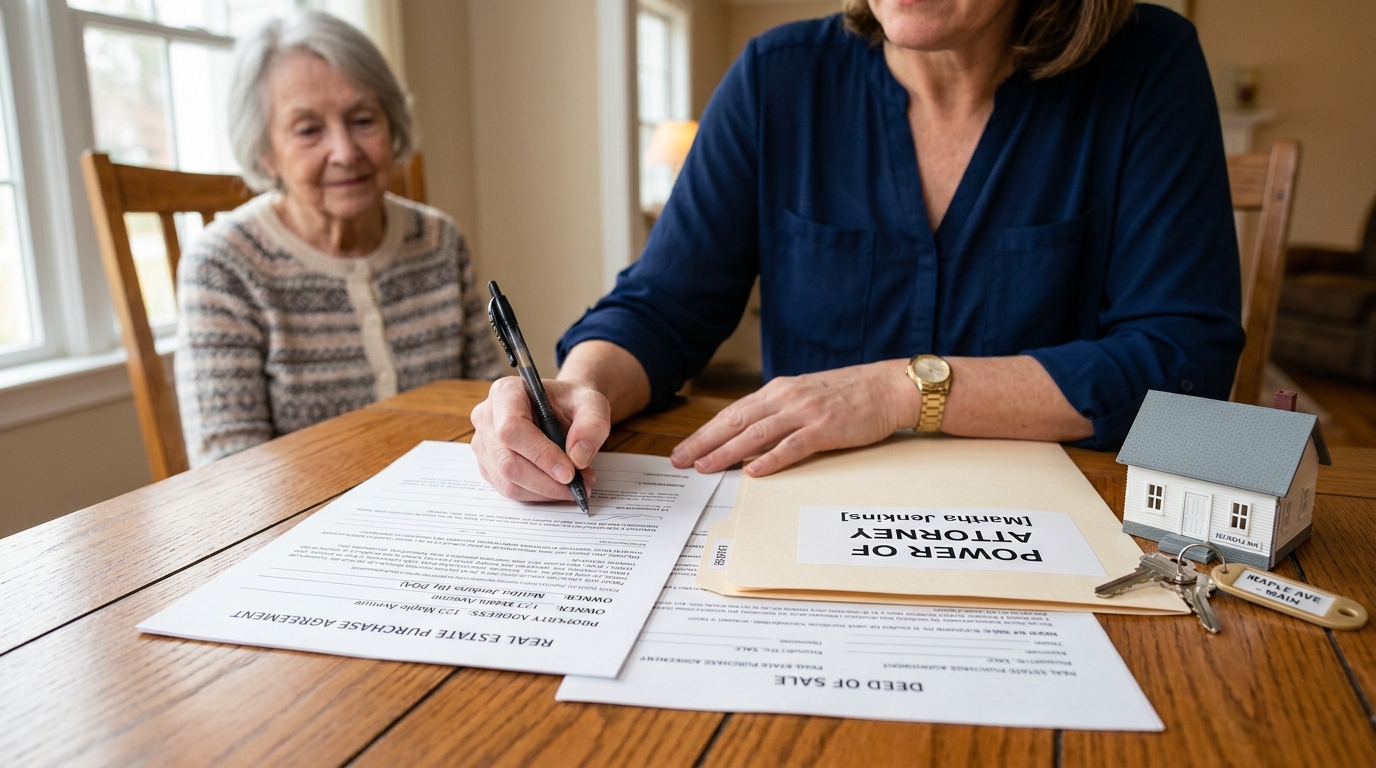
If the property was properly placed into a living trust while the owner had capacity, and the trust document names a successor trustee, that trustee can manage and sell the property when the original trustee becomes incapacitated. This is one of the primary reasons estate planning attorneys recommend placing real property into a living trust as part of a comprehensive plan for aging clients.
The successor trustee steps in when the trust document’s incapacity provisions are triggered, typically requiring a physician’s certification that the original trustee can no longer manage their affairs. Once the successor trustee is confirmed in their role, they have authority to sell the property on behalf of the trust without court involvement and without a power of attorney. Our post on selling a house in a living trust for Los Angeles families covers the full trustee process including the documentation and signing requirements in detail.
Path Three: No Planning Was Done and Conservatorship Is Required
What Conservatorship Means and When It Becomes Necessary
If the property owner never signed a durable power of attorney, the property was never placed in a trust, and the owner no longer has the capacity to sign documents or authorize anyone to act on their behalf, the family’s only remaining option is to petition the California Superior Court for a conservatorship of the estate. This is the most burdensome and time-consuming path, but it is also the legally correct one when no prior planning exists.
In a conservatorship of the estate, a judge appoints a conservator (often a family member) to manage the financial affairs of the incapacitated person, called the conservatee. The conservator has authority to manage assets, pay bills, and sell real property, but major transactions like a property sale generally require specific court approval in addition to the general conservatorship order. The conservator must demonstrate to the court that the sale is in the best interest of the conservatee.
What the Conservatorship Process Involves in California
Here is what a California conservatorship proceeding requires:
- Filing a petition with the California Superior Court in the county where the conservatee lives, which for Los Angeles is the Stanley Mosk Courthouse on Hill Street
- Submitting a Capacity Declaration completed by a licensed physician or psychologist with at least two years of experience diagnosing dementia, on form GC-335 with the dementia attachment GC-335A
- Undergoing a court investigation where an investigator interviews the proposed conservatee and reports findings to the judge
- Attending a court hearing where the judge reviews the petition, the capacity declaration, and the investigator’s report before issuing an order
- Once appointed, obtaining specific court authorization to sell the real property if the general order does not already include that power
- Filing ongoing annual accountings with the court documenting the conservatee’s assets, income, and expenses
The process from filing to appointment typically takes 60 to 90 days. It requires an attorney in virtually every practical situation, involves filing fees, investigation costs, and ongoing court reporting obligations. It is an expensive and time-consuming path that could have been entirely avoided with a durable power of attorney or a properly funded living trust signed while the owner still had capacity.
A Comparison of the Three Paths
Speed, Cost and Complexity Side by Side
| Factor | Durable Power of Attorney | Living Trust with Successor Trustee | Conservatorship |
|---|---|---|---|
| Court involvement required | No | No | Yes, ongoing |
| Time to authorize a sale | Immediate once agent produces document | Immediate once trustee confirms incapacity | 60 to 90 days minimum to establish |
| Cost to establish | Low, estate planning document | Moderate, part of trust setup | High, court filings, attorney, investigator |
| Ongoing court oversight | None | None | Yes, annual accountings required |
| Privacy | Private | Private | Public court record |
| Requires prior planning while owner had capacity | Yes | Yes | No, used when no prior planning exists |
How a Cash Buyer Helps When Time Is the Issue
Why Families in This Situation Often Need to Move Quickly
The practical reality for many families dealing with a parent’s dementia is that memory care costs begin accumulating the moment a facility placement happens. Monthly costs at a memory care facility in Los Angeles can run from $5,000 to $10,000 or more depending on the level of care required. The family home is often the primary asset available to cover those costs. The longer the sale takes, the more the family may be paying out of pocket or depleting other assets while waiting for the property to close.
A cash buyer removes the lender from the transaction entirely, eliminates repair and inspection contingencies, and can close in a timeline measured in weeks rather than months. For a family that already has legal authority through a power of attorney or successor trustee role, a cash offer allows them to move from agreement to closed proceeds far faster than a traditional market sale would permit. Our post on the paperwork involved in a cash sale walks through what the agent or trustee will actually sign and in what capacity during a transaction like this.
If you are a family member navigating this situation and want to understand your options, our sell your property page explains the full process from first contact to closing. And when you are ready to talk through the specific legal situation and property, reach out to our team directly. We work with families in complicated situations regularly and will give you honest, straightforward guidance.
Conclusion
Selling a home when the owner has dementia is entirely possible, but who signs the papers depends on what legal planning was done while the owner still had capacity. A durable power of attorney or a properly funded living trust allows a family to move quickly and without court involvement. When no planning exists and capacity is gone, conservatorship is the necessary but burdensome path. For families already in one of these situations in Los Angeles, understanding which path applies and moving through it efficiently is what makes it possible to sell the property, cover care costs, and give a parent the support they need without years of delay.
Frequently Asked Questions
Can a person with dementia legally sign a real estate contract in California?
It depends on the stage of their decline and their mental state at the time of signing. A dementia diagnosis alone does not strip a person of legal capacity. If the person can understand the nature and consequences of the transaction at the time they sign, they may still have the legal capacity to do so. However, if there is any genuine doubt, the transaction should not proceed without proper legal authorization from an agent, trustee, or court-appointed conservator, and an elder law attorney should be consulted.
What is a durable power of attorney and why does it matter for selling a home?
A durable power of attorney is a legal document signed while the owner had capacity that authorizes a named agent to handle financial and legal matters, including real estate transactions, on the owner’s behalf. The word durable means the document remains effective even after the principal becomes incapacitated. If one exists and covers real property, the agent can sign all closing documents without any court involvement, making it the fastest and simplest path for families dealing with a parent’s dementia.
What if there is no power of attorney and the owner can no longer sign?
If there is no durable power of attorney and the property is not held in a trust with a named successor trustee, the family must petition the California Superior Court for a conservatorship of the estate. This process takes a minimum of 60 to 90 days, requires a physician’s capacity declaration, a court investigation, a hearing, and ongoing court supervision. It is significantly more expensive and time-consuming than the alternatives, which is why estate planning attorneys strongly recommend executing a durable power of attorney and living trust before incapacity occurs.
Can a family member sell a parent’s home without going to court?
Yes, if the family member was named as agent under a valid durable power of attorney, or as successor trustee under a living trust in which the property was held. In both cases, the family member can authorize and complete the sale without court involvement by presenting the relevant legal documentation to the title company and escrow officer. Court involvement through conservatorship is only required when neither of those documents exists and the owner can no longer act on their own behalf.
Does selling a parent’s home affect their eligibility for Medicaid or Medi-Cal?
Potentially yes, and this is an important consideration that goes beyond the scope of a real estate transaction. The proceeds from a home sale are countable assets for purposes of Medi-Cal eligibility, which funds long-term care in California. Selling the home too quickly or without proper planning may disqualify a parent from Medi-Cal coverage sooner than necessary, or affect eligibility for other benefit programs. A qualified elder law attorney should be consulted about the timing and structure of the sale before proceeding.