
Bankruptcy and real estate ownership do not always mix smoothly. If you own a home or investment property in Los Angeles and are considering bankruptcy, or if you are already in an active case, the question of what happens to that property is one of the most important ones you will face. The answer depends heavily on which type of bankruptcy you file. Chapter 7 and Chapter 13 treat real property very differently, and understanding those differences before you file can be the difference between keeping your home and losing it, or between a clean exit and a prolonged legal process. This post explains how each chapter handles real estate and what sellers in Los Angeles need to know.
The Core Difference Between Chapter 7 and Chapter 13
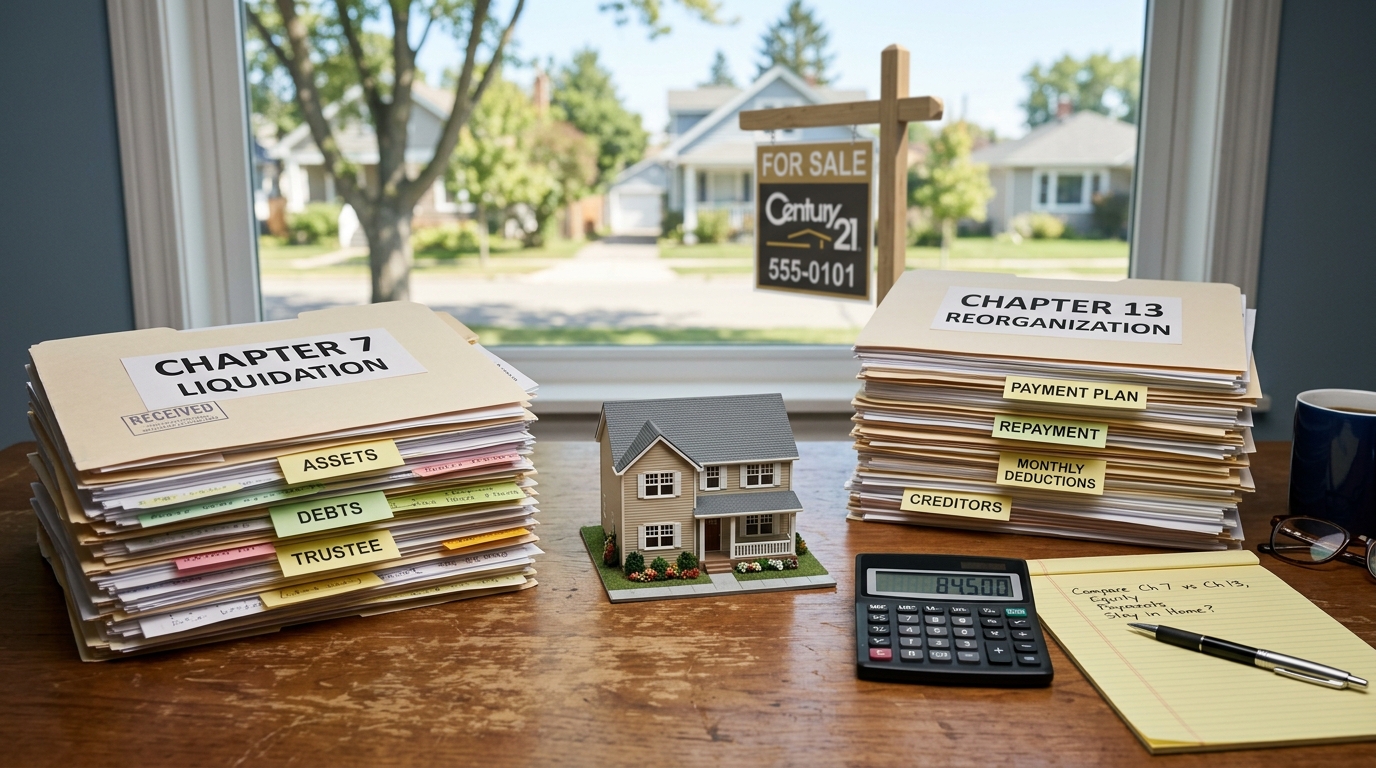
Chapter 7 Is Liquidation and Chapter 13 Is Reorganization
Chapter 7 is commonly called liquidation bankruptcy. When you file, a court-appointed trustee reviews all of your assets and identifies anything that is not protected by California’s bankruptcy exemptions. Non-exempt property can be sold by the trustee to pay your creditors. The process is fast, typically completing in three to five months, but the tradeoff is that you can lose property that exceeds the exemption limits.
Chapter 13 is reorganization bankruptcy. Instead of selling assets, you propose a three to five year repayment plan that pays creditors a portion of what you owe. You keep your property, including any real estate, as long as your plan accounts for the value of any non-exempt equity. The process is longer and requires consistent monthly payments to a trustee, but it gives homeowners a path to keep their property while catching up on arrears and restructuring debt.
The Automatic Stay Applies in Both but Works Differently for Real Estate
The moment you file either chapter, an automatic stay goes into effect. This immediately halts most collection actions, including foreclosure proceedings. For homeowners facing imminent foreclosure in Los Angeles, this can provide critical breathing room. However, the automatic stay is not a permanent solution. In Chapter 7, the stay can be lifted relatively quickly if you cannot maintain mortgage payments or if your equity is non-exempt. In Chapter 13, the stay can remain in place throughout the repayment plan as long as payments are being made.
How Chapter 7 Handles Your Home
California’s Homestead Exemption and What It Protects
California gives homeowners one of the most generous homestead exemptions in the country. Under the current rules, the exemption protects the greater of $300,000 or the county median home sale price, up to $600,000, in home equity from being seized in bankruptcy. For transfers between February 16, 2025 and February 15, 2027, the adjusted amounts under California’s Section 704 exemption system fall in a range between approximately $361,000 and $722,000 depending on the specific calculation.
What this means in practice is that if your home equity falls within the exemption range, the Chapter 7 trustee cannot sell your home to pay unsecured creditors. Your property is protected. If your equity exceeds the exemption, however, the trustee has the authority to sell the home, pay you the exempt amount, and distribute the remainder to creditors. In a high-value Los Angeles market where many homeowners have equity well into the seven figures, this is a real risk that deserves careful calculation before filing Chapter 7.
What Happens to Investment Properties and Second Homes in Chapter 7
The homestead exemption only applies to your primary residence. If you own rental properties, vacation homes, or other investment real estate in Los Angeles, those properties are generally not protected by any exemption in Chapter 7. A trustee can sell non-exempt investment property to pay creditors. This is one of the most significant risks for real estate investors who file Chapter 7 without fully understanding what they stand to lose.
How Chapter 13 Handles Your Home
Keeping the Property by Paying Its Value Through the Plan
In Chapter 13, you do not lose your property to a trustee sale. Instead, if you have non-exempt equity, you must pay the equivalent value to unsecured creditors through your repayment plan. You keep the property and keep making your regular mortgage payments, but your plan payments must reflect what creditors would have received if you had filed Chapter 7 instead.
The major advantage of Chapter 13 for homeowners is the ability to cure mortgage arrears. If you are behind on your mortgage by three, six, or even twelve months, Chapter 13 allows you to spread that past-due amount across your three to five year plan and catch up gradually while staying in the home. This is something Chapter 7 simply cannot do. Once Chapter 7 concludes, if you are behind on your mortgage, the lender can resume foreclosure proceedings.
A Direct Comparison of How Each Chapter Treats Real Property
Here is a side by side look at the key differences for homeowners and real estate owners:
| Factor | Chapter 7 | Chapter 13 |
|---|---|---|
| Primary home with equity within exemption | Protected, trustee cannot sell | Protected, keep while making plan payments |
| Primary home with equity above exemption | Trustee can sell to pay creditors | Keep by paying non-exempt value through plan |
| Investment or rental property | Usually sold by trustee, no exemption protection | Keep by paying non-exempt value through plan |
| Behind on mortgage payments | Cannot cure arrears, foreclosure may resume after discharge | Can cure arrears over 3 to 5 year plan period |
| Timeline | 3 to 5 months to discharge | 3 to 5 years to discharge |
| Can you sell the home yourself during the case | Requires court approval and trustee involvement | Requires court approval, may alter repayment plan |
Selling Your Home During an Active Bankruptcy Case
Court Approval Is Required in Both Chapters
Whether you are in Chapter 7 or Chapter 13, selling a property during an active bankruptcy case requires court approval. You cannot simply list the home and close escrow without notifying the court and the trustee. A motion must be filed demonstrating that the sale is in the best interest of creditors, the proposed sale price is reasonable, and proceeds will be properly distributed.
In Chapter 7, once the trustee has determined that the equity is non-exempt and the home will be sold, the trustee controls the sale process. They can hire a real estate agent, set the listing price, and handle the transaction. You remain in the home in many cases during this process, but the decision-making authority over the sale belongs to the trustee, not you.
How a Cash Buyer Can Help in a Bankruptcy Situation
One of the most practical advantages of working with a cash buyer when real estate is involved in a bankruptcy case is speed and certainty. A financed buyer introduces a lender into the transaction, and lenders do not enjoy the complications that come with a bankruptcy court approval process. Financing can fall through if the lender learns the seller is in bankruptcy and there are unresolved issues around the title. A cash buyer removes the lender entirely, which eliminates that specific risk.
In cases where the seller or trustee wants to close quickly to satisfy creditors and move the bankruptcy case toward discharge, a cash offer with a flexible closing date can be genuinely useful. The proceeds are distributed through escrow in accordance with the court-approved sale terms, and the transaction can often close faster than a traditional financed sale. Our post on whether you can sell a house if you owe more than it is worth covers related scenarios where debt exceeds the sale price. And our post on whether cash for houses offers are legally binding explains what makes a sale agreement enforceable in California even in complex situations.
If you are navigating a property sale in connection with a bankruptcy case in Los Angeles, visit our cash home buyers Los Angeles page to understand how we approach these transactions. And if you want to talk through your specific situation, reach out to our team directly and we will give you honest, straightforward answers with no pressure.
Conclusion
Chapter 7 and Chapter 13 are built for different situations, and they treat real property in fundamentally different ways. Chapter 7 can eliminate debt quickly but puts non-exempt equity at risk of trustee liquidation. Chapter 13 protects your property and lets you cure mortgage arrears, but commits you to years of supervised payments. For Los Angeles homeowners or investors trying to understand what happens to their real estate in each scenario, getting the details right before filing is far more valuable than trying to fix a problem after the case has already begun. Always consult a qualified bankruptcy attorney for advice specific to your situation, as exemption amounts and court procedures change regularly.
Frequently Asked Questions
Can I keep my house if I file Chapter 7 in California?
Possibly, depending on how much equity you have. California’s homestead exemption currently protects between approximately $361,000 and $722,000 in primary home equity from liquidation, depending on your specific circumstances. If your equity falls within the exemption range and your mortgage payments are current, you may be able to keep your home through Chapter 7. If your equity exceeds the exemption, the trustee may sell the home and pay you the exempt portion.
Can I sell my house while in an active Chapter 13 case?
Yes, but you must get court approval first. You will need to file a motion with the bankruptcy court explaining the proposed sale price, how the proceeds will be distributed, and how the sale affects your repayment plan. If the sale generates proceeds above what is owed on mortgages and liens, those funds may need to be contributed to the plan. Your bankruptcy attorney will guide you through the motion process.
What happens to investment properties in Chapter 7?
Investment properties and rental properties are generally not protected by the homestead exemption, which only covers a primary residence. In Chapter 7, a trustee can sell investment property with non-exempt equity to pay creditors. If preserving investment real estate is important to you, Chapter 13 is typically a better option because it allows you to keep non-exempt property by paying its value through your repayment plan.
Will the automatic stay stop a foreclosure?
Yes, filing either chapter immediately triggers an automatic stay that halts foreclosure proceedings. In Chapter 13, the stay can remain in place for the full duration of your repayment plan as long as you continue making plan payments. In Chapter 7, the stay is temporary, and if you cannot maintain your mortgage payments or your equity is non-exempt, the lender may request that the stay be lifted to resume foreclosure.
Does a cash buyer matter more or less in a bankruptcy sale?
A cash buyer matters considerably more in a bankruptcy-related sale. Financed buyers bring lenders who may be unwilling to fund a purchase when a bankruptcy case is open and title complications exist. A cash offer removes the lender and financing contingency from the equation, which reduces the chance of the sale falling through at the last moment. For trustees trying to close quickly and distribute proceeds to creditors, a reliable cash offer with a fast close is often preferred over a higher offer dependent on uncertain financing.