
You got an offer from a company that says they buy houses for cash. The number looks good and the timeline sounds perfect. But before you sign anything, there is one question you need answered first. Do they actually have the money? Asking for proof of funds is not rude. It is smart. And in California, where real estate deals involve serious money, verifying that a cash buyer can actually close is one of the most important steps you can take as a seller.
What Proof of Funds Actually Is
The Basic Definition Every Seller Should Know
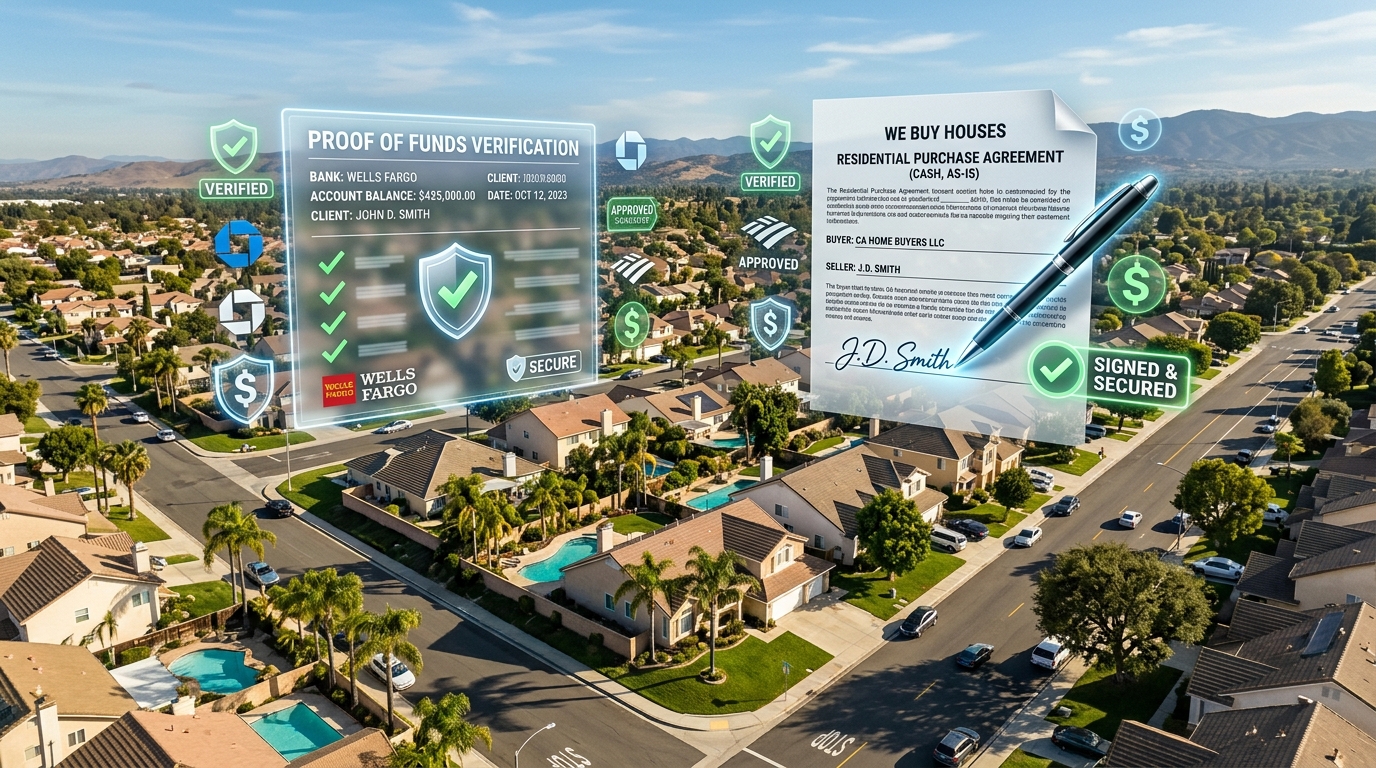
A proof of funds (POF) is a document that shows a buyer has enough liquid cash available to complete a real estate purchase. For a cash buyer, this usually means a bank statement or a letter from a financial institution confirming they have the money sitting in an account and ready to use.
According to Rocket Mortgage’s guide on proof of funds, a valid POF letter must include the bank’s name and address, an official bank statement or account confirmation, and the total balance of liquid funds available. It should also include the bank’s contact information so anyone receiving it can verify the information directly.
Proof of Funds vs Preapproval Letters
These two documents are different and it is worth knowing which one you are looking at. A preapproval letter means a lender says they are likely to loan a buyer money. A proof of funds letter means a buyer already has the cash in hand. For sellers working with a cash buyer company, you want the second one, not the first. If a company offers you preapproval as their proof of funds, that is not cash. That is a borrower.
How to Ask for Proof of Funds the Right Way
When to Request It and What to Say
You should ask for proof of funds before you accept any written offer. Not after. If a company makes you a verbal offer or sends a written offer without including POF, the right move is to request it before you sign anything. Any legitimate cash buyer company expects this request and should respond quickly, usually within one business day.
Honestly, I have seen sellers feel awkward about asking for this. They do not want to seem suspicious or rude. But any buyer who gets offended by a standard document request is a red flag in itself. A real cash buyer will hand this over without hesitation because they know it is part of a normal transaction.
What Documents Count as Valid Proof of Funds
Not every document is equal. Here is what actually qualifies as solid proof of funds for a cash home purchase in California:
- A recent bank statement showing the full account balance with the buyer’s name, the institution’s name, and the account number (can be partially redacted for privacy)
- An official POF letter on bank letterhead signed by an authorized bank representative confirming the available balance
- A certified statement from a credit union or financial institution confirming liquid assets
- A money market account statement showing readily accessible funds in the amount needed to close
- In some cases, a statement from a private equity fund or LLC with a letter from the fund confirming available capital for the transaction
What does not count as proof of funds includes screenshots from an app that cannot be verified, a preapproval letter from a mortgage lender, a statement showing a retirement account balance, or a document that shows investments that cannot be quickly converted to cash.
How to Verify the Document Is Real
Step by Step Verification Process
Getting a document is one thing. Confirming it is real is another. Here is how to actually check that the proof of funds you received is legitimate and not a fake.
First, look at the document closely. It should be on official letterhead with the bank’s logo and contact information. The balance should be for at least the amount of the purchase price. The name on the account should match the name of the buyer or the company making the offer. If the document looks like it was typed in a word processor with no branding, that is a warning sign.
Second, call the bank directly. Do not use the phone number printed on the document itself. Look up the bank’s official phone number independently and call to confirm the document is real. Ask the bank representative if they can confirm the account is in good standing and that the document they are looking at matches what they have on file.
Third, check for red flags in the document itself. Here is a quick comparison of what to look for:
| What Legitimate POF Looks Like | Red Flags to Watch For |
|---|---|
| Official bank letterhead with logo | No letterhead or logo, plain text only |
| Signed by an authorized bank rep | No signature or unidentified signer |
| Matches the amount of the offer | Amount far lower than offer price |
| Recent date, within 30 days | Old document, months past |
| Account name matches buyer name | Account name does not match |
| Bank contact info for verification | No contact info provided |
What to Do If Something Feels Off
Trust your instincts. If a document looks edited, the numbers seem off, or the company pushes back hard when you try to verify, step back. A real cash buyer with real money has nothing to hide. Take your time, do not feel rushed, and consult a real estate attorney if you are not sure what you are looking at.
Our post on whether cash for houses offers are legally binding covers how the contract side of these transactions works in California and what your rights are as a seller before you sign anything.
Why Some We Buy Houses Companies Cannot Provide Real POF
Wholesalers vs Actual Cash Buyers
Here is something many sellers do not know. Not every company that says we buy houses actually buys houses with their own money. Some are wholesalers. They lock up a contract with you, then turn around and find another buyer to assign that contract to. They collect the difference as a fee. There is nothing necessarily wrong with this approach, but it does mean they do not have cash sitting in an account ready to pay you directly.
A wholesaler may give you a proof of funds letter from an end buyer they have a relationship with. The key question is whether the funds actually belong to the company making your offer, or whether they belong to a third party who has not yet committed to buying your home. Ask directly. If they are assigning the contract, you deserve to know that before you proceed.
Questions to Ask a Cash Buyer Company
Before you move forward with any we buy houses company in California, here are the questions worth asking out loud:
- Are you buying this property yourself or assigning the contract to a third party buyer?
- Can you provide a proof of funds letter from your own bank account or fund?
- How many homes have you purchased in California in the past 12 months?
- Are you licensed with the California Department of Real Estate?
- Can you provide the name and contact information of a title or escrow company you have closed with before?
- What happens if you cannot close on the date we agree to in writing?
A reputable cash buyer will answer all of these questions directly. According to Quicken Loans’ guide on proof of funds letters, most financial institutions can produce a valid POF letter within one business day. If a buyer says they need a week or more to get you proof of funds, that is a sign worth taking seriously.
What Reputable Cash Buyers Do Differently
Transparency Is Not Optional for Serious Buyers
A trustworthy cash buyer in California will offer you proof of funds without waiting for you to ask. They have the funds ready, they expect the question, and they want you to feel comfortable before you sign anything. That level of transparency is actually in their interest because it moves the deal forward faster.
At Buy Your Properties, we provide proof of funds as a standard part of every offer we make. We do not wait to be asked. If you want to learn more about what selling your property directly looks like from start to finish, our sell your property page walks through the entire process in plain terms.
How the California Real Estate Escrow Process Protects Sellers
California requires all real estate transactions to go through a licensed title and escrow company. This is a layer of protection that applies to every sale, including cash sales. The escrow company acts as a neutral third party. They hold the buyer’s funds, confirm the title is clear, and release the money to you only when all the conditions of the sale are met.
This means that even if a buyer shows you legitimate proof of funds, the actual closing is still handled through a licensed escrow company that protects your interests. According to the California Department of Real Estate, all escrow companies operating in California must be licensed, and using a licensed escrow company is the standard practice for protecting both parties in a real estate transaction.
If you want to understand more about how disclosures and paperwork work when selling your California home for cash, our post on the paperwork involved in a cash sale breaks down each document you will need to review and sign.
Conclusion
Verifying proof of funds is not complicated, but it is necessary. Any we buy houses company operating in California that is serious about buying your home will have no problem providing a current, verifiable bank statement or official POF letter. Ask for it before you accept any offer, confirm it directly with the issuing bank, and watch for the red flags that point to a company that does not actually have the money they are promising. If you are ready to talk to a cash buyer who handles this step the right way from day one, reach out to our team at Buy Your Properties and we will walk you through the process from start to finish.
Frequently Asked Questions
Can I ask for proof of funds before accepting a cash offer in California?
Yes, absolutely. Requesting proof of funds before accepting any offer is standard practice and every reputable buyer expects it. You should ask for it as part of reviewing the offer, not after you have already signed a purchase agreement.
What does a legitimate proof of funds letter include?
A valid proof of funds letter should be on official bank letterhead, include the buyer’s name, the account balance, the date the funds were verified, and be signed by an authorized bank representative. It should also include the bank’s contact information so you can verify it independently.
How do I verify that a proof of funds document is not fake?
Call the bank directly using a phone number you look up independently, not one printed on the document. Ask a representative to confirm the account is real and the document matches their records. Also look at the document itself for official branding, a signature, and a recent date. Any document that cannot be verified by the issuing institution should be treated as suspicious.
What is the difference between a wholesaler and a true cash buyer?
A true cash buyer uses their own funds to purchase your property and closes directly with you through an escrow company. A wholesaler puts your home under contract and then assigns that contract to another buyer, collecting a fee in the process. Wholesalers may still close your deal, but they are not the ones bringing the cash. Asking whether the company will assign or close directly tells you which one you are dealing with.
Does California require a cash buyer to use escrow?
Yes. In California, all residential real estate transactions must go through a licensed escrow company. This applies to cash sales as well. The escrow company holds the buyer’s funds and only releases them to the seller when all conditions of the sale are met. This protects both parties and is required by state law.