
If you own a home near the Los Angeles River and you are thinking about selling, there are some things you need to know before you put a sign in the yard. The LA River corridor is not just a bike path and a patch of concrete anymore. It has become one of the most talked about stretches of real estate in the city, and with that attention comes a set of rules and disclosures that sellers absolutely have to get right. Getting them wrong can delay your sale or, worse, get you into legal trouble after closing.
What Makes LA River Properties Different From Other LA Homes
The River Corridor Has Changed a Lot in a Short Time
Not long ago, owning a home next to the LA River was not exactly something people bragged about. The concrete channel was mostly known for car chases in movies and not much else. But that started changing around 2014 when the Army Corps of Engineers got behind a billion dollar plan to restore large sections of the river. Parks, bike paths, green space, and pedestrian bridges started going in, and neighborhoods like Elysian Valley (also called Frogtown), Atwater Village, and Boyle Heights started drawing a completely different kind of buyer.
According to an analysis of LA County Assessor data by Crosstown, a nonprofit data journalism newsroom at USC, the assessed value of all residential properties in Elysian Valley skyrocketed nearly 90% between 2016 and 2024. That is the largest increase on the entire Eastside. So yes, living near the river is now a selling point. But that proximity also comes with a specific set of environmental zone rules you need to understand before you list.
Flood Zones Are the First Thing Buyers Will Ask About
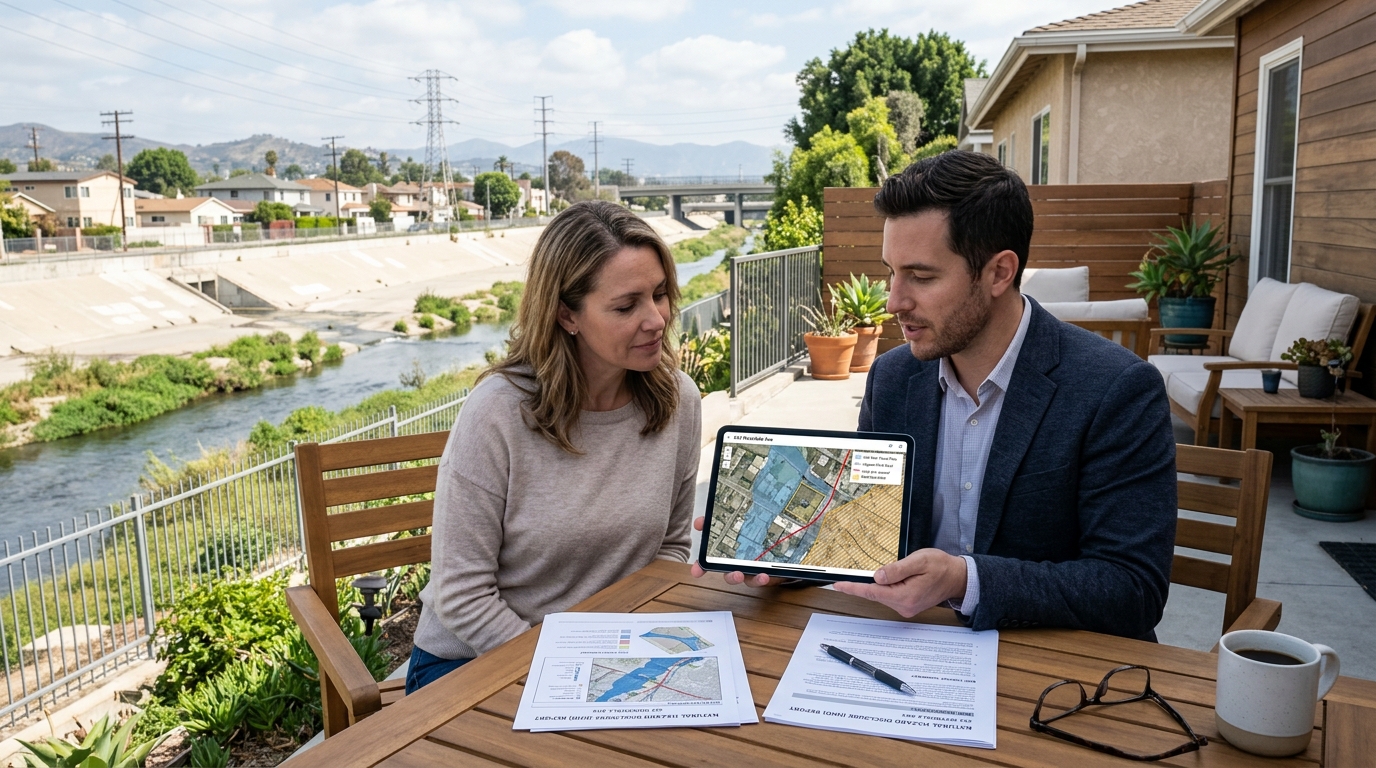
The LA River runs 52 miles through Los Angeles County. Along much of that stretch, FEMA has mapped out Special Flood Hazard Areas (SFHAs). If your property falls inside one of these zones, California law requires you to disclose that in writing to any potential buyer. This is not optional and it is not a gray area.
According to the California Department of Real Estate, sellers of residential property must provide a Real Estate Transfer Disclosure Statement (TDS) that specifies any known environmental hazards, including flood zone status. On top of that, California requires a Natural Hazard Disclosure (NHD) Report to be delivered to the buyer before close. If your home sits in a FEMA designated flood zone, that fact must appear clearly in that report.
The good news is that the NHD report is handled by a third party provider, not you personally. That third party takes on the liability if the report turns out to be inaccurate. But it is still your job as a seller to know whether your property falls in a flood zone and to not withhold that information from your agent or buyer.
The Environmental Disclosures Sellers Near the LA River Must Know
California Updated Its Disclosure Rules Starting in 2024
California has always had strong disclosure laws, but starting January 1, 2024, those rules got more detailed. Sellers are now required to provide more specific information about climate related risks including floods, wildfires, and sea level rise. For properties near the LA River, the flood risk piece is the most relevant, but you may also need to check for dam inundation zones depending on your exact location.
According to the New Era Escrow disclosure guide, updated rules now require sellers to make it clear whether a property is located in a FEMA Special Flood Hazard Area and whether federal flood insurance is required. These changes came out of Assembly Bill 1195 and related legislation focused on making climate risk more transparent in property transactions across the state.
Honestly, the updated disclosure requirements are a good thing for sellers too. When everything is in the open, buyers cannot come back after closing and claim they did not know about a risk. Over disclosing is always safer than under disclosing.
What the Natural Hazard Disclosure Report Covers for River Adjacent Homes
The NHD report is probably the most important document in a California home sale when it comes to environmental issues. It checks a property against several state and federal maps and tells the buyer whether the home falls inside any of several designated hazard zones. For homes near the LA River, the zones most likely to show up include the following.
- FEMA Special Flood Hazard Area (Zone AE, AO, or similar flood zone designations)
- Supplemental Flood Hazard Zone as mapped by state or local agencies
- Dam Inundation Area if the property sits downstream from a dam or reservoir
- Seismic Hazard Zone if the property is near a fault line or liquefaction risk area
- Alquist Priolo Earthquake Fault Zone, which can affect buildability and financing
- State Responsibility Area for wildfire if applicable to your specific parcel
- Contaminated soil or underground storage tank disclosures if there is known industrial history nearby
Not every property near the LA River will trigger all of these, but flood zone and dam inundation are the two most common for river corridor homes. Your NHD provider will run the check against the current maps, but it helps to know in advance what you might be dealing with so you are not surprised at the table.
New Zoning Changes Along the LA River and What They Mean for Sellers
The Boyle Heights Community Plan Update Changed Things in 2024
In September 2024, the LA City Council voted unanimously to adopt the updated Boyle Heights Community Plan, which includes new zoning regulations for land adjacent to the LA River and the Pico Aliso neighborhood. This plan is currently going through a final legal review process and is expected to become effective in the second half of 2025.
What this means for sellers in that corridor is that properties could fall under different zoning classifications depending on where they sit. Mixed income and mixed use incentives are part of the new plan. If you own a lot with development potential near the river in Boyle Heights, those incentives could actually raise your property’s appeal to developers and investors looking to build affordable or mixed use projects.
And if you are in the Elysian Valley area, the city’s broader new Zoning Code, adopted in October 2024 and now active in the Downtown Community Plan area, will eventually roll out to neighborhoods like Frogtown as part of the Community Plan Update process. It is worth checking ZIMAS, the city’s official interactive zoning map, to confirm the current and pending zone for your specific parcel before listing.
How the River Revitalization Plan Affects Property Values Near the Water
The LA River Revitalization Master Plan has been in motion since 2007 and it has already started changing land values in a real way. Neighborhoods along the river that were once considered too industrial or too flood prone are now attracting buyers looking for access to trails, green space, and a different kind of urban lifestyle. That is a genuine selling advantage if you are near one of the revitalized sections.
The Taylor Yard pedestrian and bike bridge, which opened in March 2022 and connects Elysian Valley to the park on the other side of the river, is one example of how infrastructure investment has made river proximity a real selling point. New mixed use development projects are going up along the bike path. Buyers are paying close attention to how near a home is to river access.
For a deeper look at how transit and infrastructure access drive property values across Los Angeles, check out our post on how living near Metro transit lines affects LA property values.
Practical Tips for Selling Your Home in an LA River Environmental Zone
Steps to Take Before You List Near the River
Selling near the LA River is not harder than selling anywhere else in Los Angeles. It just requires a little more preparation. Here is a straightforward look at what to do before you put your home on the market.
| Step | What to Do | Why It Matters |
|---|---|---|
| Check Your Flood Zone Status | Use the FEMA Flood Map Service Center to confirm your zone designation | Determines whether flood insurance is required and affects buyer financing |
| Order Your NHD Report Early | Get the Natural Hazard Disclosure report from a certified provider before listing | Lets you know what will show up so you are not caught off guard during escrow |
| Review Current Zoning on ZIMAS | Check the city’s interactive zoning map for your parcel | New community plan updates may have changed your zone classification |
| Disclose Known Environmental History | Tell your agent about any past flooding, soil contamination, or industrial use on the property | Failing to disclose known hazards can lead to legal liability after the sale |
| Work With an Agent Who Knows River Corridor Properties | Choose a local agent familiar with flood zones, NHD reports, and LA River area zoning | The right agent can frame the river access as a positive and handle buyer questions confidently |
Framing the Environmental Zone as a Feature, Not a Problem
Here is something a lot of sellers near the river do not realize. Being in or near a designated environmental zone does not automatically hurt your sale price. In many cases, buyers who are specifically drawn to river adjacent living already expect to see a flood zone disclosure. They have done their research. What they are buying is the bike path out back, the green space, the community feel, and the fact that their neighborhood is changing in a positive way.
The key is how you handle the disclosure conversation. A seller who is prepared, transparent, and matter of fact about the environmental zone tends to close deals faster than one who is nervous or evasive. Buyers trust sellers who lead with the facts.
You can also read more about what makes the LA market unique and why local buyers choose neighborhoods like these in our post about why we love Los Angeles and our local buyers community. And if you want help navigating the process of selling a river adjacent home, our team is here to help. Reach out through our Contact Us page.
For more on how location factors into property values in the greater LA area, take a look at our guide on the best commutes from downtown LA and how they affect property value.
Conclusion
Selling a home near the LA River is one of the more interesting real estate situations in Los Angeles right now. The neighborhood energy is strong, buyer demand is real, and the long term picture for river corridor property values looks good. But the environmental zone piece is not something to skip over. California’s updated 2024 disclosure laws are clear, the NHD report process is straightforward once you know what it involves, and the zoning updates along the river corridor are actually creating new opportunities for sellers with the right properties. Go in prepared, be upfront with buyers, and work with people who know this stretch of the city. That is how you get a clean, confident sale.
Frequently Asked Questions
Do I have to disclose a flood zone when selling a home near the LA River in California?
Yes. California law requires sellers to disclose if a property is located in a FEMA Special Flood Hazard Area. This disclosure must be included in the Natural Hazard Disclosure (NHD) report provided to the buyer before close of escrow. Failing to make this disclosure can result in legal liability even after the sale is complete.
What is a Natural Hazard Disclosure report and do I need one to sell near the LA River?
Yes, you need one. The NHD report is a document required in all California residential real estate sales. It checks your property against state and federal hazard maps and tells the buyer whether the home is in a flood zone, seismic zone, fire zone, dam inundation area, or other designated hazard area. A third party provider prepares the report and takes on liability for its accuracy.
Does being in a flood zone hurt the sale price of a home near the LA River?
Not necessarily. Many buyers looking at river corridor neighborhoods like Frogtown, Atwater Village, and Boyle Heights already expect a flood zone designation and factor it into their plans. What matters more is transparency and preparation. A seller who handles the disclosure clearly and confidently tends to close deals faster than one who is caught off guard by it.
What are the new zoning changes along the LA River that affect sellers?
In September 2024, the LA City Council adopted the updated Boyle Heights Community Plan, which includes new zoning rules for land near the LA River. The plan is going through a final legal review and is expected to become effective in late 2025. Additionally, the city’s new Zoning Code adopted in October 2024 will roll out to other river corridor neighborhoods through future Community Plan Updates. Sellers should check ZIMAS for the current zoning on their specific parcel.
Does the LA River revitalization plan help or hurt home values for sellers?
It has generally helped. The ongoing revitalization of the LA River corridor has driven real demand for homes in nearby neighborhoods. Assessed values in Elysian Valley alone rose nearly 90% between 2016 and 2024, the largest increase on the Eastside according to LA County Assessor data analyzed by Crosstown at USC. Buyers today often see river proximity as a lifestyle asset, not a liability.