
You have a buyer. You have a contract. And then the appraiser looks at the roof and writes something like “less than two years of useful life remaining.” Just like that, the deal is in serious trouble. If your buyer is using an FHA loan, a VA loan, or even a conventional mortgage, a bad roof can stop the entire sale cold, right at the finish line.
This happens to sellers all over Los Angeles and Southern California every month. And most of them had no idea the roof was going to be the problem that killed the deal.
What FHA and VA Loans Require From a Roof
Government-backed loans have strict rules about the condition of a property before they will fund. The roof is one of the biggest items they check. It is not just about how the roof looks. It is about whether the appraiser believes it can hold up for a few more years.
According to the official FHA and VA property repair guidelines, major roof issues, including leaking roofs and roofs expected to fail within three years, are listed as required repair items. This means FHA and VA appraisers are specifically trained to flag roofs that are near the end of their life, and the loan will not close until those issues are fixed.
For FHA loans, the rule is clear: the roof must have at least two years of remaining life. For VA loans, the roof must be free of major defects. If the appraiser flags the roof, the lender will not release the funds until the repair or replacement is completed and certified. There is no workaround. There is no credit at closing. The work has to be done first.
How a Roof Problem Kills a Mortgage-Backed Deal
Here is how it plays out in a real sale. A seller accepts an offer from a buyer using an FHA loan. The appraisal comes back and flags missing shingles, water staining on the decking, and a roof estimated to have only one year of life left. The lender issues what is called a condition, which is a required repair the seller must complete before the loan will fund.
The seller now has a few choices, and none of them are great. They can pay to fix or replace the roof, which in Los Angeles costs anywhere from $11,000 to $18,000 for a standard replacement according to 2025 data from Roof Replacement CA. They can negotiate with the buyer to reduce the price by that amount and hope the buyer can cover the repair separately, which rarely works with FHA loans since the property still has to pass before funding. Or the deal falls apart completely.
A lot of deals fall apart. The buyer walks. The home goes back on the market. And the seller has lost weeks, sometimes months, of time.
Why a Roof Problem Does Not Affect a Cash Sale
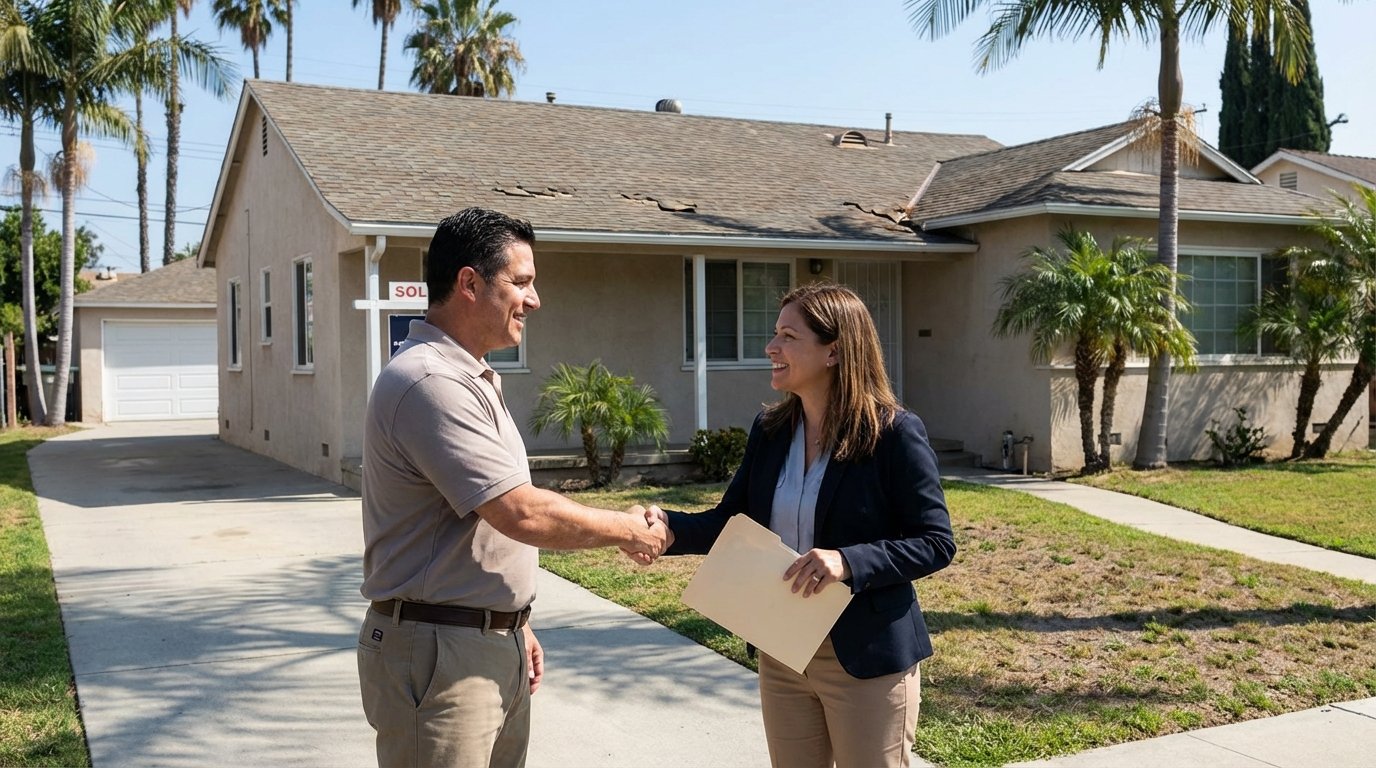
When we buy a home for cash, there is no bank involved. No lender. No appraiser with a checklist of government-mandated property conditions. No FHA minimum property standards to satisfy. No VA appraiser circling problems on a form.
We evaluate the home ourselves. We look at the overall condition, including the roof, and we factor the cost of whatever work is needed into our offer. If the roof needs to be replaced, we know that going in. We price accordingly. You disclose the condition honestly, we make a fair cash offer that reflects reality, and we close.
The roof does not stop the sale. We handle it after closing. That is the way cash buying works, and it is why so many sellers with problem properties come to us after a mortgage deal falls through.
What Roof Issues Look Like From a Seller’s Side
Most sellers do not know their roof is a problem until the appraisal. You might have lived in the home for years without a single visible leak. But an appraiser looking at worn-down shingles, granule loss, soft spots, or aged materials will flag the roof regardless of whether it has been leaking recently.
Here are the most common roof conditions that cause FHA and VA loans to stall or fail:
- Missing or severely damaged shingles that expose the decking underneath
- Active leaks or visible water staining on the attic ceiling or interior walls
- Sagging or soft areas in the roof deck, which indicate rot or structural problems
- A roof estimated to be at the end of its useful life, typically 20 to 25 years for standard asphalt shingles
- Heavy moss or algae growth that is lifting or degrading the shingle material
- Improper installation or previous poor repairs that leave gaps or vulnerabilities
- Flashings around chimneys or vents that are cracked, bent, or separated
Any of these items can cause an FHA or VA appraiser to issue a repair condition. And once that condition is issued, the clock starts ticking. The seller either fixes it or the deal dies.
The Real Cost of a Roof Replacement in Los Angeles
If a seller decides to fix the roof to keep a mortgage-backed deal alive, the cost is significant. Los Angeles is one of the more expensive places in the country for roofing work. Labor costs here are among the highest in California, and permits add another $300 to $1,000 to the total.
Here is what sellers in LA typically pay for a roof replacement in 2025, based on home size and materials:
| Home Size | Asphalt Shingles (Standard) | Clay or Concrete Tile | Metal Roofing |
|---|---|---|---|
| 1,000 to 1,500 sq ft | $8,000 to $12,000 | $15,000 to $25,000 | $14,000 to $22,000 |
| 1,500 to 2,000 sq ft | $11,000 to $18,000 | $20,000 to $35,000 | $18,000 to $30,000 |
| 2,000 to 2,500 sq ft | $14,000 to $22,000 | $25,000 to $45,000 | $22,000 to $38,000 |
| 2,500 sq ft and above | $18,000 to $30,000+ | $35,000 to $60,000+ | $30,000 to $55,000+ |
These figures are based on 2025 pricing reported by Roof Replacement CA and reflect the full tear-off and replacement process that LA County building codes require. Layering new shingles over old ones is generally not permitted in the county.
Spending that much money to save a deal that might still fall apart for other reasons is a big gamble. Many sellers decide it is simply not worth it.
Selling As-Is With a Roof Problem: Your Options
If your roof has issues and you are not prepared to spend $15,000 to $30,000 fixing it before selling, you have real options. You do not have to list the home, wait for a buyer, watch the deal collapse at appraisal, and start all over again.
Selling to a cash buyer is the most straightforward path. You disclose the roof condition upfront, as California law requires for all known material defects. The cash buyer evaluates the home knowing about the roof. The offer reflects the condition. You close on a set timeline without any lender stepping in to demand repairs first.
We buy homes in Los Angeles and throughout SoCal with roof problems all the time. Worn shingles, active leaks, roofs that would fail an FHA appraisal in a heartbeat. None of that stops us. We handle the roof after we buy the home. Your job is just to be honest about what you know, and we will take care of the rest.
If you are dealing with a deal that fell through because of roof issues, or if you want to avoid that situation entirely, our post on how to sell your house fast in Los Angeles walks through the full process of a cash sale from start to close.
You can also read our comparison of why a lower cash offer can net you more than a higher listing price to see how the numbers actually shake out when you factor in repair costs, agent commissions, and carrying costs.
Ready to find out what your home is worth right now, roof problems and all? Reach out through our contact page and we will give you a straightforward cash offer with no pressure and no surprises.
Conclusion
Roof issues are one of the most common reasons that FHA and VA loans fail to close. Government-backed lenders require roofs to meet minimum property standards, and appraisers are trained to flag anything that does not make it. When a roof gets flagged, sellers face an expensive repair bill or a dead deal.
Cash buyers operate entirely outside that system. There are no appraisers, no government checklists, and no required repairs before closing. If your home has a roof problem and you want a clean, certain sale, selling for cash is the fastest and least stressful path forward.
Frequently Asked Questions
Why do roof issues stop FHA and VA loans from closing?
FHA and VA loans have minimum property requirements that protect buyers and the government’s financial interest in the loan. Roofs that are leaking, severely damaged, or estimated to fail within two to three years do not meet those standards. The lender will not fund the loan until the roof is repaired or replaced and approved by a second appraisal. This process can take weeks and costs the seller thousands of dollars.
Do roof problems stop a cash sale?
No. When a home is purchased with cash, there is no bank involved and no government appraisal checklist to satisfy. The buyer assesses the home’s condition directly, factors in the cost of roof repairs or replacement, and makes an offer based on that reality. Roof problems do not block the sale or delay the closing timeline.
How much does a roof replacement cost in Los Angeles in 2025?
For a standard home in LA, a full roof replacement using asphalt shingles typically costs between $11,000 and $18,000. Larger homes or those using tile or metal roofing can easily run $25,000 to $50,000 or more. Labor rates in Los Angeles are among the highest in California, and LA County requires permits for roof replacement, which adds another $300 to $1,000 to the total cost.
Can I sell my home as-is with a bad roof in California?
Yes, but you must disclose the roof condition in writing. California law requires sellers to disclose all known material defects, including roof damage. Selling as-is is legal and allowed, but it does not protect you from disclosure requirements. A cash buyer will accept the home with the roof problem already factored into the offer. A mortgage buyer typically cannot proceed until the roof is fixed.
What if the roof inspection fails after a buyer already made an offer?
If the appraisal or inspection flags the roof and the buyer is using a mortgage, the lender will issue a repair condition. The sale cannot close until the roof is repaired or replaced and re-inspected. The seller usually has to pay for this work upfront. If the seller cannot or will not fix the roof, the buyer typically walks away and the seller starts over. Selling to a cash buyer avoids this scenario completely because there is no lender appraisal involved.