
Waterfront living looks like a dream from the outside. The view, the breeze, the sound of water. But once you own it, you quickly find out there’s a whole other side nobody talks about enough — the insurance bills, the constant maintenance, and the risks that don’t show up on the listing page. I’ve spoken with many waterfront homeowners who said the same thing: “I wish someone had told me this before I bought.” So let me tell you now.
Why Waterfront Properties Face Unique Risks
Waterfront homes sit in some of the most beautiful spots in the country. But beauty comes with exposure. These properties face risks that regular inland homes never deal with, and those risks can cost you serious money if you’re not ready for them.
Flood, Storm Surge, and Coastal Erosion
The biggest threat to any waterfront home is flood damage. And here’s the thing most new buyers don’t realize: standard homeowners insurance does not cover flooding. Not even close. It’s a completely separate policy you have to buy on your own.
According to FEMA’s National Flood Insurance Program (NFIP), flooding is the most costly and most frequent natural disaster in the United States. The NFIP covers up to $250,000 in dwelling coverage for residential buildings — but average flood claims already exceed $42,000. That gap matters a lot when a storm surge hits your living room.
Storm surge is especially dangerous for coastal properties. A Category 3 hurricane can push seawater more than 12 feet above normal tide levels. Properties within 500 feet of a shoreline face the highest surge risk. And coastal erosion is a slower but equally serious threat — water gradually wears away the shoreline, sometimes taking land and foundation with it. Insurance won’t replace lost land, so prevention is the only real answer here.
Saltwater Corrosion and Moisture Damage
If your property is near saltwater, the damage doesn’t wait for a storm to happen. Saltwater air slowly attacks metal components year-round — your roof, gutters, electrical systems, appliances, even the screws in your deck. This kind of wear happens faster than normal weathering, and it means your repair and replacement schedule is much shorter than it would be for an inland home.
I once visited a beachfront home in Florida that had been owned for only six years, and the owner had already replaced the HVAC unit, all the exterior light fixtures, and had to treat the door hinges twice a year. It didn’t look like damage from the outside. But it was quietly eating the house alive. That’s what saltwater corrosion does.
Moisture also speeds up wear on wood siding, decking, and window frames. Repainting, resealing, and replacing exterior materials is a regular — and expensive — part of owning a waterfront home.
What Standard Insurance Doesn’t Cover
This is the part that surprises most buyers. Standard homeowners insurance is built around risks like fire and theft. When it comes to waterfront-specific hazards, the gaps in coverage are wide.
Critical Coverage Gaps Every Waterfront Owner Should Know
Here’s a quick look at what standard policies typically exclude for waterfront properties:
- Flood damage — requires a completely separate flood insurance policy (NFIP or private)
- Storm surge water damage — wind from a hurricane may be covered, but water damage from surge is usually not
- Dock, pier, and seawall damage — often excluded or heavily limited under standard policies
- Coastal erosion — land loss from erosion is not covered by any standard insurance policy
- Boat lift damage — marine structures need specialized coverage
- Mold from moisture — often excluded unless directly caused by a covered event
The Insurance Information Institute reports that only about 15% of American homes carry flood insurance — which means most waterfront homeowners are one bad storm away from a financial disaster with no coverage in place. Don’t be in that group.
Wondering how this affects your overall buying costs? Our guide on closing costs and what to expect covers some of the upfront expenses, including insurance escrow requirements that often catch buyers off guard.
The Insurance Policies You Actually Need
A properly insured waterfront property usually needs several different policies working together. Here’s a breakdown:
| Policy Type | What It Covers | Who Provides It | Estimated Annual Cost |
|---|---|---|---|
| Standard Homeowners Insurance | Fire, theft, wind, liability | Private insurers | Higher than inland homes |
| Flood Insurance (NFIP) | Flood water damage, up to $250K dwelling | FEMA / NFIP | $1,000–$3,000+ per year |
| Windstorm Insurance | Hurricane and high-wind damage | Private or state programs | Varies by location & risk |
| Marine / Dock Coverage | Dock, seawall, boat lift | Specialized marine insurers | Varies by structure size |
| Umbrella Insurance | Extra liability above homeowners limits | Private insurers | $150–$300 per year typical |
If you’re in a high-risk flood zone (AE or VE), your mortgage lender may legally require flood insurance before you can close. Getting an elevation certificate for your property is a smart first step — it determines your official flood risk level and directly affects what you pay for flood insurance.
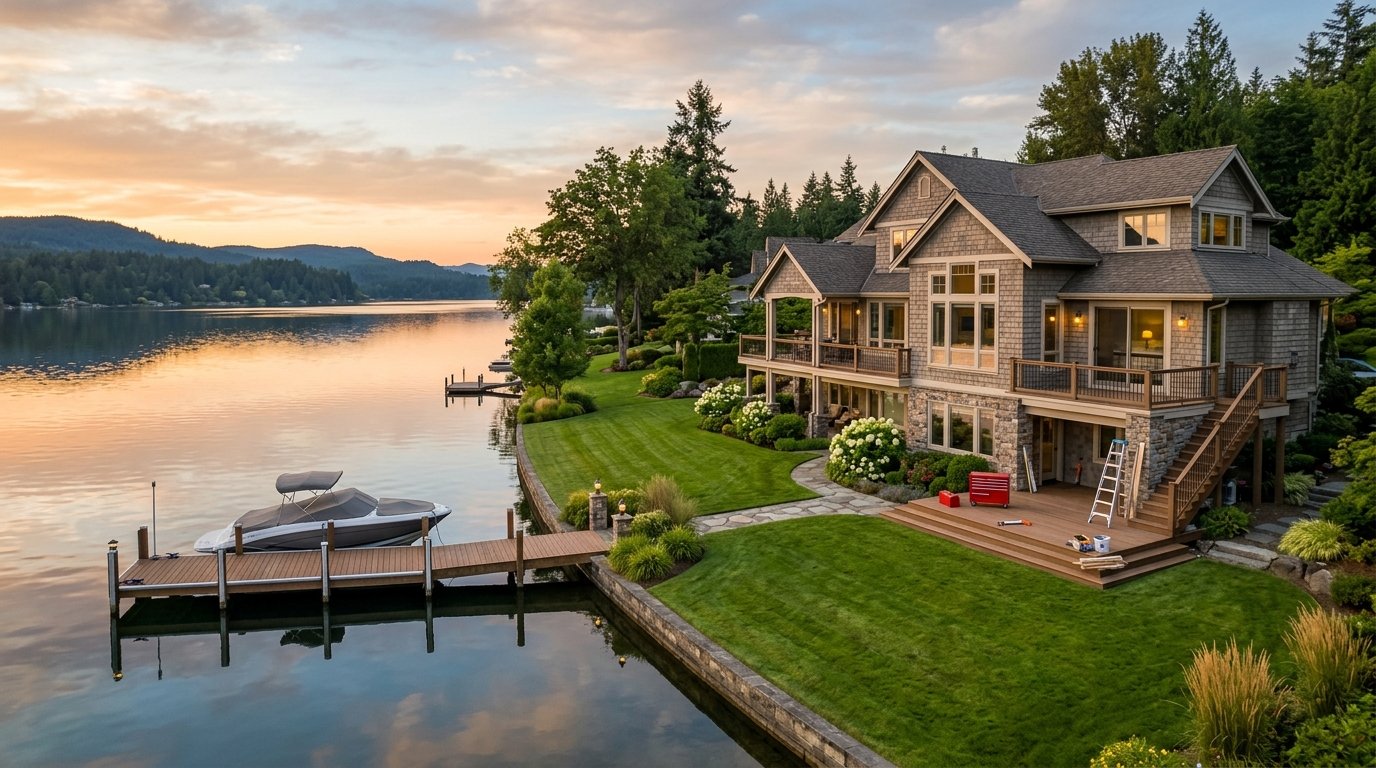
The Real Cost of Waterfront Property Maintenance
Beyond insurance, the ongoing maintenance costs of a waterfront home are in a league of their own. This isn’t like owning a regular house where you mow the lawn and fix the occasional leaky faucet.
Docks, Seawalls, and Marine Structures
If your property has a dock, seawall, or boat lift, those structures need regular professional inspection and upkeep. Seawalls protect your land from wave erosion, but they take a beating year after year. A basic seawall repair can run $150–$500 per linear foot. A full replacement? Much more. These aren’t optional repairs — let a seawall fail, and you could lose significant land value and face foundation risk to the home itself.
Docks face constant exposure to water, weather, and boat traffic. Wood decking needs to be treated or replaced regularly. Metal hardware corrodes. Pilings eventually need to be inspected by a marine engineer. None of this is cheap, and none of it is covered by your standard homeowner’s policy without a special add-on.
Smart Maintenance Habits That Protect Your Investment
Here’s what experienced waterfront homeowners do to keep costs manageable over the long run. According to the National Oceanic and Atmospheric Administration (NOAA), coastal properties face increasing risks from sea level rise and more intense storms, making proactive maintenance more important than ever:
- Schedule an annual professional inspection of your seawall, dock, and foundation
- Apply corrosion-resistant coatings to all exposed metal fixtures each year
- Repaint and reseal exterior wood surfaces every 2–3 years (sooner in saltwater areas)
- Install impact-resistant windows and hurricane shutters to reduce damage and lower premiums
- Keep gutters and drainage systems clear to prevent water from pooling near the foundation
- Consider riprap or retaining walls to slow shoreline erosion
- Move electrical panels and HVAC equipment above expected flood levels if possible
These steps don’t just protect your home — many of them also qualify you for lower insurance premiums. Your insurer wants to see that you’re taking the risk seriously. Documented maintenance records can make a real difference at claim time too.
How to Lower Your Waterfront Insurance Costs
Insurance for waterfront homes is never cheap. But there are ways to bring it down without cutting coverage you actually need.
Certifications and Upgrades That Reduce Premiums
One of the most effective ways to reduce your insurance cost is to get a wind mitigation report. This is a professional inspection that documents how resistant your home is to wind damage. Many insurers offer significant discounts — sometimes 20–40% off your windstorm premium — for homes with certified wind-resistant features like reinforced roofs, hurricane straps, and impact-resistant glazing.
An elevation certificate works similarly for flood insurance. If your home is built above the base flood elevation, your flood insurance premium can drop dramatically. These certificates are issued by licensed surveyors and are worth every dollar they cost.
Bundling your homeowners, flood, auto, and boat policies with the same insurer often brings a multi-policy discount too. And keeping detailed records — photos, invoices, inspection reports — can help support claims and sometimes unlock additional discounts. Want to understand what other costs are part of a property transaction? Check out our overview of financing strategies for home buyers to see how insurance fits into the overall picture. Not sure what type of waterfront home is right for you? Our team is happy to help. Get in touch with us here and we can walk you through your options.
Conclusion
Owning a waterfront property is genuinely wonderful — but it comes with a financial responsibility that standard homeownership doesn’t. The risks are real: flooding, storm surge, saltwater corrosion, erosion, and expensive dock and seawall maintenance. The insurance gaps are significant, and standard policies simply aren’t built for these properties. The good news is that with the right coverage stack, proactive maintenance habits, and smart upgrades, you can protect your investment and keep costs under control. Go in with your eyes open, and waterfront living can be everything you dreamed it would be.
Frequently Asked Questions
Does standard homeowners insurance cover flood damage at waterfront homes?
No. Standard homeowners insurance does not cover flood damage under any circumstances. Waterfront homeowners need a separate flood insurance policy, either through FEMA’s National Flood Insurance Program (NFIP) or a private flood insurer. This is one of the most important things to arrange before buying a waterfront property.
How much does flood insurance cost for a waterfront home?
Flood insurance for waterfront homes typically adds $1,000 to $3,000 or more per year to your costs, depending on your flood zone, property elevation, and coverage amount. Properties in high-risk flood zones (AE or VE) will generally pay more. Getting an elevation certificate can help lower your premium if your home sits above the base flood level.
What is an elevation certificate and why does it matter?
An elevation certificate is an official document issued by a licensed surveyor that shows your home’s elevation relative to the base flood elevation in your area. Lenders and insurers use it to determine your flood risk level. If your home sits above the base flood elevation, it can significantly reduce what you pay for flood insurance.
What maintenance costs should I budget for with a waterfront home?
Budget for annual dock and seawall inspections, corrosion-resistant treatments for metal fixtures, regular repainting and resealing of exterior wood, potential riprap or retaining wall work to manage erosion, and higher-frequency HVAC and appliance replacement compared to inland homes. These costs can easily add several thousand dollars per year above what a non-waterfront home requires.
What is a wind mitigation report and how does it reduce insurance costs?
A wind mitigation report is a professional inspection that documents how resistant your home is to wind damage — things like roof construction, hurricane straps, and impact-resistant windows. Many insurers offer discounts of 20–40% on windstorm premiums for homes with certified wind-resistant features. It’s one of the most cost-effective ways to lower your waterfront home insurance bill.