
So you’ve got some money saved and you’re ready to invest in real estate. You’ve narrowed it down to two choices: a condo or a townhome. Sounds simple, right? Honestly, this is one of the most common decisions new investors get stuck on — and for good reason. Both have real upside, but they work very differently. Let me break it down for you in plain, simple language.
What’s the Difference Between a Condo and a Townhome?
Before you can pick the better investment, you need to know what you’re actually buying. These two property types look similar on the surface but have very different ownership structures underneath.
What You Own with Each Property Type
With a condo, you own only the inside of your unit. The walls, roof, parking lot, hallways, and shared spaces like pools or gyms? Those belong to the homeowners association (HOA). You pay monthly HOA fees and they handle all that upkeep.
With a townhome, you own the inside AND the outside — including the roof, the small yard or patio, and often the land beneath it. You might still have an HOA, but it covers much less. That means more responsibility for you, but also more control and, often, more long-term appreciation potential.
How They Look and Feel Day-to-Day
Condos feel more like apartments — usually one or two floors, shared building entrances, neighbors above and below. Townhomes are more like traditional houses — multiple floors, private entrance, attached on one or both sides but with no neighbors above or below you.
For tenants, this matters a lot. Families tend to prefer townhomes. Young professionals or people who travel often tend to go for condos. Knowing who your likely tenant is helps you pick the right property.
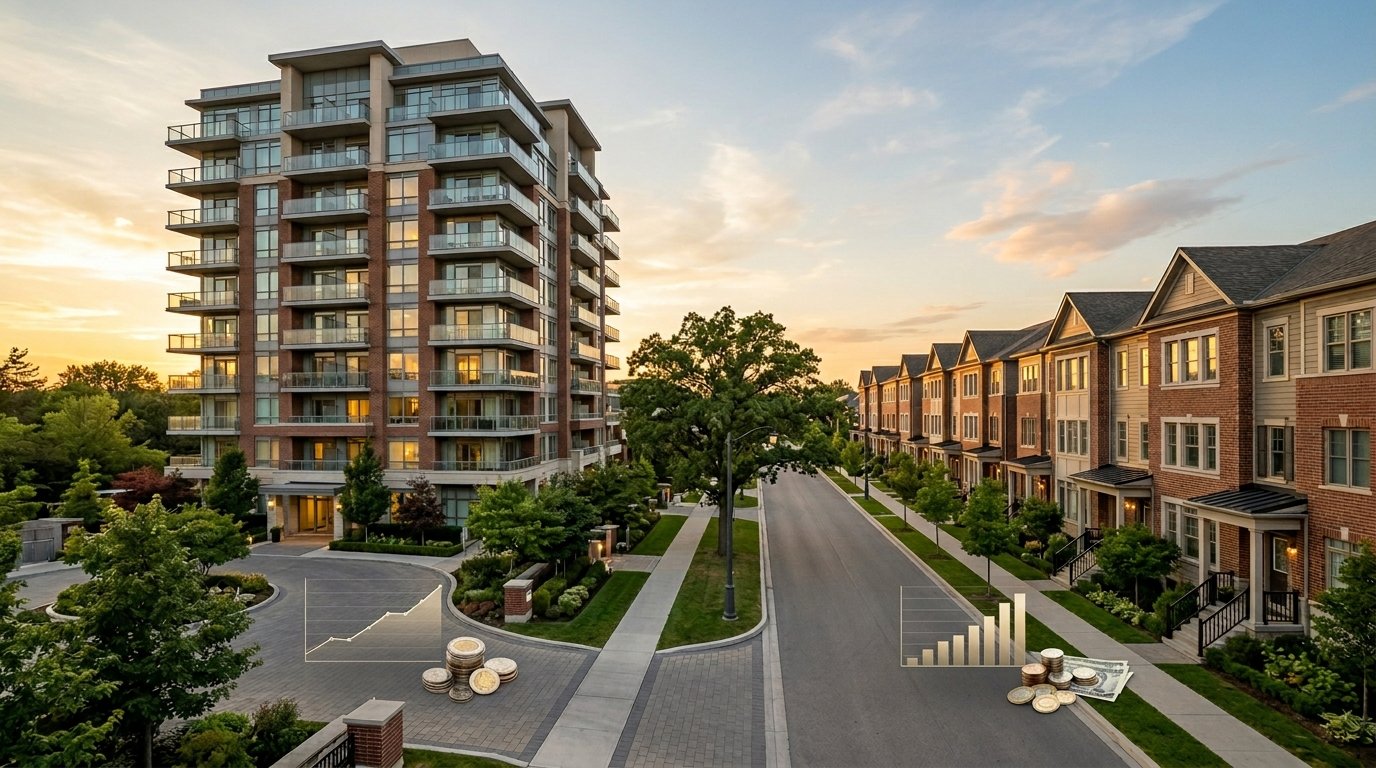
Condos vs. Townhomes: The Investment Numbers
Let’s talk money — because that’s really what this is about. Both types can make you a profit, but they do it in different ways. Here’s how the key financial factors compare.
Purchase Price, HOA Fees, and Financing
Condos tend to have a lower purchase price upfront, which is great for investors with smaller budgets. But here’s the catch: condo HOA fees are almost always higher than townhome HOA fees, because the HOA covers the entire building’s maintenance. Those monthly fees add up fast and eat into your cash flow.
Financing is another key difference. According to Bankrate, lenders often view condos as riskier investments. If the HOA is financially weak, or if too many units in the building are rentals, banks may charge higher interest rates or flat-out refuse to lend. Townhomes, on the other hand, qualify for the same financing as single-family homes — easier to get and often with better terms.
Appreciation and Rental Income Potential
This is where the data gets interesting. Looking back at 2014 to 2024, townhomes appreciated 86.5% nationally, while condos came in at 82.7%, as reported by Realtor.com senior economic analyst Hannah Jones. The gap isn’t huge, but land ownership is the key driver here — townhome buyers own the land, and land reliably grows in value over time.
That said, condos in dense urban markets like Miami, New York, and San Francisco can outperform townhomes because demand for city living stays strong. Location matters more than property type when it comes to rental income and appreciation. I’ve seen condos in downtown Chicago outperform suburban townhomes by a wide margin — it really comes down to the neighborhood.
Pros and Cons: Side-by-Side Comparison
Here’s a quick comparison table to see how these two stack up as investments:
| Factor | Condo | Townhome |
|---|---|---|
| Purchase Price | Usually lower | Typically higher |
| HOA Fees | Higher (covers exterior) | Lower (you maintain exterior) |
| Financing Ease | Harder (stricter lender rules) | Easier (like single-family) |
| Appreciation (10yr) | 82.7% | 86.5% |
| Maintenance Responsibility | Interior only | Interior + exterior |
| Tenant Appeal | Singles, professionals | Families, long-term renters |
| Land Ownership | No | Yes |
| Rental Restrictions | Often yes (HOA limits) | Fewer restrictions |
What Makes Condos a Better Investment Choice?
Condos aren’t just a consolation prize. In the right market, they can be a smart, low-maintenance investment that puts money in your pocket every month.
Lower Entry Cost and Urban Location Advantage
If you want to invest in a big city without spending a fortune, condos are often your only option. Urban land is expensive. A condo gives you access to a high-demand rental market at a price point that would never exist for a standalone home in the same neighborhood.
According to data published in early 2025, national condo inventory is near 194,000 units — roughly double what it was in early 2022. Prices have dipped about 1.3% year-over-year, meaning buyers have more choices and more negotiating room right now. That’s a buyer’s window worth paying attention to.
Less Maintenance Headache for Investors
One thing I genuinely love about condos as an investment: you don’t deal with roof replacements, landscaping, or exterior painting. The HOA handles all of that. As a landlord, your job is simpler — fix what’s inside the unit and collect rent. For investors who don’t want to be hands-on with maintenance, condos make life much easier.
The trade-off, of course, is that HOA fees are non-negotiable. Some buildings also have strict rules about renting out units — always check this before you buy. Some HOAs cap the number of rentals allowed in the building, which could block your plans entirely. Check our guide on how to negotiate with cash home buyers if you’re planning to sell a condo investment later.
What Makes Townhomes a Better Investment Choice?
Townhomes have a lot going for them — especially for investors who want something that feels more like a traditional house without the full price tag.
More Control, Better Financing, and Stronger Appreciation
When you own a townhome, you own the land. Land is one of the most reliable wealth builders in real estate. Eric Hughes, a real estate investor cited by Realtor.com, explains that townhome price growth tracks closely with single-family homes — which historically outperform condos over the long run.
Townhomes are also easier to finance. Conventional loans, FHA loans, and VA loans all apply — and lenders don’t scrutinize the HOA’s financial health the way they do with condos. That makes it easier to close the deal and start earning rental income faster. If you’re thinking about how to fund a townhome purchase, our guide on buying a home with zero down payment covers several financing strategies that may help.
Broader Tenant Appeal and Easier Resale
Townhomes appeal to a wider range of renters — families, couples, people who want space and a bit of outdoor area. That wider appeal means lower vacancy rates, which is good for your cash flow.
When it’s time to sell, townhomes also have a broader buyer pool. Both investors and regular homebuyers will consider a townhome. Condos, on the other hand, sometimes face tougher resale conditions if the building’s HOA is in bad shape or if financing becomes difficult for future buyers.
Not sure which property suits your investment goals? Our team can help. Reach out to us here for personalized guidance.
Key Things to Check Before You Buy Either One
Do Your Due Diligence on HOA and Location
Whether you’re buying a condo or a townhome, always review the HOA’s financial statements. A poorly funded HOA means special assessments — surprise bills for big repairs that every owner has to pay. I’ve seen investors get hit with $10,000–$20,000 assessment bills they never expected. Read those HOA documents carefully.
For location, look at:
- Job growth in the area — more jobs mean more renters
- Vacancy rates for similar properties nearby
- Proximity to transit, schools, and shopping
- Rental restrictions — some HOAs limit how many units can be rented at once
- Cap rate — net operating income divided by purchase price should meet your target return
For a breakdown of what to expect when closing either type of deal, check out our article on closing costs and what to expect.
Conclusion
Both condos and townhomes can be excellent investments — it just depends on your goals, budget, and market. If you want urban access, low maintenance, and a lower entry price, a condo might be your best move. If you want land ownership, easier financing, and stronger long-term appreciation, a townhome is probably the smarter pick. Either way, the key is doing your homework: check the HOA health, study the local rental market, and run the numbers before you sign anything. The right property in the right location beats any blanket rule about which type is “better.”
Frequently Asked Questions
Which is a better investment — a condo or a townhome?
It depends on location, budget, and your investment style. Townhomes generally offer stronger appreciation and easier financing due to land ownership. Condos can outperform in dense urban markets where demand for city living is high. Both can produce solid rental income when chosen carefully.
Are HOA fees higher for condos or townhomes?
Condo HOA fees are almost always higher because the HOA covers the full building exterior, landscaping, shared amenities, and sometimes utilities. Townhome HOA fees are typically lower since owners handle much of their own exterior maintenance.
Is it harder to get a mortgage for a condo than a townhome?
Yes, in most cases. Lenders apply stricter rules to condos — especially if the HOA is financially weak or if a large percentage of units are already rentals. Townhomes qualify for conventional, FHA, and VA loans under the same terms as single-family homes, making financing simpler.
Can I rent out a condo I buy as an investment?
Sometimes, but not always. Many condo HOAs have rules limiting how many units in the building can be rented out at once. Before you buy a condo as a rental investment, always read the HOA rules carefully and ask directly whether renting is allowed.
Which holds its value better over time — a condo or townhome?
Townhomes have historically appreciated slightly faster because they include land ownership, which adds value reliably over time. However, condos in high-demand urban areas can appreciate strongly too. Over the past 10 years, townhomes appreciated 86.5% nationally versus 82.7% for condos, according to Realtor.com data.