
Your home can look amazing in real life but still sit on the market for months. Why? Because buyers decide in seconds — and most of that decision happens online before they even visit. Staging your home the right way changes everything. Let me show you how.
What Is Home Staging and Why Does It Work?
Home staging means preparing your home specifically for sale. It is not decorating for yourself. It is setting the scene so buyers can walk in, feel something, and say “I can see myself living here.”
The data on staging is very clear. According to the NAR 2025 Profile of Home Staging, 29% of real estate agents reported that staging led to a 1% to 10% increase in the dollar value offered by buyers. And nearly 49% of sellers’ agents observed that staged homes spent less time on the market.
On a $400,000 home, a 1% to 10% boost equals $4,000 to $40,000 more in your pocket. That is not small change.
Staging vs. Decorating: Know the Difference
Decorating is personal. It reflects your taste, your style, your life. Staging is strategic. It is about removing everything personal and creating a space that appeals to the widest possible audience.
Honestly, the first time I heard this, it felt a little counterintuitive. Why would you make your home look less like you? But when you understand that buyers need to picture themselves there — not you — it clicks right away.
What the Numbers Say About Staging
According to NAR data, 82% of buyer’s agents reported that staging helped their clients better visualize the property as their future home. That is huge. It means when you stage well, most buyers walking through the door are already building an emotional connection.
And 37% of home buyers say staging the living room is most important, followed by the primary bedroom at 34%, and the kitchen at 23%. These three rooms are where your staging effort should be concentrated.
Step 1: Declutter, Deep Clean, and Depersonalize
Before any furniture gets moved or flowers get added, you need a clean, empty canvas. This is the foundation of all staging — and according to NAR, 96% of agents identify decluttering as the most essential staging step.
How to Declutter for Maximum Impact
Go room by room and remove anything that is not necessary. Every extra item on a counter, every piece of furniture that blocks a path, every collection on a shelf — it all makes rooms feel smaller and busier.
Rent a storage unit if you need to. It is worth it. Buyers will open closets and look in cabinets. If closets are packed to the ceiling, buyers think the home does not have enough storage. Clear closets feel spacious and organized — a huge selling point.
Remove Personal Items and Family Photos
Family photos, kids’ artwork on the fridge, religious items, sports memorabilia — all of it should come down. This is not about hiding who you are. It is about giving the buyer space to imagine who they are in this home.
When buyers see your family photos, they are reminded this is someone else’s home. When the walls are clean, they start to imagine hanging their own photos there. That mental shift is the whole point of staging.
Step 2: Set the Stage Room by Room
Once your home is clean and depersonalized, it is time to make it look beautiful in a way that appeals to a broad range of buyers. Every room should have a clear purpose and feel.
Living Room and Kitchen Staging Tips
The living room is your most important space. Arrange furniture to create conversation groupings and show the room’s full size. Remove one or two pieces of furniture if the room feels crowded. A large rug, clean throw pillows in neutral tones, and a simple centerpiece on the coffee table go a long way.
In the kitchen, clear the counters completely. Keep one small decorative item at most — a bowl of lemons or a small plant. Make sure the sink is spotless, the appliances are clean, and the cabinet faces are free of grease and smudges. Buyers will touch and open everything.
Primary Bedroom and Bathroom Staging
The primary bedroom should feel like a calm retreat. Use white or neutral-toned bedding. Add matching nightstands and lamps if possible. Keep decor minimal and symmetrical — it looks polished and intentional.
Bathrooms should sparkle. Scrub the grout, replace the toilet seat if it is worn, hang fresh white towels, and add a simple soap dispenser and small plant. Buyers love bathrooms that feel clean and spa-like. If there is any caulk discoloration around the tub, replace it — it costs almost nothing and makes a huge difference.
Step 3: Maximize Curb Appeal and Lighting
The Outside Matters More Than You Think
Many sellers spend all their energy inside and forget the outside. But 97% of buyers today start their home search online. The very first photo they see is the front of the house. If it does not look inviting, they swipe past.
Mow the lawn, edge the walkway, trim all shrubs, and add fresh mulch to garden beds. A few pots of seasonal flowers near the front door can immediately warm up the entry. Power wash the driveway if it is stained. Clean the windows inside and out. These small steps combine to create a great first impression.
Lighting: The Secret Weapon of Home Staging
Dark homes feel smaller and sadder. Bright homes feel bigger and more alive. Open every curtain and blind. Replace dim bulbs with brighter warm-white LEDs. Add floor lamps in dark corners. Turn on all the lights before every showing — even during the day.
Good lighting is one of the most overlooked and affordable staging moves. A few new light fixtures or brighter bulbs can genuinely transform how a room photographs and how it feels in person.
Home Staging Checklist: What to Do Before Every Showing
Here is a quick list to run through before each showing or open house:
- Air out the home — open windows briefly to bring in fresh air; use a light, neutral scent if needed (no heavy candles)
- Clear all counters — kitchen, bathrooms, and any desk surfaces
- Make all beds — neatly, with matching pillows arranged properly
- Hide pet items — bowls, beds, toys, litter boxes; some buyers are allergic or just distracted
- Empty trash cans — in all rooms, not just the kitchen
- Turn on all lights — throughout the entire house
- Adjust temperature — make it comfortable; buyers spend more time in comfortable homes
- Leave the home — do not stay during showings if at all possible
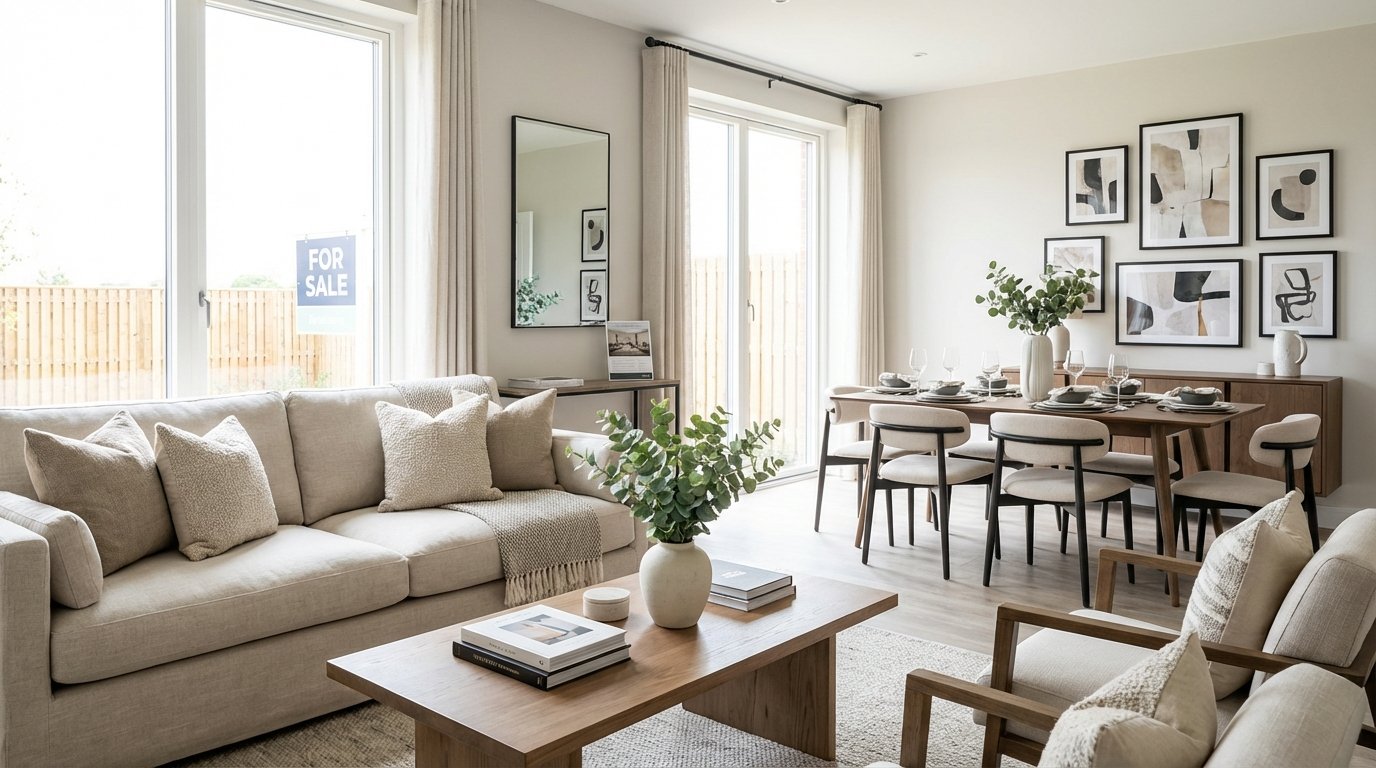
Do You Need a Professional Home Stager?
Professional staging costs around 1% to 3% of your home’s asking price. On a $400,000 home, that is $4,000 to $12,000. That might sound like a lot, but if staging helps you sell for 5% to 10% more, the math works out very clearly in your favor.
DIY Staging vs. Hiring a Professional
You do not always need to hire a professional stager. Many sellers do a great job on their own, especially when their home already has good bones and modern finishes. The key steps — declutter, depersonalize, clean, light, and arrange — can all be done yourself.
However, if your home has an awkward layout, outdated furniture, or empty rooms, a professional stager’s expertise can add real value. They know exactly how to make a space read well in photos and in person.
Virtual Staging: A Budget-Friendly Option
If your home is empty or you have already moved out, virtual staging is a smart, affordable option. A digital designer adds furniture and decor to your listing photos, making empty rooms look warm and livable. Virtual staging typically costs $75 to $200 per room versus thousands for physical staging.
In 2024, 99% of home buyers between ages 24 and 57 used the internet to search for homes. Great listing photos are not optional anymore — they are the whole game.
Home Staging Impact: A Quick Comparison
Here is how staged and unstaged homes compare, based on data from NAR and RESA (Real Estate Staging Association):
| Factor | Staged Home | Unstaged Home |
|---|---|---|
| Time on Market | Significantly less (49% of agents confirm this) | Often lingers longer |
| Sale Price Increase | 1%–10% higher offers (NAR 2025) | Baseline market price |
| Buyer Visualization | 82% of buyers can visualize themselves living there | Hard for buyers to imagine |
| Online Appeal | Higher click-through on listings | Often passed over quickly |
| Offers Received | Often multiple offers; stronger competition | Fewer, lower offers |
If you want to further boost your home’s value before listing, check out our guide on high-ROI home improvements before selling — it pairs perfectly with a good staging strategy.
And for a deeper understanding of what really moves property values in your area, our post on factors that drive property value appreciation is a great read.
Ready to sell fast and without all the hassle? Visit our homepage to learn how Buy Your Properties makes the selling process simple and stress-free.
Have questions about your specific home or situation? Contact us directly — we are happy to help you figure out the best path forward.
According to a study from the National Association of Realtors (NAR) — The Case for Home Staging, about 30% of real estate professionals reported that staging boosted home values by 1% to 10%. On a $400,000 home, that is a potential $4,000 to $40,000 gain.
Conclusion
Staging your home is one of the smartest moves you can make before listing. It does not have to be expensive or complicated. Declutter, clean, depersonalize, light it well, and focus on the three rooms buyers care most about. The result? Faster offers, stronger prices, and less time sitting on the market wondering what went wrong.
Frequently Asked Questions
Does staging really help sell a home faster?
Yes. According to the NAR 2025 Profile of Home Staging, nearly 49% of sellers’ agents confirmed that staged homes spent less time on the market than similar unstaged ones. Staging helps buyers make faster decisions by creating an emotional connection right away.
How much does home staging cost?
Professional staging typically costs 1% to 3% of your home’s listing price. Virtual staging (digitally adding furniture to photos) is much cheaper at $75 to $200 per room. For many sellers, the return far outweighs the cost, especially when staging leads to a faster sale and higher offers.
Which rooms are most important to stage?
The living room, primary bedroom, and kitchen are the three most important rooms to stage, according to NAR buyer data. The living room tops the list at 37% of buyers, followed by the primary bedroom at 34%, and the kitchen at 23%.
Can I stage my home myself?
Absolutely. Decluttering, deep cleaning, removing personal items, adding fresh neutral bedding, improving lighting, and improving curb appeal can all be done yourself at very low cost. These steps alone make a dramatic difference in how your home feels to buyers.
How long before listing should I start staging?
Start at least 2 to 4 weeks before your planned listing date. This gives you time to declutter, make small repairs, do any fresh painting, and get professional photos taken. Rushing staging at the last minute often leads to missed details that cost you money.