
I’ve watched two nearly identical houses on the same street end up with very different prices just five years later. One sold for 30% more than what the owner paid. The other barely broke even. The difference wasn’t luck. It came down to a handful of factors most buyers never think about until it’s too late. If you want your home or investment property to grow in value, you need to know what actually drives that growth.
What Is Property Value Appreciation?
Property value appreciation means your home is worth more today than what you paid for it. It’s one of the main reasons people buy real estate. According to data from Rocket Mortgage, the average U.S. home appreciated by 3.8% between Q2 2024 and Q2 2025. But that’s just the national average. Some areas saw 7% or more. Others barely moved.
The truth is, appreciation isn’t guaranteed. It depends on where you buy, when you buy, what you do with the property, and what’s happening in the economy around you. Let’s break it all down.
Natural Appreciation vs. Forced Appreciation
There are two types of appreciation worth knowing. Natural appreciation happens on its own because of outside forces — like more people moving to the area, interest rates dropping, or new businesses opening nearby. You don’t have to do anything. The market does the work.
Forced appreciation is when YOU make the property more valuable. A kitchen remodel, a new roof, better landscaping — these improvements directly push your home’s price up. The smart investor learns to use both types together.
Location: Still the Biggest Factor of All
I know you’ve heard “location, location, location” a hundred times. But it’s repeated so often because it keeps being true. Location doesn’t just affect today’s price. It shapes how your property grows (or doesn’t) over time.
What Makes a Location Boost Property Value?
The best locations share common traits. Properties close to good schools, parks, grocery stores, hospitals, and public transport tend to appreciate faster. Buyers will always pay more for convenience. And when more buyers want a home in a specific area, prices go up.
Here are the top location-based factors that drive home value appreciation:
- School district quality — Highly rated schools push demand and prices up significantly
- Low crime rates — Safe neighborhoods hold value better in downturns
- Job market strength — Areas with growing employment attract more buyers
- Proximity to amenities — Walkability, shopping, parks, and transit access increase desirability
- Future development plans — Upcoming infrastructure, commercial hubs, or transit lines often signal rising values
- Neighborhood quality — Well-maintained streets and homes keep the whole area competitive
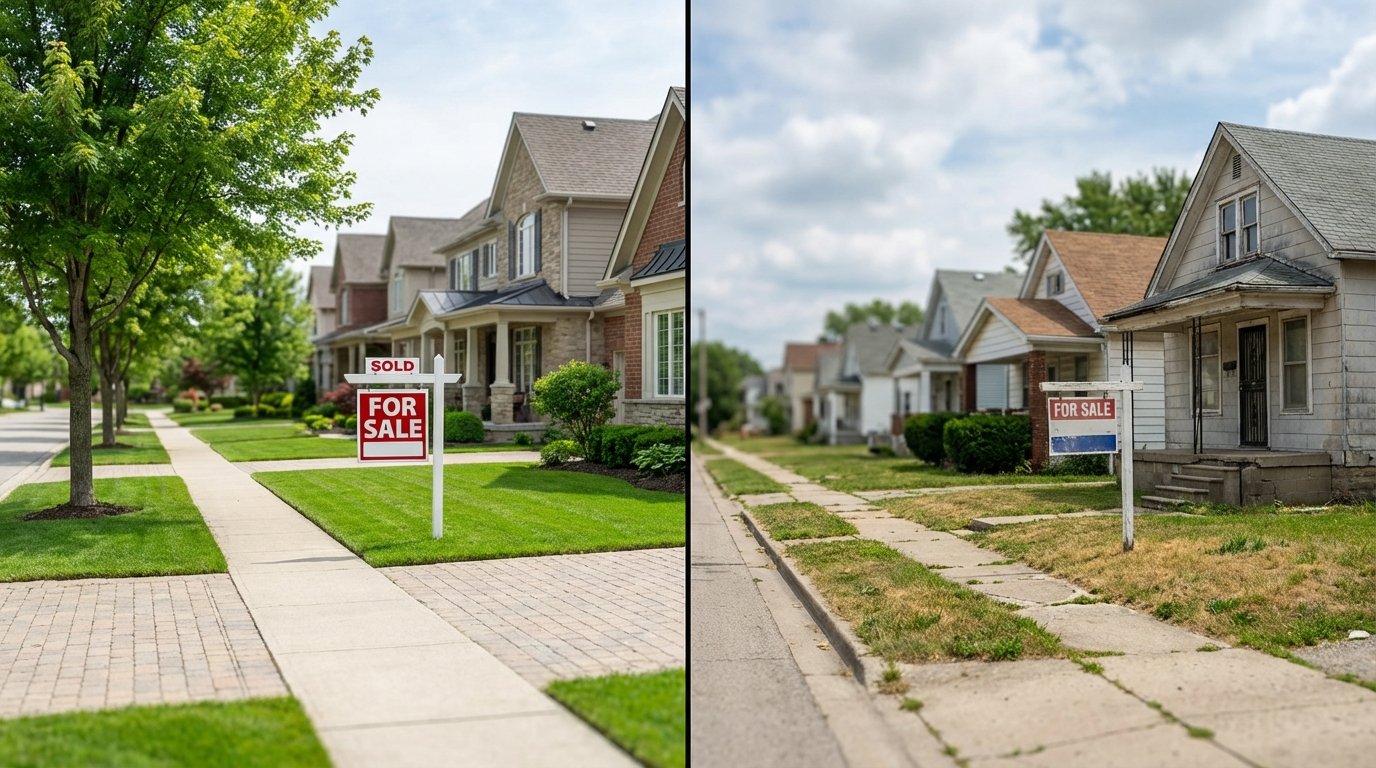
How Much Can Location Actually Affect Your Home’s Price?
A lot. According to the Federal Housing Finance Agency’s (FHFA) Q1 2025 House Price Index, U.S. home prices rose 4.7% year-over-year on average. But some metro areas saw as high as 23% growth, while others dropped by 7%. Same country. Very different outcomes based on location.
That 23% vs. -7% swing comes almost entirely down to local conditions. Job growth, migration patterns, housing supply, and the local economy all play a role. When you pick a location with strong momentum behind it, appreciation tends to follow.
Economic Conditions and Market Demand
Even a great property in a great location won’t appreciate well if the economy is struggling. I’ve seen beautiful homes sit on the market for months during times of high interest rates and low buyer confidence. The economy sets the ceiling for how much your property can grow.
Interest Rates and Their Direct Impact on Home Values
When mortgage rates drop, more people can afford to buy. More buyers means more competition for homes. More competition drives prices up. It’s that simple. When rates rise, the opposite happens. Fewer buyers enter the market, demand cools, and price growth slows or reverses.
This is why so many investors pay close attention to what the Federal Reserve does. A shift in interest rates ripples through the entire housing market in a matter of months.
Job Growth, Population Growth, and Housing Supply
Areas with strong job growth attract workers who need housing. More people moving in creates demand. If housing supply can’t keep up — which is common in desirable cities — prices rise fast. This is one reason cities like Austin and Nashville saw massive price increases after remote work became common and people relocated from expensive coastal cities.
Population growth works the same way. More residents need more homes. In markets where supply is tight and demand keeps growing, property appreciation rates climb well above the national average. This is why tracking local market trends and migration patterns matters before you buy.
If you’re looking at purchasing a property and want to understand every step of the buying process before you commit, our guide on the escrow process step by step is a great place to start so you know exactly what to expect from offer to close.
Property-Specific Factors That Drive Value Up
Here’s where things get practical. Beyond location and economics, the actual condition and features of your home make a real difference. Some upgrades pay off big. Others barely move the needle.
Home Improvements That Actually Boost Appreciation
Not every renovation is equal. According to the 2025 Cost vs. Value report referenced by HomeLight’s property value analysis, a mid-range minor kitchen remodel recoups about 113% of its cost at resale. That means you spend less than you get back. That’s forced appreciation at its best.
Other improvements that consistently add value include updating your HVAC system, replacing or repairing your roof, installing energy-efficient windows, and adding a new garage door. These aren’t glamorous upgrades, but they signal to buyers that the home is well-maintained and won’t need costly repairs right after purchase.
Property Size, Layout, and Condition
Bigger isn’t always better, but usable square footage matters. A 3-bedroom home on a good lot in a desirable neighborhood will almost always appreciate more than a studio in the same zip code. Buyers are willing to pay premiums for functional floor plans, good natural light, modern kitchens and bathrooms, and solid curb appeal.
Curb appeal is underrated. The outside of your home is the first thing buyers see. Fresh paint, clean landscaping, and a well-maintained exterior set buyer expectations from the moment they pull up. Homes that look cared for sell faster and at better prices.
| Appreciation Factor | Type | Estimated Impact on Value |
|---|---|---|
| Top-rated school district | Location | 10–50%+ premium |
| Strong local job market | Economic | High demand, faster price growth |
| Low mortgage interest rates | Economic | Increases buyer pool, pushes prices up |
| Kitchen or bath remodel | Property improvement | Up to 100%+ cost recoup at resale |
| New roof or HVAC | Property improvement | Increases buyer confidence, reduces negotiation |
| Population/migration growth | Market demand | Drives housing demand and prices up |
| Future infrastructure projects | Location/development | Can spike nearby values by 10–25% |
Before closing on any property, it’s smart to run a property lien search to make sure there are no hidden debts or claims on the title. A clean title protects your investment from day one and makes future resale much smoother.
Have questions about what factors might affect a specific property you’re looking at? Reach out to our team and we’ll help you evaluate the numbers before you commit.
Conclusion
Property value appreciation doesn’t happen by accident. It’s driven by location, local economic conditions, housing supply and demand, and what you do with the property itself. The best investors understand all four of these levers and buy in places where multiple factors are working in their favor at once.
If you’re buying a home or investment property, think beyond today’s price. Think about what will drive that price higher in 5 or 10 years. That’s how you build real, lasting wealth in real estate. I’d love to hear which factor surprised you most — drop a comment below.
Frequently Asked Questions
What is the average property appreciation rate in the USA?
According to Rocket Mortgage data, the average U.S. home appreciated by 3.8% between Q2 2024 and Q2 2025. Historically, the national average tends to fall between 3–5% per year, though high-demand markets often see much higher rates and some areas can experience declines during economic downturns.
What is the single most important factor for property appreciation?
Location is consistently the most powerful driver of property value appreciation. A home in a desirable neighborhood with good schools, low crime, and strong job growth will almost always appreciate faster than a similar home in a less attractive area — even if both properties are identical in size and condition.
Do home renovations guarantee appreciation?
Not always. Some renovations add more value than they cost — like a minor kitchen remodel. Others, like a highly personalized addition, may not appeal to future buyers. The safest renovations for forced appreciation are those that fix functional issues (roof, HVAC, windows) or update high-visibility areas like kitchens and bathrooms in a neutral style.
How do interest rates affect property appreciation?
When mortgage rates drop, more buyers can afford homes, which increases demand and pushes prices up. When rates rise, fewer buyers enter the market and price growth slows. This relationship means that even a well-located property may not appreciate quickly during periods of high interest rates.
Can a property depreciate instead of appreciate?
Yes. Property depreciation happens when a home loses value over time. This can be caused by economic downturns, rising crime rates, school district decline, job losses in the area, property neglect, or a sharp increase in housing supply without matching demand. Choosing your location carefully and maintaining the property reduces the risk of depreciation significantly.