
Which States Actually Make You Money in Real Estate?
If you put your money in the wrong state, it just sits there. Maybe it even loses value. But if you pick the right state? You could be earning rental income every single month while your property grows in value. That’s the dream — and in 2026, it’s more possible than ever if you know where to look.
What Makes a State Good for Investment Property?
Not every state works the same for investors. Some states make it easy to own rentals. Others make it really hard.
Here are the things I always look at before picking a market:
- Population growth — more people means more renters
- Job market strength — employed people pay rent on time
- Landlord-friendly laws — faster evictions, no rent control
- Low property taxes — keeps your operating costs down
- No state income tax — more of your profit stays in your pocket
- Strong rental demand — low vacancy rates mean steady cash flow
- Below-average home prices — lower entry cost, faster ROI
Once I started checking all these boxes before investing, my returns got a lot better. It’s not luck — it’s research.
How We Picked the Best States for 2026
I looked at real data — cap rates, rent-to-price ratios, vacancy rates, and state laws. I also checked which states are seeing new jobs and population growth. This is not a list based on what’s trendy. It’s based on what actually works for investors right now.
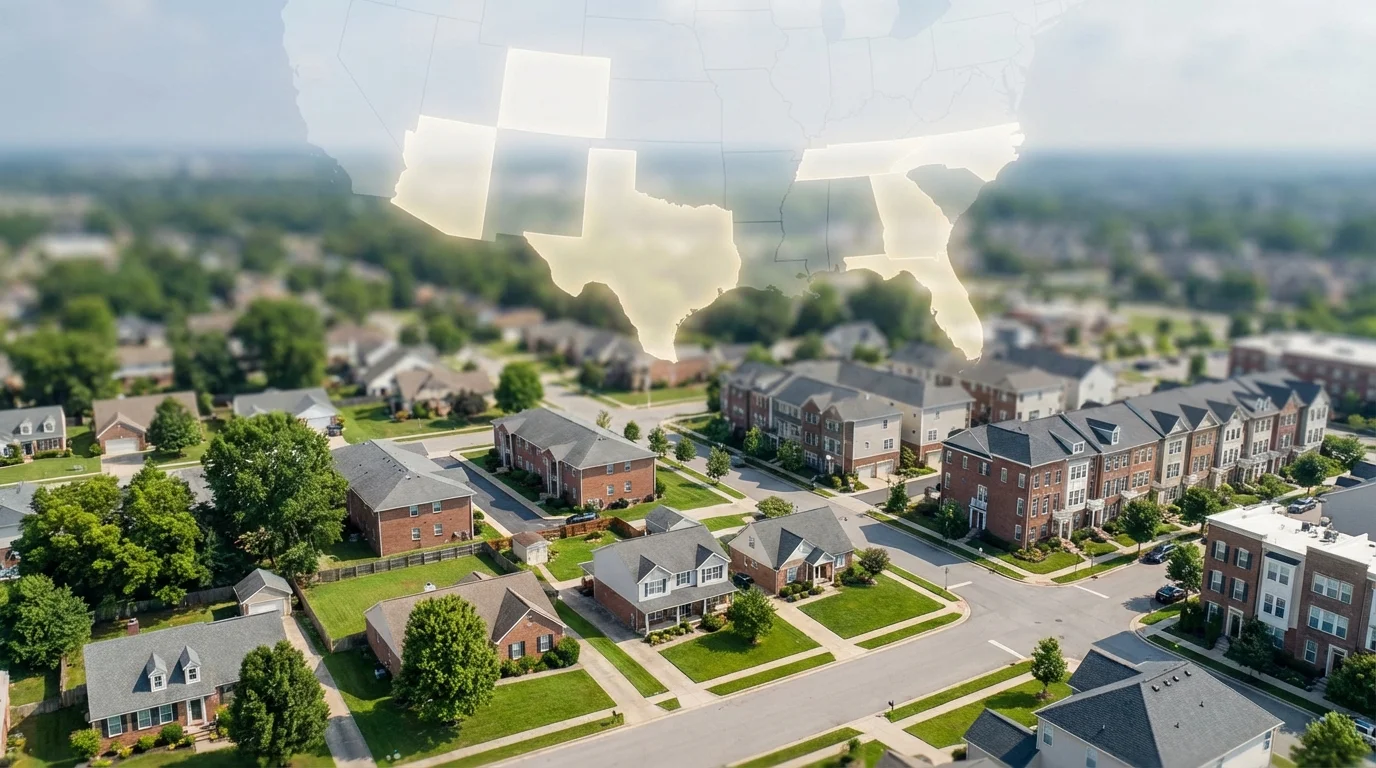
The 7 Best States to Buy Investment Property in 2026
Let’s go through each one. Some of these might surprise you — and honestly, a few surprised me too when I first dug into the numbers.
1. Texas — Strong Economy, No Income Tax
Texas keeps showing up on every investor’s list, and for good reason. It has no state income tax, a massive and growing economy, and one of the highest renter-homeowner ratios in the country.
Cities like San Antonio, Houston, and Dallas-Fort Worth have seen steady population growth and strong job market numbers. According to the U.S. Census Bureau, seven of the ten fastest-growing cities in the U.S. between 2023 and 2024 were in Texas and Florida.
The only thing to watch? Property taxes in Texas run about 1.5–2% annually, which can eat into your cash flow if you’re not careful. But in most markets, the rental income more than covers it.
2. Florida — Zero Income Tax and Landlord-Friendly Laws
Florida is one of only nine states with no personal income tax, and its property tax rate of around 0.80% sits below the national average. That’s a great combo for investors who want to keep more of what they earn.
The rental market here is powered by a huge tourism economy, steady migration from northern states, and year-round warm weather. Tampa, Orlando, and Jacksonville are three markets worth watching closely in 2026.
Florida also has no statewide rent control, no limits on security deposits, and landlord-friendly eviction processes. That makes managing properties there much less stressful.
3. Tennessee — Tax Benefits and Growing Cities
Tennessee has no state income tax on wages, which is a big win for investors. Nashville has become a major business hub with strong corporate relocation activity and consistent rental demand across all property types.
I talked to an investor last year who bought two single-family homes in Nashville’s suburbs and was pulling in solid rental yields within six months. The tenant quality was high because of the strong job market in healthcare, tech, and entertainment.
Chattanooga is another city to watch — it’s smaller, more affordable, and seeing a nice wave of job growth that’s pushing housing demand up fast.
4. Ohio — Best Cash Flow Market in the U.S.
If you want immediate cash flow, Ohio is hard to beat. Cleveland, in particular, has the highest rent yield ratio and best affordability of almost any major U.S. metro right now.
The median home price in Cleveland is well below the national average, but rents are solid. That math creates a really strong foundation for cash-flow investing. Major employers like Cleveland Clinic and Case Western help keep vacancy rates low.
Columbus and Cincinnati are also strong markets — both have growing populations, expanding job bases, and a lot of new businesses moving in.
5. Indiana — Affordable Entry, Strong Fundamentals
Indiana is often overlooked, but it’s one of the most landlord-friendly states in the country. Indianapolis combines Midwest affordability with real growth-market characteristics.
Home prices are well below the national median, cap rates are strong, and the city continues to attract new employers and residents. Honestly, it’s the kind of market that experienced investors quietly buy in while everyone else is looking at flashier places.
6. Georgia — Atlanta’s Growing Influence
Georgia benefits from Atlanta’s massive economic engine. The city is a corporate hub for major companies across finance, tech, and logistics. This drives strong rental demand from young professionals who prefer renting over buying in the current market.
According to the U.S. Bureau of Labor Statistics, Georgia has consistently added jobs faster than the national average, which directly supports housing demand. The state also has relatively low property taxes and no restrictions on rent increases.
7. North Carolina — Quality Tenants, Stable Appreciation
North Carolina gives you a really nice balance — quality tenants, strong property appreciation, and a stable, growing economy. Charlotte and Raleigh continue to attract tech companies, universities, and healthcare employers.
This creates a deep pool of well-employed renters who stay long-term. That means lower tenant turnover, fewer vacancies, and more predictable rental income. The state is also expanding its zoning rules to make manufactured housing more accessible, which opens up new investment options.
Key Metrics Comparison: Top States at a Glance
Here’s a quick side-by-side look at the states we covered so you can compare them easily:
| State | State Income Tax | Landlord-Friendly | Best For | Key City |
|---|---|---|---|---|
| Texas | None | Yes | Appreciation + Cash Flow | Dallas, Houston |
| Florida | None | Yes | Rental yield, Tourism | Tampa, Orlando |
| Tennessee | None | Yes | Tax benefits, Growth | Nashville |
| Ohio | Yes (low) | Yes | Cash flow, Affordability | Cleveland |
| Indiana | Yes (flat 3%) | Very Yes | Low entry cost | Indianapolis |
| Georgia | Yes | Yes | Job-driven demand | Atlanta |
| North Carolina | Yes (low) | Yes | Stable appreciation | Charlotte, Raleigh |
What to Do Before You Buy in Any State
Picking the right state is step one. But you still have to do the work on each specific deal before you put money down.
Run the Numbers on Every Property
The state sets the stage, but individual properties win or lose based on their own numbers. Always calculate the cap rate, gross rental yield, and estimated net operating income before you move forward. A great state can still have bad deals in it.
Use the formula: Cap Rate = NOI ÷ Purchase Price. Look for markets where you can buy below the national average home price but still charge at or above average rent. That spread is where the money is.
If you’re new to the process of actually buying a property and closing on it, our guide on the escrow process step by step walks you through everything from accepted offer to getting your keys.
Understand Local Laws and Property Titles
Every state has different landlord-tenant laws. Some have rules about how much notice you need to give before raising rent. Others have strict rules about security deposit limits. Always read up on your specific state before you sign anything.
Also — never buy a property without checking for liens. Hidden liens become your problem after closing. Our post on property lien searches explains exactly how to protect yourself before you buy.
How to Finance Your Investment Property
Financing is often what holds first-time investors back. But there are more options than most people think.
Common Loan Options for Investment Properties
The most common route is a conventional investment property loan, which usually requires 20–25% down. But there are other paths too — DSCR loans (where qualifying is based on rental income, not your salary), hard money loans for fix-and-flip deals, and even seller financing in some cases.
If you already have a home with equity in it, a cash-out refinance or HELOC can give you funds to buy your first rental without needing fresh savings. I’ve seen investors start their portfolios this way and grow to five properties within three years.
According to the Federal Reserve’s H.15 data, interest rates in 2025–2026 remain elevated, which means your financing cost matters more than ever. Focus on markets where the rental income comfortably covers the mortgage, not just barely.
If you’re ready to take the next step or have questions about buying investment property in any of these markets, reach out to our team and we’ll be happy to help you figure out the best path forward.
Conclusion
The best states to buy investment property in 2026 are the ones that combine affordable prices, strong rental demand, and landlord-friendly laws. Texas, Florida, and Tennessee lead the pack for tax advantages. Ohio and Indiana win on cash flow and affordability. Georgia and North Carolina offer job-driven demand and stable appreciation.
Pick a state that matches your investment strategy, run your numbers carefully, and don’t skip the due diligence. The right deal in the right state can generate income for years. I’d love to hear which state you’re considering — drop your thoughts in the comments below.
Frequently Asked Questions
Which state has the highest rental yield for investment properties?
Ohio, particularly Cleveland, currently offers some of the highest rental yields in the country due to low home prices combined with solid rents. Indiana and parts of Georgia also deliver strong yields for investors focused on cash flow.
Is Texas a good state for real estate investment in 2026?
Yes. Texas remains one of the top choices because of its zero state income tax, large and growing population, landlord-friendly laws, and diverse economy. Cities like Dallas, Houston, and San Antonio continue to show strong rental demand.
What is a good cap rate for an investment property?
Most experienced investors look for a cap rate between 5% and 10%. Lower cap rates (around 5–6%) are typical in institutional-grade markets. If you want more cash flow, look for value-add markets in the 7–9% range, which you’ll often find in Ohio, Indiana, and parts of the South.
Do I need a lot of money to buy investment property?
Not necessarily. Conventional loans for investment properties usually require 20–25% down. But DSCR loans, seller financing, and partnerships can reduce the upfront cash needed. Some investors also use equity from their primary home to get started without saving a large down payment separately.
Is now a good time to buy investment property?
It depends on the market. Some areas still have elevated prices and higher mortgage rates, which makes the math tighter. But markets like Cleveland, Indianapolis, and parts of Georgia still offer properties that cash flow from day one even at current rates. If the numbers work, timing matters less than finding the right deal.