
Foundation problems are one of the most anxiety-inducing things a Southern California seller can discover before listing. Whether you see cracks in the walls, sticking doors, sloping floors, or a concrete expert has told you there is actual settlement happening, your mind probably goes straight to one place. Can I sell this? The answer is yes, but you need to understand what you are working with.
What Foundation Settlement Actually Means in Southern California
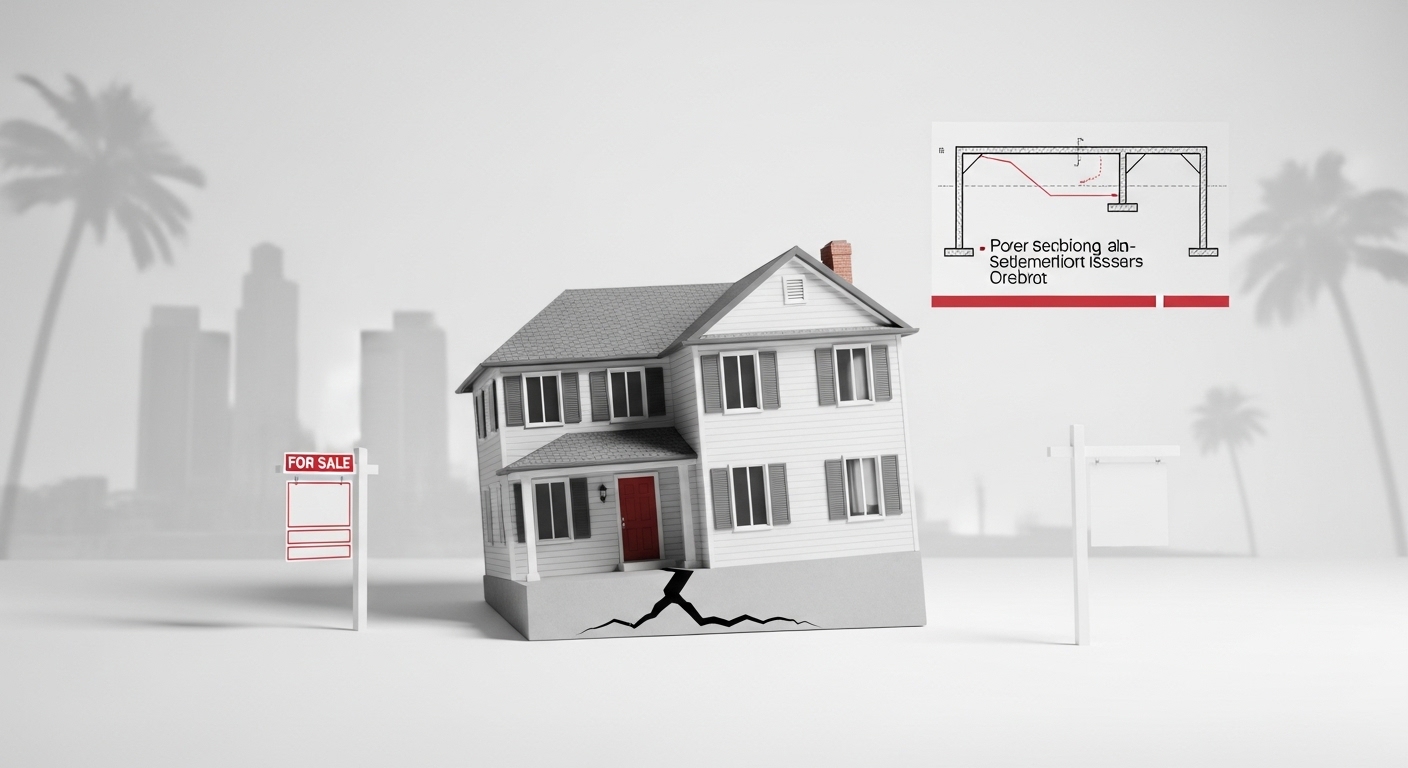
Foundation settlement refers to the downward movement of a building’s foundation over time. In Southern California, this is driven by several factors including expansive clay soils that swell and shrink with moisture changes, earthquake activity that shifts soil and structures, hillside grading issues, and poor original construction practices that did not account for local soil conditions.
Not all settlement is equal. Uniform settlement, where the whole foundation drops evenly, is less damaging than differential settlement, where different parts of the foundation move different amounts. Differential settlement is what causes the visible signs that concern buyers and inspectors, including diagonal cracks in drywall, doors and windows that stick or no longer close properly, and floors that slope or feel uneven.
What Causes Foundation Settlement in SoCal Specifically
Southern California has some of the most geologically active and diverse terrain in the country. The U.S. Geological Survey has documented how seismic activity, soil liquefaction, and expansive soil conditions in the LA Basin and surrounding areas contribute to foundation movement in ways that are specific to this region.
The Los Angeles area has significant deposits of expansive clay soils, particularly in neighborhoods that were built on graded hillsides or filled land. These soils absorb water and swell during the rainy season, then shrink and contract during dry months. Over years of this cycle, foundations can crack, heave, or settle unevenly. Add seismic events to the mix and the problem compounds.
Signs of Foundation Settlement That Buyers Will Notice
Any experienced home inspector in Southern California will look specifically for these signs of foundation issues.
- Diagonal cracks starting from the corners of windows and doors, typically at 45-degree angles
- Horizontal cracks in concrete block or brick foundations, which suggest lateral pressure
- Doors and windows that stick, do not close fully, or have gaps at the top corners
- Sloping or uneven floors that can be felt when walking or measured with a level
- Separation of the home from the foundation or visible gaps between exterior walls and the concrete
- Cracks in exterior stucco or brick that follow a stair-step pattern along mortar joints
How Foundation Issues Affect Your Sale in Southern California
Foundation problems have a significant impact on both buyer demand and financing eligibility. Most lenders are not willing to fund a mortgage on a home with unresolved foundation settlement, particularly if it is active or has been flagged by an inspector. This effectively limits your buyer pool to cash buyers unless the issue is repaired and documented first.
What Foundation Repair Costs in Southern California
The cost of foundation repair in SoCal varies significantly depending on the type and severity of the settlement. Minor crack repair and epoxy injection can run $2,000 to $5,000 for localized issues. Pier installation or underpinning for differential settlement typically runs $15,000 to $50,000 depending on the number of piers needed and site access. Full foundation replacement, which is rare but sometimes necessary on older homes with severe problems, can run $75,000 to $150,000 or more.
Sellers often find that the cost of full repair exceeds what they can recover in a higher sale price. That math is why many SoCal homeowners with serious foundation issues choose the as-is selling path instead.
Here is a comparison of how the main selling approaches play out for foundation settlement situations.
| Settlement Severity | Typical Repair Cost | Recommended Approach | Time to Sell | Buyer Pool |
|---|---|---|---|---|
| Minor (hairline cracks, no structural impact) | $2,000 to $5,000 | Repair, document, and list | 30 to 60 days | Most buyers |
| Moderate (differential settlement, sticking doors) | $10,000 to $30,000 | Repair or disclose and price down | 30 to 90 days | Cash buyers mainly |
| Severe (significant movement, structural impact) | $30,000 to $75,000 | Sell as-is to cash buyer | 7 to 21 days | Cash buyers and investors only |
| Extreme (full replacement needed) | $75,000 to $150,000+ | Sell as-is or demolish and sell land | 7 to 30 days | Developers and investors |
California Disclosure Requirements for Foundation Issues
California requires sellers to disclose all known material defects on the Transfer Disclosure Statement. Foundation issues are among the most important disclosures a seller can make. If you know your home has settlement problems, cracks in the foundation, or structural movement, that information must be shared with buyers before they make an offer.
According to the California Department of Real Estate, sellers must disclose facts that could affect the value or desirability of the property. Foundation settlement clearly qualifies. If you have a structural engineer’s report documenting the issue, sharing that with buyers gives accurate information and prevents them from assuming the worst.
Getting a Structural Engineer Report Before You Sell
One of the best things you can do before deciding how to handle a foundation issue is get a structural engineer’s assessment. This gives you an accurate picture of what you actually have. Many sellers see cracks in the walls and assume the worst when a licensed engineer might tell them the settlement is minor, stable, and has not moved in years.
What a Structural Engineer Report Tells You
A licensed structural engineer will assess the type, location, and severity of the settlement. They will tell you whether it is active or historic, what caused it, and what remediation options exist. That report becomes a document you can share with buyers and with cash buyers who are evaluating your property.
An accurate report can actually help you get a better offer from a cash buyer because it removes uncertainty. Cash buyers price risk into their offers. Uncertainty about the extent of a foundation problem always costs sellers more than the actual problem would justify. A clear report narrows that uncertainty gap significantly.
Selling As-Is to a Cash Buyer for Foundation Settlement
For sellers who are not in a financial position to repair the foundation, or who simply want to exit quickly without managing a major construction project, selling as-is to a cash buyer is the practical solution. Cash buyers who specialize in distressed properties in Southern California regularly evaluate and purchase homes with foundation issues.
For sellers dealing with structural challenges related to hillside properties and soil movement, our guide on selling a Hollywood Hills property with a failed retaining wall covers similar structural disclosure and selling dynamics.
You might also find it helpful to read about how sellers handle LA homes affected by mudslides and soil erosion, where the soil movement and structural impact considerations are very similar to foundation settlement situations.
When you are ready to find out what your home is worth in its current condition and what your options are, contact our team today for a no-pressure, honest assessment.
To learn more about how we buy homes throughout Southern California regardless of condition, visit our Los Angeles cash home buyers page.
For current building code requirements related to foundation and structural standards in California, the California Building Standards Commission publishes the applicable codes that govern structural repair and inspection in the state.
Conclusion
Selling a Southern California home with foundation settlement issues is challenging but absolutely possible. The right approach depends on the severity of the settlement, the repair costs relative to the expected sale price, and how quickly you need to move. Minor issues are often worth documenting and repairing. Severe settlement is usually better handled through an as-is sale to a cash buyer who specializes in these situations.
The worst thing you can do is hide it or ignore it. California’s disclosure laws are strict, and buyers who discover undisclosed foundation problems after closing have strong legal remedies. Get a structural engineer’s assessment, know what you have, and make a decision based on real numbers.
Frequently Asked Questions
Do I have to disclose foundation settlement when selling in California?
Yes. California law requires sellers to disclose all known material defects on the Transfer Disclosure Statement. Foundation settlement, cracks, structural movement, or any known foundation issues must be disclosed to buyers. Hiding known foundation problems can result in serious legal liability after closing.
Can I sell my Southern California home with foundation problems without fixing them?
Yes. California law does not require you to repair defects before selling. You must disclose them, but you can sell as-is. Cash buyers and investors regularly purchase SoCal homes with foundation issues. They factor the repair cost into their offer and handle the work after closing. You accept a lower price but avoid major upfront costs.
How much does foundation repair cost in Southern California?
Foundation repair costs in SoCal range widely based on severity. Minor crack repairs run $2,000 to $5,000. Pier installation or underpinning for differential settlement typically costs $15,000 to $50,000. Full foundation replacement can run $75,000 to $150,000 or more. Getting multiple bids from licensed structural engineers and contractors is always recommended before deciding whether to repair or sell as-is.
Will a buyer’s lender finance a home with foundation settlement in California?
Most mortgage lenders will not finance a home with unresolved and active foundation settlement. FHA and VA lenders have strict structural standards. If a lender’s appraiser identifies significant foundation issues, they will likely require repairs before funding the loan. This means your buyer pool is limited to cash buyers unless the foundation is repaired and cleared by an engineer first.
What is the fastest way to sell a SoCal home with foundation problems?
Selling to a cash buyer who specializes in distressed properties is the fastest option. Cash buyers do not need lender approval, so foundation issues do not create the same financing barriers. A cash buyer can typically close in 7 to 21 days. Having a structural engineer’s report and contractor estimates ready helps you get a more accurate offer and speeds up the due diligence process.