
Having an illegal ADU on your LA property is more common than most sellers realize. Whether it was there when you bought the home or you added it yourself without going through the city, the moment you decide to sell, the question comes up. Can you sell with it? And if so, what do you have to do? The answers are more manageable than you might expect.
What Makes an ADU Illegal in Los Angeles
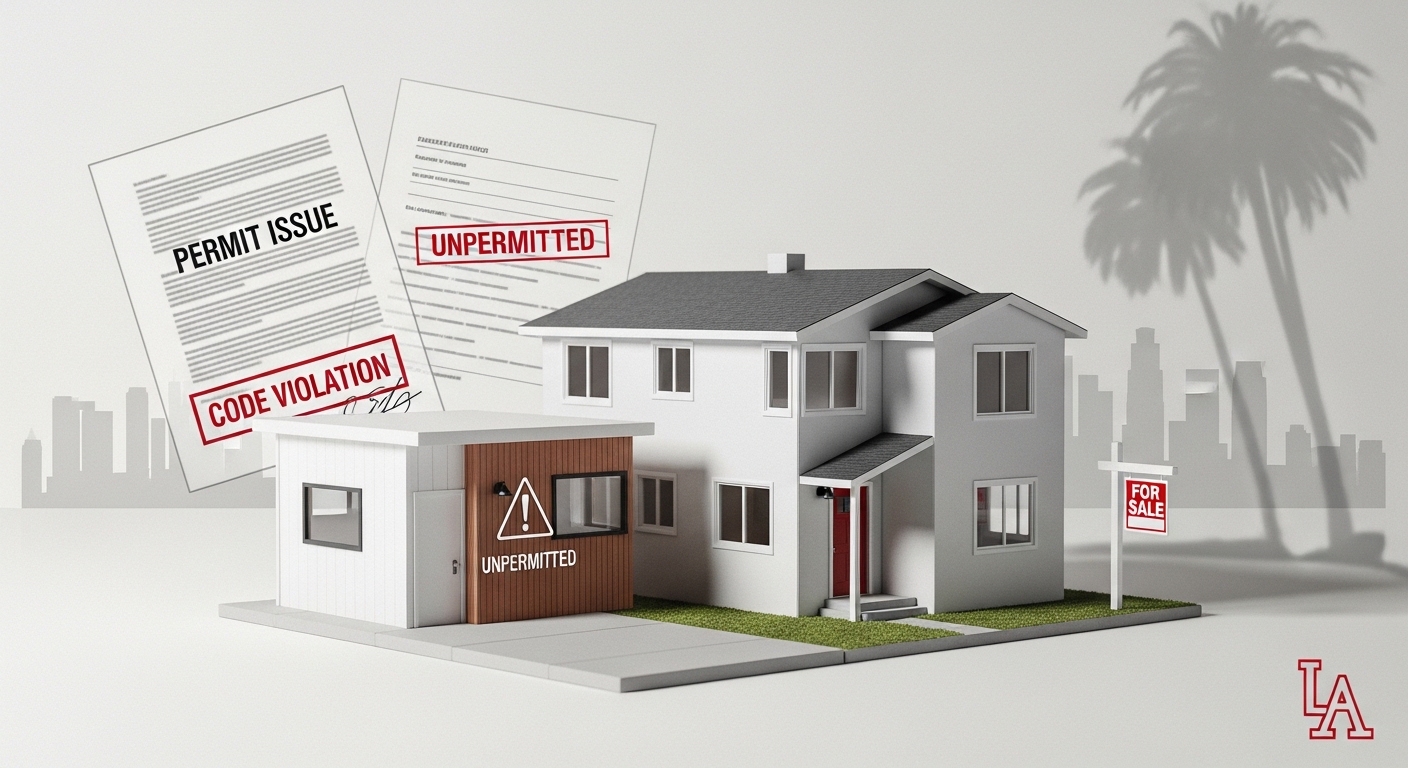
An illegal ADU, also called an unpermitted ADU or an unlawful dwelling unit, is any secondary living space on your property that was built or converted without obtaining the required permits from the Los Angeles Department of Building and Safety (LADBS). This includes garage conversions, basement units, backyard cottages, or attached additions that function as separate living quarters.
The difference between an illegal ADU and a legal one comes down entirely to permits, inspections, and city approval. A legally permitted ADU that meets current code adds real market value to your property. An illegal one does not get counted in appraisals, can trigger compliance orders, and creates disclosure obligations you cannot ignore when you sell.
How LADBS Treats Unpermitted ADUs When You Sell
When you list your home, the permit history of the property becomes visible to buyers, their agents, and lenders. LADBS maintains permit records going back decades that are publicly accessible online. An ADU that shows no permit history will be flagged by any experienced buyer’s agent or inspector.
If LADBS receives a complaint or conducts an inspection and discovers an unpermitted unit, they can issue a compliance order requiring you to either legalize the unit or remove it. According to the Los Angeles Department of Building and Safety, unpermitted work that poses health or safety concerns can result in notices to comply and escalating fines if they are not addressed.
What California Law Says About Disclosing an Illegal ADU
California is clear on this. If you know your property has an unpermitted ADU, you are required to disclose it to buyers on the Transfer Disclosure Statement under Civil Code Section 1102. This is not optional. Sellers who hide known unpermitted structures risk lawsuits from buyers after closing, which can include demands for the full cost of legalization or removal.
Disclosing the ADU does not mean you have to fix it before selling. You just have to make sure buyers know about it. From there, you price accordingly and let buyers decide how they want to handle the issue after taking ownership.
How an Illegal ADU Affects Your LA Home Sale
The impact depends on the type of buyer and how the sale is structured. For traditional buyers using mortgage financing, an unpermitted ADU creates complications at the appraisal and underwriting stage. For cash buyers and investors, it is usually a much smaller obstacle.
The Appraisal and Financing Problem
When a financed buyer’s lender orders an appraisal, the appraiser will identify the ADU as unpermitted and exclude it from the home’s livable square footage. The value comparison will be made against similar-sized permitted homes, not against the actual size of your property. This can result in an appraisal that comes in lower than your asking price.
Beyond the appraisal, lenders have their own risk policies around unpermitted structures. Some lenders will decline to fund a purchase entirely if an unpermitted unit is present, especially if it appears to be rented out. FHA and VA loans are particularly strict about property condition and compliance standards.
Your Options When You Have an Illegal ADU in LA
You have real choices here, and none of them involve just hoping the buyer does not notice. Here is how the main paths compare.
| Option | Timeline | Estimated Cost | Buyer Pool | Best For |
|---|---|---|---|---|
| Legalize the ADU before selling | 3 to 6 months | $5,000 to $25,000+ | All buyers | Sellers with time and budget |
| Demolish and restore garage | 4 to 8 weeks | $5,000 to $15,000 | Most buyers | When legalization is not viable |
| Disclose and sell as-is | 30 to 60 days | None upfront | Cash buyers mainly | Sellers who need to move quickly |
| Sell as-is to cash buyer | 7 to 21 days | None | Cash buyers and investors | Sellers who want certainty and speed |
The Case for Legalizing Your ADU Before Selling
California has made it easier in recent years to retroactively permit ADUs that were built before January 1, 2020. Under state law, local building departments must allow these units to be permitted as long as they meet current health and safety standards. According to the California Department of Housing and Community Development, the state has been actively encouraging cities to accept legalization applications for unpermitted ADUs as part of addressing the housing shortage.
A legalized ADU adds meaningful value. Lenders can include it in appraisals. Rental income from a legal unit can count toward a buyer’s loan qualification. And your buyer pool expands significantly to include financed buyers who might otherwise not be able to make an offer.
Steps to Legalize an Illegal ADU in Los Angeles
The legalization process runs through LADBS and involves several steps that require time and professional help.
- Pull the permit history on your property through the LADBS online portal to see what was previously permitted
- Have a licensed contractor or architect assess the ADU to determine what modifications are needed to bring it to current code
- Submit plans to LADBS through their ePlanLA system for plan check review
- Pay the permit and plan check fees, which can range from $5,000 to $25,000 depending on unit size and complexity
- Pass all required inspections including structural, electrical, plumbing, and fire safety
- Receive your certificate of occupancy or permit finalization from LADBS
This process typically takes three to six months for straightforward projects. More complex situations with significant construction modifications can take longer.
When Selling As-Is Is the Better Move
Not every illegal ADU is worth legalizing. If the unit was poorly constructed, has significant safety deficiencies, or would require a full tear-down and rebuild to meet code, the cost of legalization may exceed the value it adds to your sale. In those cases, selling as-is to a cash buyer or real estate investor is often the faster and more financially sensible path.
Cash buyers and investors in Los Angeles purchase homes with illegal ADUs regularly. They understand how to price the risk and have experience working through the legalization or removal process after closing. They do not need a lender’s approval, so the complications that derail financed deals do not apply.
For sellers dealing with code enforcement issues beyond just the ADU, our guide on dealing with code enforcement liens when selling in LA covers the additional complications you might face.
And if the ADU situation is connected to a broader unpermitted addition or conversion, reading about how to sell an LA property with an unpermitted garage conversion will give you additional context on how these situations typically play out.
If you want to know what your home is worth in its current condition and what your fastest options are, reach out to our team today. We work with LA homeowners in exactly these situations every day and can give you an honest, no-pressure assessment.
To learn more about how we work with sellers throughout Los Angeles regardless of property condition, visit our Los Angeles cash home buyers page.
For the most current information on California ADU legalization requirements and state law on unpermitted structures, the California Legislature’s official website provides the authoritative legal text that governs these situations.
Conclusion
Selling a home in LA with an illegal ADU is manageable, but it requires a clear decision on your part. Legalize it and expand your buyer pool, disclose and negotiate, or sell as-is to a cash buyer who can close quickly and handle the situation after closing. What you cannot do is pretend the ADU does not exist or hope buyers miss it. They will not, and California law gives buyers strong tools to come after sellers who fail to disclose what they know.
Get the facts straight, know your options, and choose the path that matches your timeline and financial situation. That approach will always produce a better outcome than letting the problem manage itself.
Frequently Asked Questions
Do I have to disclose an illegal ADU when selling my LA home?
Yes. California law requires sellers to disclose known unpermitted structures on the Transfer Disclosure Statement under Civil Code Section 1102. If you know your property has an illegal ADU, you must inform buyers before they make an offer. Hiding it can result in lawsuits after closing.
Can I sell my LA home with an illegal ADU without fixing it?
Yes, you can sell as-is. California law does not require you to fix or legalize the ADU before selling. You must disclose it, price the home accordingly, and find buyers who are willing to accept the situation. Cash buyers and investors are typically the most comfortable purchasing homes with illegal ADUs.
How much does it cost to legalize an illegal ADU in Los Angeles?
Legalization costs in Los Angeles typically include permitting fees ranging from $5,000 to $25,000 depending on unit size, plus any construction costs needed to bring the unit up to current code. The total process usually takes three to six months for straightforward projects. More complex situations with significant structural issues can cost considerably more.
Will an illegal ADU cause problems with a buyer’s financing?
Yes, often. Lenders will not include unpermitted space in appraisals, which can result in a lower appraised value than your asking price. Some lenders decline to fund purchases entirely when a significant unpermitted structure is present. FHA and VA loans are especially strict about property compliance. Cash buyers avoid all of these financing complications.
Can LADBS force me to demolish my illegal ADU before I sell?
If LADBS issues a compliance order related to the ADU, they can require you to either legalize it or remove it. If an active compliance order exists when you try to sell, it will show up on property records and create additional complications. Proactively addressing the issue before listing, or selling to a cash buyer who will handle it after closing, are both ways to manage this risk.