
Unpermitted garage conversions are extremely common in Los Angeles. Homeowners convert garages into bedrooms, living spaces, or rental units all the time, often without pulling a single permit. When it comes time to sell, that conversion can create real complications. But it does not have to kill your deal.
What Is an Unpermitted Garage Conversion and Why Does It Matter
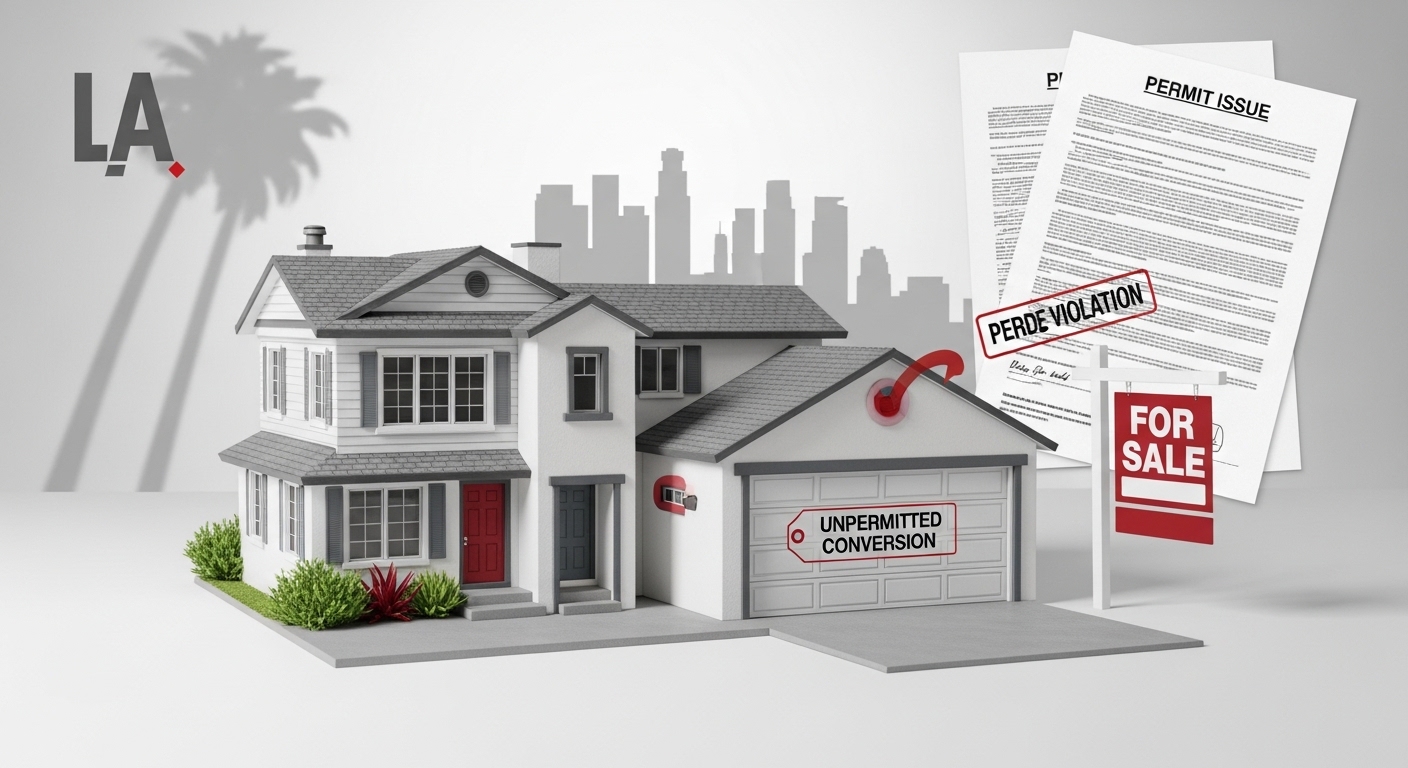
An unpermitted garage conversion is any conversion of a garage into habitable or semi-habitable space that was done without obtaining building permits from the Los Angeles Department of Building and Safety (LADBS). This includes converted bedrooms, home offices, laundry rooms, and any ADU (accessory dwelling unit) that was built without going through the city’s approval process.
It matters when you sell for several reasons. The converted space cannot legally be counted in the home’s square footage or bedroom count. Lenders who are appraising the property cannot include it in the value calculation. And California law requires you to disclose it to buyers on the Transfer Disclosure Statement.
I have seen this catch sellers off guard more times than you would believe. A homeowner thinks they have a 4-bedroom house with an extra unit, but the appraiser calls it a 3-bedroom house with an unpermitted space. That gap can affect your asking price significantly.
How Common Are Unpermitted Garage Conversions in LA
Extremely common. Los Angeles has tens of thousands of unpermitted additions and conversions throughout the city, and a significant portion of them are garage conversions. This happened for decades because many homeowners added living space or rental units without fully understanding the permit requirements, or deliberately skipped the process to avoid costs and delays.
The city has been increasing enforcement in recent years, and LADBS has specifically been cracking down on unpermitted expansions. But a lot of older conversions are still out there on the market, and buyers and their agents now know to look for them.
What You Must Disclose to Buyers in California
California law requires sellers to disclose known unpermitted work on the Transfer Disclosure Statement. If you know your garage was converted without permits, you have to tell buyers. Hiding it is not a legal option, and sellers who fail to disclose known issues can face lawsuits from buyers after closing.
According to the Los Angeles Department of Building and Safety, unpermitted work that is discovered can result in compliance orders requiring the owner to either legalize the work through retroactive permits or demolish and restore the space to its original condition.
How an Unpermitted Garage Conversion Affects Your Home’s Sale
The impact of an unpermitted garage conversion on your sale depends on how the space was converted, what condition it is in, and what kind of buyer is looking at your property.
The Appraisal Problem
When a buyer gets a mortgage, the lender orders an appraisal. The appraiser will identify any spaces that were not permitted and exclude them from the home’s livable square footage. A 2,000-square-foot home with a 400-square-foot unpermitted garage conversion gets appraised as a 1,600-square-foot home, and the value comparison is made against comparable 1,600-square-foot homes in the area.
This can result in a significant gap between what you are asking and what the appraisal supports. If the appraisal comes in low, the buyer’s lender will only fund based on the appraised value, not your asking price. That either means you drop the price or the buyer brings extra cash to cover the gap.
How Buyers React to Unpermitted Conversions
Experienced buyers in LA know how to check permit records. LADBS has permit records available online, and savvy buyers and their agents will pull permit history before making an offer or during due diligence. If the garage conversion does not show up in permit records, they will know it was done without approval.
Some buyers are completely fine with this and will still make an offer. Others will ask you to either legalize the conversion before closing or price the home to account for the risk they are taking on. Cash buyers are generally the most comfortable with unpermitted work because they do not have a lender imposing conditions.
Here is a breakdown of how the main selling approaches compare when you have an unpermitted garage conversion.
| Approach | What It Involves | Timeline | Buyer Pool | Best For |
|---|---|---|---|---|
| Legalize before selling | Pull retroactive permits, pass inspections | 3 to 6 months | All buyers | Sellers with time and budget |
| Disclose and offer credit | Price reflects issue, buyer handles it | 30 to 60 days | Mostly cash and conventional | Sellers who want traditional sale |
| Sell as-is to cash buyer | Full disclosure, no repairs needed | 7 to 21 days | Cash buyers and investors | Sellers who need speed and certainty |
Your Options for Legalizing or Selling With an Unpermitted Garage Conversion
There is more flexibility here than a lot of sellers realize, especially under California’s recent ADU laws.
Option 1: Legalize the Conversion Before You List
California has made it significantly easier in recent years to retroactively permit unpermitted ADUs and garage conversions. Under state law, local building departments must allow existing illegal units to be permitted as long as they meet current health and safety codes. According to the California Department of Housing and Community Development, the state has been actively encouraging homeowners to bring unpermitted units into compliance to address the housing shortage.
The legalization process involves submitting plans to LADBS, going through plan check, and passing required inspections. For garage conversions that were built reasonably well and meet current code in most areas, this process can take three to six months. Permitting fees in Los Angeles typically range from $5,000 to $25,000 depending on unit size and type, plus any required construction modifications to bring the space into full compliance.
A legalized ADU adds real value to the property. Lenders can include the square footage in appraisals, rental income from a legal ADU can count toward a buyer’s loan qualification in some programs, and you expand your buyer pool significantly.
Option 2: Disclose and Sell As-Is
Many LA sellers choose to disclose the unpermitted status and sell the home in its current condition. Cash buyers and investors in Los Angeles deal with unpermitted work regularly and are generally not scared off by it. They will price the risk into their offer, but they can close fast and without the complications of a lender appraisal.
If your conversion is in good physical condition even if it is not permitted, that can work in your favor. A well-built, functional space that happens to lack permits is a much easier sell than a poorly constructed space with safety issues.
For sellers dealing with code enforcement and violation issues that go beyond just the unpermitted conversion, our guide on dealing with code enforcement liens when selling in LA covers the next level of complications you might face.
And if there are other condition issues on the property in addition to the garage conversion, it is worth reading about how sellers handle red-tagged properties and unmaintained pools in LA, where similar as-is selling strategies apply.
When you are ready to talk through your specific situation, contact our team today. We work with LA sellers dealing with all kinds of property issues and can give you a clear, honest picture of your options without any pressure.
To learn more about how we buy homes in all kinds of conditions throughout Los Angeles, visit our Los Angeles cash home buyers page.
For the most current information on California’s ADU legalization pathways and what rules apply to existing unpermitted units in your area, the California Legislature’s official code resources provide the authoritative legal text on state ADU requirements.
Steps to Take Before Selling a Home With an Unpermitted Garage Conversion
Regardless of which path you choose, these steps will help you understand your situation and make a more informed decision.
- Look up your property’s permit history through the LADBS online portal to confirm what work was permitted
- Get a consultation with a licensed contractor or permitting specialist about the cost and timeline for legalization
- Talk to a real estate agent or appraiser about how the unpermitted space is likely to affect your appraisal value
- Prepare your Transfer Disclosure Statement forms and be ready to fully disclose the conversion to any buyer
- Contact a cash buyer or investor to get a no-obligation offer that reflects the property in its current condition
Having all this information before you start the selling process puts you in control of the conversation instead of reacting to surprises during escrow.
Conclusion
An unpermitted garage conversion in LA is a common issue that has real solutions. You can legalize it before selling, disclose and negotiate a price that reflects the unpermitted status, or sell as-is to a cash buyer who is experienced at handling these situations. None of these paths is impossible.
The key is to be honest about what you have, understand the real financial impact on your sale, and make a decision based on your timeline and budget. Trying to hide the conversion or hoping buyers and appraisers miss it is the one strategy that almost never works in Los Angeles.
Frequently Asked Questions
Do I have to disclose an unpermitted garage conversion when selling in California?
Yes. California law requires sellers to disclose known unpermitted work on the Transfer Disclosure Statement. If you know your garage was converted without permits, you are legally required to inform buyers before they make an offer. Failing to disclose can expose you to lawsuits from buyers after closing if they discover the unpermitted work later.
Can I sell an LA home with an unpermitted garage conversion to a regular buyer?
Yes, but it is more complicated than selling to a cash buyer. Traditional buyers using mortgages will have their lender order an appraisal that excludes unpermitted square footage, which can affect the appraised value significantly. Some conventional loan buyers will still proceed if the price reflects the issue, but FHA and VA buyers may face additional complications from their lenders.
How much does it cost to legalize an unpermitted garage conversion in LA?
The cost varies depending on the size and condition of the conversion. Permitting fees in Los Angeles typically range from $5,000 to $25,000. If construction modifications are needed to bring the space up to current code, that adds more. The full process typically takes three to six months. Garage conversions that were built to a reasonable standard often legalize more smoothly than those with significant safety issues.
Does an unpermitted garage conversion reduce my home’s value?
It depends on the context. The unpermitted square footage cannot be counted in the home’s official square footage by an appraiser, which limits how a lender values the home. However, if the conversion is in good condition and the buyer is a cash buyer or investor, they may value it favorably as functional space. Legalizing the conversion before selling is the most reliable way to maximize the value it adds to your property.
What happens if I do not disclose an unpermitted garage conversion and the buyer finds out?
You could face significant legal liability. California’s non-disclosure laws give buyers legal recourse if they can prove a seller knew about a defect and deliberately hid it. That recourse can include requiring you to pay for legalization costs, repair costs, and attorney fees. In severe cases, buyers can seek to rescind the sale entirely. Full disclosure is always the better and safer approach.