
If you’ve been trying to buy a home in Los Angeles this year, you’ve probably felt it in your gut — something has shifted. Mortgage rates in 2026 are not what they were at their peak, but they’re also not the dream rates of 2020 and 2021. So what’s really going on, and what does it mean for LA home buyers right now? Let me walk you through it.
Where 2026 Mortgage Rates Stand Right Now
Rates Are Dropping — And It’s a Big Deal
Here’s something genuinely exciting: according to Money.com, Freddie Mac’s benchmark 30-year fixed mortgage rate recently dropped to 5.98% — the first time in more than three years it’s dipped below 6%. That’s a psychological barrier that matters a lot to buyers.
When rates crossed below 6%, something changed in how buyers felt. I’ve noticed more people getting serious about their home searches. It’s like a switch flipped. Even a small improvement in home affordability can bring thousands of buyers back into the market who had been sitting on the sidelines waiting.
And for California specifically, as of early March 2026, the 30-year fixed rate in California is hovering around 5.875% to 6.13% depending on your lender and credit score, according to Bankrate. That’s meaningfully better than where we were just 12 months ago.
How Far We’ve Come From the Peak
To understand where we are, you need to remember where we were. In late 2023, mortgage rates hit nearly 8% on a 30-year fixed loan. That was brutal. On a $800,000 home with 20% down, that extra 2% in rate meant about $600 more per month compared to today’s rates. That’s a car payment.
Coming down from 8% to under 6% is a real shift. It’s not the pandemic-era 3% rates that people dream about — and those aren’t coming back. But it’s enough to open doors for a lot of buyers who got priced out during the worst of the rate spike.
What High Rates Still Mean for LA Buyers in 2026
LA’s Already Expensive — Rates Make It Harder
Here’s the honest part: even at 6%, buying in Los Angeles is not easy. The median home price in LA sits at around $1,032,500. If you put 20% down, you’re financing roughly $826,000. At 6%, that’s a monthly payment of about $4,950 — just for principal and interest, before taxes and insurance.
That’s a lot. And it explains why housing affordability in LA is still a real challenge, even as rates come down. The California Association of Realtors reports that housing affordability in the state is expected to inch up to just 18% in 2026, according to C.A.R.’s 2026 Housing Market Forecast. That means only about 1 in 5 California households can actually afford a median-priced home. That’s a sobering number.
The “Rate Lock” Effect Is Limiting Inventory
Here’s something that doesn’t get talked about enough: high rates don’t just affect buyers — they also affect inventory. A lot of current homeowners are locked into mortgage rates of 3% or 3.5% from 2020 and 2021. They don’t want to sell and trade that rate for a 6% loan on their next home. So they stay put.
This “rate lock effect” keeps supply low. And when supply stays low in a city like LA, prices don’t fall the way you’d expect them to. That’s one reason why, despite affordability pressure, home prices in LA haven’t crashed. There just aren’t that many homes coming to market.
As a buyer, this means you’re competing for a smaller pool of homes than you might expect. It also means sellers in desirable areas still have leverage, even in a market that feels less frenzied than 2021.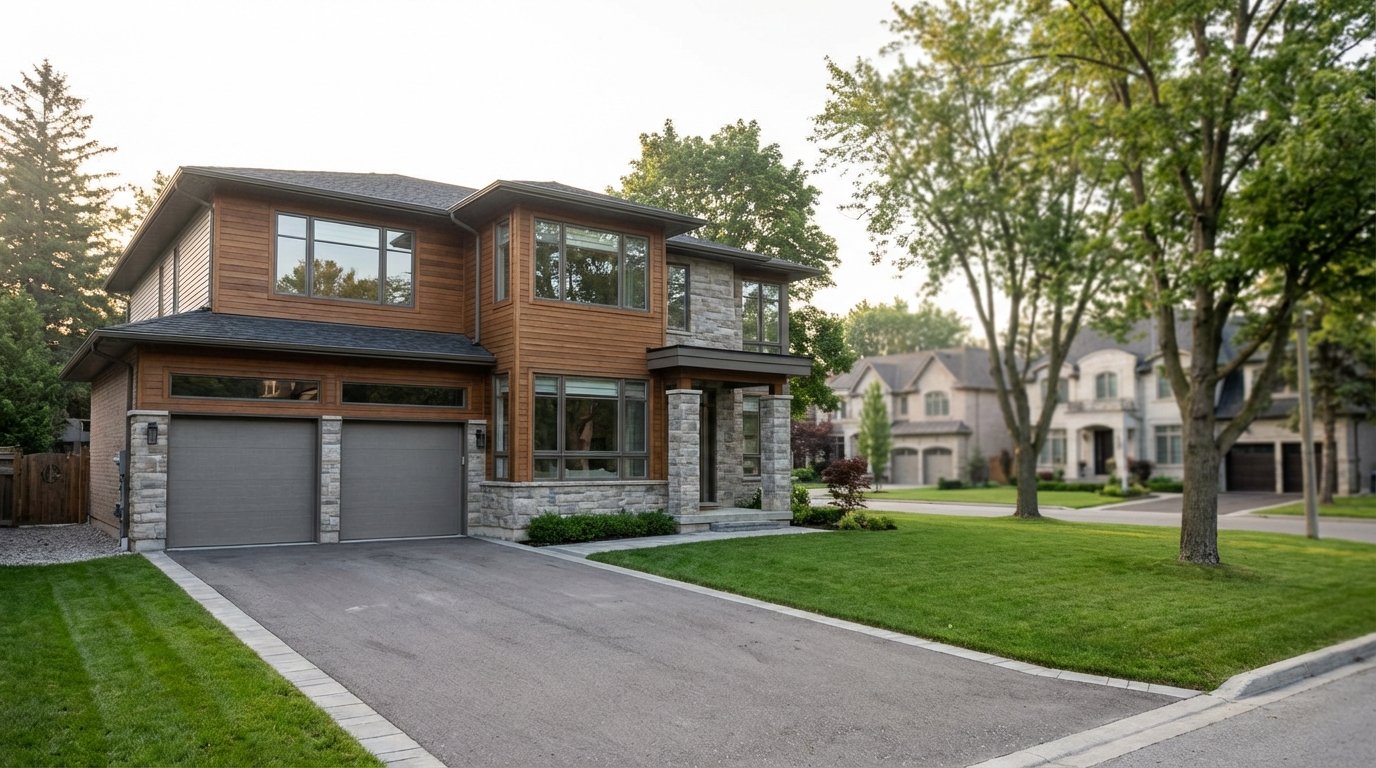
How Interest Rates Affect Different Buyer Groups
First-Time Buyers Are Feeling the Squeeze the Most
If you’re a first-time home buyer in LA, 2026 is tough — but not impossible. The good news is that the California Housing Finance Agency (CalHFA) offers programs to help, including lower-rate loan options and down payment assistance. These can make a real difference on a high-priced LA home.
The bad news is that even with assistance, you’re entering a market where jumbo loans are common (LA prices often exceed the $832,750 conforming loan limit), and jumbo rates tend to run slightly higher. Shopping multiple lenders is not optional here — it’s essential. A 0.25% difference in rate on a $900,000 loan saves you over $150 per month.
Here’s a quick look at how rate changes affect your monthly payment on a typical LA purchase:
| Loan Amount | Rate at 7% | Rate at 6% | Rate at 5.5% | Monthly Savings (7% vs 6%) |
|---|---|---|---|---|
| $600,000 | $3,992/mo | $3,597/mo | $3,407/mo | ~$395/mo |
| $800,000 | $5,322/mo | $4,796/mo | $4,542/mo | ~$526/mo |
| $1,000,000 | $6,653/mo | $5,995/mo | $5,678/mo | ~$658/mo |
The numbers don’t lie. Even a 1% drop in rate saves you a serious amount of money every month. That’s why watching rates closely in 2026 really matters.
Move-Up and Repeat Buyers Have More Options
If you already own a home and have built up equity — especially if you bought a few years ago — you’re in a stronger position. You can use that equity as a larger down payment, which reduces your loan amount and your monthly payment. Some buyers in this position are also using bridge loans or seller credits to manage the transition.
The funny part is, even repeat buyers who feel stuck in their current home (because of their low rate) are starting to reconsider as rates edge closer to 6%. At some point, life reasons — a growing family, a job change, a desire for a different neighborhood — outweigh the financial cost of moving to a higher rate. We’re starting to see that shift happen more in 2026.
What LA Buyers Should Do Right Now
Smart Moves to Make in This Rate Environment
So what’s the right move for buyers in LA in 2026? Here’s what I’d tell a friend asking me this question:
- Don’t wait for 3% rates — They’re not coming back. Every month you wait is a month you’re not building equity.
- Shop at least 3–5 lenders — The difference between the best and worst rate offer you’ll get is often 0.3–0.5%. On a large loan, that’s real money.
- Consider an ARM if it makes sense — A 7-year adjustable-rate mortgage can offer lower initial rates if you don’t plan to stay long-term.
- Ask about seller credits — In a slower market, sellers may offer credits to help buy down your rate. A mortgage rate buydown can lower your payment for the first few years.
- Look at neighborhoods where prices have softened — Some parts of LA have seen price reductions. That softness gives you room to negotiate.
- Get pre-approved, not just pre-qualified — In a market this competitive, sellers want to see a strong, real pre-approval letter.
Is This a Good Time to Buy — Or Should You Wait?
I get this question all the time. And my honest take is this: if you can afford to buy at today’s rates and today’s prices, buying is usually better than waiting — especially in LA, where property values have historically gone up over the long run.
Trying to time the market perfectly is a losing game. If rates drop further, you can always refinance. But if prices start climbing again because lower rates bring more buyers into the market — which is very possible — the home you’re waiting to buy gets more expensive while you wait.
If you’re a seller trying to understand how buyer behavior is changing, check out our post on the Los Angeles housing market forecast for sellers to see how both sides of this market are moving. Also take a look at how Burbank homeowners are navigating the current market — there’s a lot of useful context there.
What Sellers Need to Know About Today’s Buyers
Rate-Sensitive Buyers Are More Careful Now
Today’s buyers have done their math. They know what a rate change of 0.25% means to their monthly payment. They’re not going to overpay for a home just because they love it. If your listing is overpriced, they’ll pass — and come back weeks later expecting a price reduction.
This is why sellers who are realistic about pricing are still doing well, while homes that are priced too high are sitting and getting stale. In a rate-sensitive market, presentation and pricing both matter more than ever.
Cash Offers Cut Through Rate Uncertainty
One thing that never changes: cash offers are always attractive to sellers. They don’t depend on a buyer’s mortgage rate. They don’t fall through because a lender got cold feet. They close fast and clean.
If you’re a homeowner who wants to sell your property without dealing with the hassle of buyer financing, rate locks, and inspection delays, a cash sale might be the smoothest path. You can learn more about how the probate and sale process works in LA County or simply reach out to us at Buy Your Properties for a free, no-obligation cash offer.
Conclusion
2026 interest rates are finally moving in the right direction for LA buyers. They’re not perfect — this isn’t 2020 — but they’re meaningfully better than the peak of 2023. For buyers, that means more purchasing power and more options. For sellers, it means a fresh wave of buyers is re-entering the market, which is good news if you price your home correctly.
The key for everyone in this market is to stop waiting for perfect conditions and start working with the conditions that exist right now. If you want to talk through what this means for your specific situation, contact us today — we’re happy to help.
Frequently Asked Questions
What is the current mortgage rate in California in 2026?
As of early March 2026, the 30-year fixed mortgage rate in California is approximately 5.875% to 6.13%, depending on the lender, loan type, and borrower’s credit score. Freddie Mac’s benchmark rate recently dropped below 6% for the first time in over three years.
Will mortgage rates go down more in 2026?
Most forecasts suggest rates will stay in the 6% range for most of 2026, possibly dipping toward 5.9% by year-end. A return to pandemic-era 3% rates is not expected. The best strategy is to lock in a good rate when it’s available rather than waiting for rates that may never come.
Is it a good time to buy a home in Los Angeles in 2026?
It depends on your financial situation, but for many buyers, yes. Rates are improving, some neighborhoods have seen modest price softening, and inventory is slightly higher than last year. Buyers who are financially ready are better positioned now than they were in 2023 or 2024.
What is a jumbo loan and why does it matter in LA?
A jumbo loan is any mortgage above the conforming loan limit, which is $832,750 in most U.S. counties. Because LA home prices are so high, many buyers need jumbo loans. These typically carry slightly higher rates than conforming loans, making rate shopping especially important in LA.
How can I get a lower mortgage rate in California?
The most effective ways to lower your rate include improving your credit score, making a larger down payment, shopping multiple lenders, considering a shorter loan term (15 years instead of 30), and asking about mortgage points or rate buydowns. California’s CalHFA programs also offer below-market rate options for qualifying buyers.